
You’re the only person speaking at the table
You’re leading the meeting on your laptop, and nobody else at home needs to speak. Check the headset’s microphone boom, mute controls and connection. Logitech specifies a USB-A connection for the H390.


If you’re the only person speaking, a wired USB headset is a good choice when its cable and connector suit your seat. Choose a wireless model with a USB receiver if you want to move around during meetings and can manage the receiver and battery. If others at the table also need to speak or listen, don’t treat a single-user headset as a complete solution: choose and test audio for the whole group.
You’re leading the meeting on your laptop, and nobody else at home needs to speak. Check the headset’s microphone boom, mute controls and connection. Logitech specifies a USB-A connection for the H390.
Colleagues sitting beside you also need to take part. Decide whether only your voice needs to be transmitted through a headset, or whether the audio needs to work for everyone at the table.
Compare the freedom of movement offered by a cable with that of a wireless model. For wireless headsets, also check which USB receiver is included and how to charge the headset.
Choose this option if: you usually speak from one spot and don’t want to manage a battery or wireless receiver. Check that the plug fits your laptop port.
Bear in mind: the cable limits how far you can move. Logitech lists a cable length of 1.9 m for the USB-A version of the H390.
Choose this option if: you often get up while planning and your laptop has a compatible port for the receiver. Jabra describes a USB-A adapter for one version of the Evolve2 65; JLab lists a USB-C dongle for the GO Work Gen 2.
Bear in mind: check the exact version, what’s included in the box and how it charges. A USB charging cable alone doesn’t prove that the headset works as a USB audio device through that cable.
Choose this option if: others sitting beside you also need to speak to or listen to remote participants. Set up the audio for the whole group, not just the person wearing a headset.
Bear in mind: test the positioning and prevent echo when multiple devices join the same meeting. Microsoft Support distinguishes between computer audio and meeting room audio in Teams.
| What to consider | What to look for | Who it matters to |
|---|---|---|
| Clear speech | Check the microphone boom and mute controls on the exact version; make a test recording in the place you plan to use it. | I want remote participants to hear me clearly. Around 33% of consumers prioritise how clearly others can hear their voice. |
| Others joining in at the table | Decide who needs to be heard at the table and test the microphone, speaker and echo in your intended set-up. | I want others at the table to be able to speak and listen too. Around 27% of consumers prioritise participation from others at the table. |
| Connection and freedom of movement | Check which USB-A or USB-C port is available and compare the cable length with the receiver on a wireless model. | I want a connection that fits my laptop, or the freedom to get up during a meeting. Around 20% of consumers choose mainly based on connection or freedom of movement. |
| Comfort | Check whether it’s mono or stereo, how adjustable it is and how it fits; try the headset for a typical meeting length. | I want a style I’ll find comfortable to wear during longer meetings. Around 20% of consumers prioritise fit and comfort. |
A headset microphone is designed for the person wearing it. That doesn’t automatically mean remote participants will be able to hear everyone at the table.
Before you choose, decide who needs to speak and test everyone at the table in your intended set-up.
A product range may include wired and wireless versions, or models that differ in USB-A, USB-C, mono and stereo connections. A feature of one version won’t necessarily apply to another.
Compare the full product version and box contents with your laptop’s ports and your preference for one or two earcups.
A stated period doesn’t, by itself, tell you what your statutory rights are. The Netherlands government states that there is no fixed statutory warranty period in the Netherlands.
If a product is faulty, rely on the applicable Dutch rules and ask the seller to put things right.
The H390 is a wired USB headset for one speaker.
The Evolve 20 comes in wired mono and stereo versions; the Evolve2 65 includes wireless versions with a USB adapter.
The Blackwire 5200 series is a wired range with different wearing styles.
The IMPACT 100 series includes wired mono and stereo models, including Teams versions.
The GO Work Gen 2 is a wireless headset for anyone looking for more freedom to move.
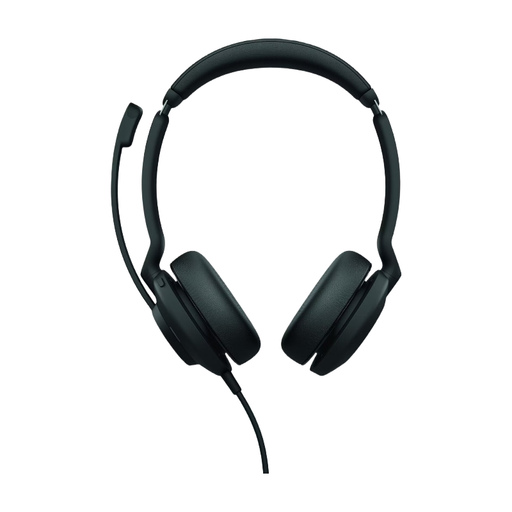
These product picks are personal USB headsets for one speaker: wired models and wireless versions with a USB receiver.
 No image available
A wired headset for calls from a laptop.
USB-A connection, two built-in microphones, and volume, mute and call controls. The description mentions an adjustable headband and memory foam ear cushions.
 No image available
A wired option if you want to use the microphone boom and in-line controls during meetings.
The description lists USB, an adjustable microphone boom, and in-line volume and mute controls.
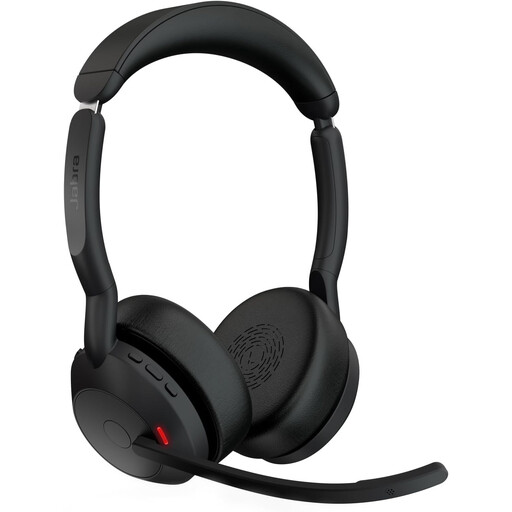 No image available
A wireless stereo version for anyone who wants to move around during meetings.
The description mentions a USB-C Bluetooth adapter, two noise-cancelling microphones and a microphone boom with a mute function. Check the adapter and features of the version you choose.
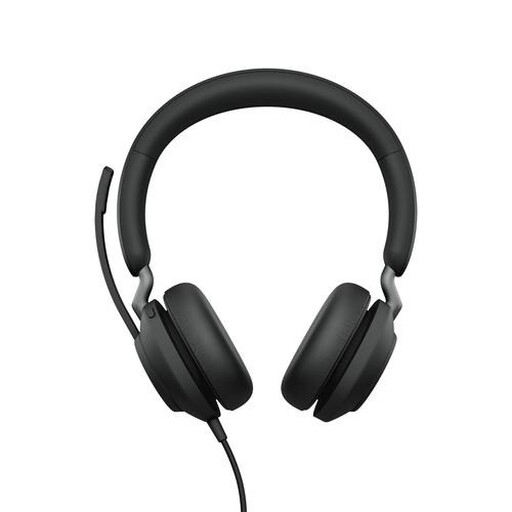 No image available
A wireless mono version for anyone who wants to keep one ear free.
The description lists an included USB-A Bluetooth adapter and a Teams button. Wireless use requires a charged headset and the adapter.
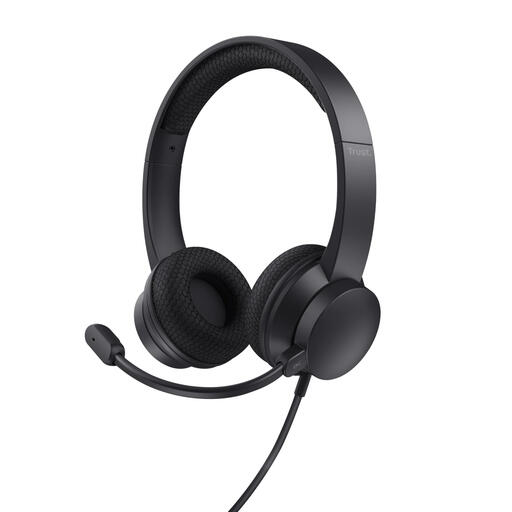 No image available
A wired option for video calls if you want to mute the microphone using the flip-to-mute function.
The description lists USB-A, a USB-C adapter cable, volume controls and an adjustable headband.
Test the microphone you intend to use on your Windows PC and listen back to the recording. Microsoft Support explains how to test a microphone under Sound and Input; also select the right microphone and speaker in your meeting app.
Don’t assume so without testing: a personal headset is worn by one participant. If several people need to speak and listen, choose and test audio for the whole group; mute a second device in Teams to help prevent echo.
If a product is faulty, the seller must offer a solution; the Netherlands government states that there is no fixed statutory warranty period in the Netherlands. For a distance purchase from a business, you’ll often also have a 14-day cooling-off period. This is a separate right from a warranty for a faulty product.
No. You don’t need to buy one to have statutory cover: according to the Netherlands government, there is no fixed statutory warranty period in the Netherlands. Before choosing an additional warranty, compare its terms with the rights you already have.
No, a headset on its own doesn’t replace a secure meeting service. The Dutch Data Protection Authority points out that the organisation is responsible for secure communications. Bear this in mind when discussing personal data or confidential matters.