If you’re the only person speaking through your computer, choose a personal USB headset based on its wearing style, microphone controls and the connection that suits your computer. If several people around the table need to speak directly to remote participants, shared room audio is worth considering instead of relying on one headset’s microphone. Also check whether mute works with your meeting app. Logitech describes the BCC950 as a speakerphone for small teams, while HP Poly lists mono as an option that leaves one ear free.
Who is this choice for?
Meeting facilitator at the table
You speak to remote participants, but also want to follow what people beside you are saying. First decide whether only you or everyone around the table needs to speak directly. HP Poly describes mono as an option that leaves one ear free; Logitech positions the BCC950 as a speakerphone for small teams.
Speaker in low light
You want to find mute and other call controls without having to keep looking at the screen. Check how the exact model indicates its control or mute status; for example, EPOS documents illuminated icons on the IMPACT 100 series.
Attendee in a long online meeting
You listen and speak through your computer for extended periods, so you need to consider what suits your wearing style, freedom of movement and available USB port. Logitech lists a 1.9 m cable for the H390 model; a wireless headset needs charging and a compatible receiver.
What should you look for in a USB headset?
First decide whether only you will be speaking or whether several people around the table need to be heard directly. Then choose the controls, microphone, wearing style and connection that suit the room and the meeting.
| What to consider |
What to look for |
Who is this important for? |
| Taking part around the table |
Decide whether only the headset wearer will speak or whether several people need to take part directly; if it’s the latter, look into shared room audio. |
If I want people beside me to be able to speak directly to remote participants, a personal microphone isn’t enough. Around 26% of consumers give taking part around the table top priority. |
| Controls in low light |
Check where the mute button is, whether it’s easy to find and how the exact model indicates mute status. An indicator light and synchronisation with the meeting app are separate features. |
If I want to mute quickly during the discussion and see the status, I focus on how easy the controls are to use in dim light. Around 26% of consumers put this need first. |
| How clearly your voice comes across |
Check the microphone boom and any stated noise-cancelling features. This doesn’t automatically tell you how much room noise you’ll hear yourself. |
If remote participants need to follow what I’m saying, I want to know how the microphone handles the sounds around me. Around 21% of consumers say how clearly their own voice comes across is their main consideration. |
| Wearing comfort |
Check the fit and whether the exact model is mono or stereo; a stated weight doesn’t predict how a headset will feel on everyone’s head. |
For a longer discussion, I want a wearing style I can stay comfortable in. Around 16% of consumers put wearing comfort first. |
| Connection and freedom of movement |
Compare your computer’s USB port with the plug or included dongle. Weigh up a cable against wireless freedom of movement and the need to charge the headset. |
If I want to connect without an adapter or move around during the meeting, I check the port and included receiver. Around 11% of consumers make connectivity their top priority. |
Buying pitfalls when choosing a headset for meetings
-
Buying a headset for yourself when everyone at the table needs to speak
A personal microphone is designed for the wearer. It doesn’t replace a solution that allows several people in the room to take part directly.
Before choosing, decide who needs to be able to speak to remote participants. If several people need to, look into a suitable speakerphone or meeting setup.
If everyone around the table needs to take part, you may still need separate room audio as well as a personal headset.
-
Confusing microphone noise cancellation with silence for the wearer
Noise cancellation on the microphone affects what is picked up at the other end; it’s different from the sound you hear yourself.
Check the microphone feature and your own listening needs separately, especially if you want to keep following conversations in the room during the meeting.
-
Assuming all versions with the same shortened model name are identical
USB-A, USB-C, mono, stereo and Teams versions can differ within the same product range.
Before buying, compare the full model name, connection, wearing style and what’s included in the box.
A different connection may mean you need a suitable adapter, so check what comes with the model you’ve chosen.
-
Assuming an indicator light also mutes the meeting app
A physical indicator and software synchronisation are separate features. Microsoft describes synchronisation for supported personal peripherals certified for Teams.
Check the certification of the exact model and test the mute status in the app you use for the meeting.
Brands to compare
Logitech
Worth considering if you’re comparing a wired headset for one speaker with shared room audio.
- For the H390 model described, Logitech lists USB-A, in-line controls and a microphone boom; the cable is 1.9 m long.
- The cable limits how far you can move from the computer. The BCC950 is a speakerphone, not a personal headset; Logitech positions it for small teams of 1–4 people.
EPOS
The IMPACT 100 series is worth considering if you want to be able to find the controls in low light.
- EPOS documents illuminated control icons and lists mono and stereo versions, as well as a USB-C-to-USB-A adapter.
- The product specifications don’t show how easy the buttons are for every user to see in a dimly lit room. Also check the connection and model variant.
HP Poly
The Blackwire 3200 series offers a wired option with a choice of mono or stereo.
- HP Poly lists mono as an option that leaves one ear free, which is useful if you also want to follow conversations in the room.
- The connection and wearing style vary by model; features listed for the series don’t necessarily apply to every version in the box.
Jabra
Jabra offers wired and wireless models for computer meetings.
- Jabra documents USB-A and USB-C versions of the Evolve2 40. A specific USB-A MS Stereo version is also listed for the Evolve2 65.
- A Teams button requires the Teams version. Check the full model name and connection before assuming that features of one version apply to another.
JLab
The GO Work Wireless is worth considering if you want to move around wirelessly and see the mute status on the microphone boom.
- JLab describes the GO Work Wireless as having a USB-C dongle and a red indicator at the end of the microphone boom.
- GO Work is available in different generations. Compare the full model name and what’s in the box before assuming features apply to another version.
USB headsets on Joybuy
This selection includes personal wired USB headsets and headsets with a USB receiver for computer meetings. Check that the connection and controls of each model suit your workspace.
 No image available
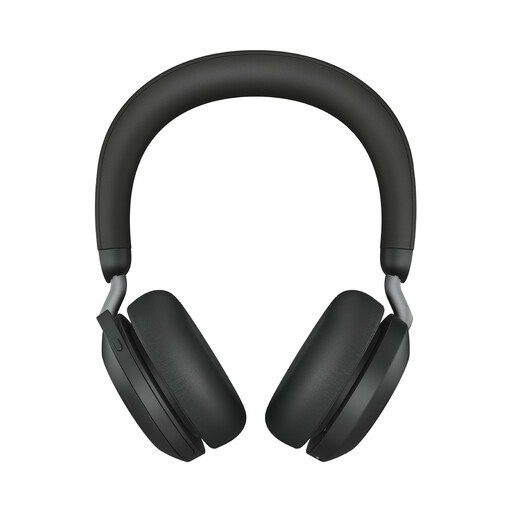
Jabra Evolve2 75 USB-A MS Teams Black
A wireless option for computer meetings if you’re looking for a USB-A receiver and a Teams version.
The product information lists Bluetooth 5.2, connection to two devices, eight microphones with beamforming and Teams certification.
Battery life is listed as up to 36 hours; actual usage time may vary depending on how you use it.
View product on Joybuy
 No image available
Logitech PC 960 USB headset
A wired option if you want to be able to see the mute status on the controls during meetings.
The product information lists stereo sound, a 240 cm cable and an adjustable microphone described as noise-cancelling.
View product on Joybuy
 No image available
Logitech H340 USB headset Black Wired
A wired option for computer calls if you’re looking for stereo sound and an adjustable microphone.
The product specifications list a 180 cm cable. The microphone is described as adjustable and designed to reduce background noise.
View product on Joybuy
 No image available
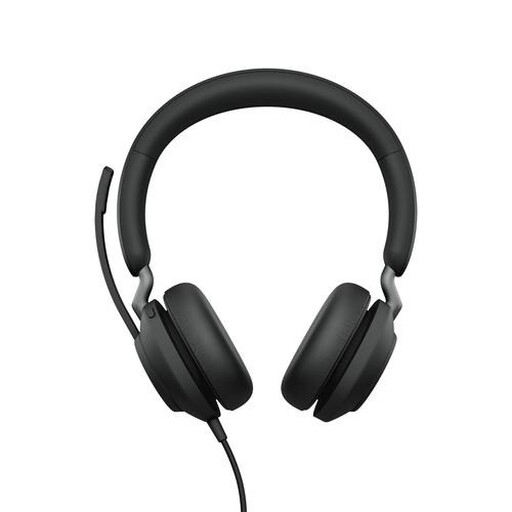
Jabra Evolve2 65 USB-A Black MS Mono
A wireless mono version for anyone who wants to connect via USB-A and keep one ear free to follow conversations in the room.
The product information lists Bluetooth 5.0 and a USB-A Bluetooth adapter.
View product on Joybuy
 No image available
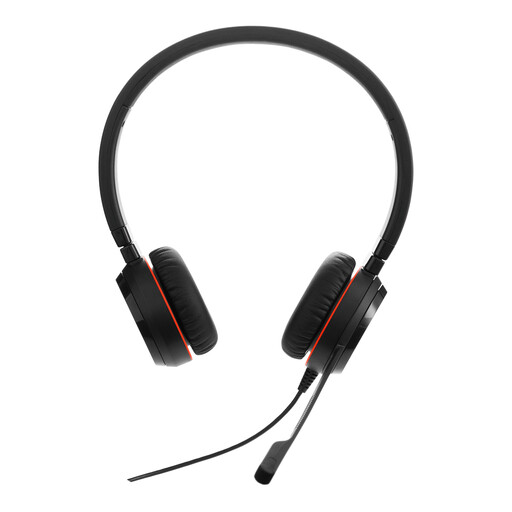
Jabra Evolve 30 II MS Stereo
A wired stereo version for computer calls, supplied with the LINK MS controller.
The product information lists a 3.5 mm connection used with that controller and a 0.95 m cable.
View product on Joybuy
Frequently asked questions
Do I need a stereo headset if people beside me are also discussing the design brief?
Not necessarily: HP Poly describes mono as an option that leaves one ear free. If people around the table need to speak directly to remote participants themselves, look into shared room audio rather than relying on your headset’s microphone.
What can I check if people can’t hear me through a wired headset?
First check that the USB plug is connected properly and that mute is off. For the H390, Logitech then recommends checking the computer’s and meeting app’s input and output settings; Jabra recommends positioning the microphone close to your mouth. These instructions apply to the models mentioned.
Does a mute button on a headset always work with Microsoft Teams?
No, don’t assume it does just because there’s a physical button. Microsoft describes mute-status synchronisation for personal peripherals certified for Teams; check the certification of the exact model and the Teams client you’re using.
What can I do if the fit isn’t right after buying online or the headset develops a fault?
For online purchases from a business in the Netherlands, you generally have a 14-day cooling-off period, subject to legal exceptions, according to the Dutch government. You also have the right to a product that meets reasonable standards if it’s faulty. The Dutch government states that there is no fixed statutory guarantee period in the Netherlands and that you should contact the seller if there’s a fault.


