What should you look for?
Stereo
Choose this if: you want to use both ears to focus on speakers and instructions from your computer.
Bear in mind: how much sound from your surroundings the earcups let through; this varies by design.
Mono
Choose this if: you also want to hear someone or something in your surroundings during the lesson.
Bear in mind: background noise may distract you more easily when only one ear is covered.
| What to consider |
What should you check? |
Who is this most relevant to? |
| Speaking clearly |
Check that you can position and mute the microphone. Do a quick speaking test in your lesson app. |
If I often take part in dialogues, I want to position and mute my microphone quickly. Around 29% of consumers say speaking clearly is their top priority. |
| Hearing other participants clearly |
Compare mono and stereo, and consider the fit and seal of the ear cushions. |
If I want to follow instructions and different speakers clearly, I pay attention to how the headset reproduces the lesson audio. Around 23% of consumers put hearing other participants first. |
| Comfort during the lesson |
Look at how adjustable the headband and ear cushions are. A product description alone can’t predict how a headset will fit you. |
For long lessons, I want to wear a headset without the fit distracting me. Around 18% of consumers say wearing comfort is their top priority. |
| Connection and app |
Check whether the exact model uses USB-A or USB-C, then select the headset as both the microphone and speaker in your lesson app. |
If I want to use my computer without extra connection accessories, I check the port and model before buying. Around 18% of consumers put a suitable connection and easy set-up first. |
| Cost and features |
Check the connection, microphone, mute controls and fit of the exact model before weighing up its features. |
If I’m looking for a practical headset for lessons, I don’t want to pay for features I don’t need. Around 12% of consumers say useful lesson features within their budget are their top priority. |
A noise-cancelling microphone affects what others hear from your surroundings; the earcups partly determine how much background noise you hear. Zoom makes the same distinction in its advice on headset audio. Check each separately rather than relying on the term ‘noise cancelling’ alone.
The connection depends on the exact model: the same model name can refer to different USB variants. Microsoft Support recommends selecting the connected microphone and speaker separately in Teams; check this in the meeting app used for your lesson too.
USB headsets at Joybuy
This selection focuses on wired USB headsets for listening and speaking during a group lesson.
 No image available
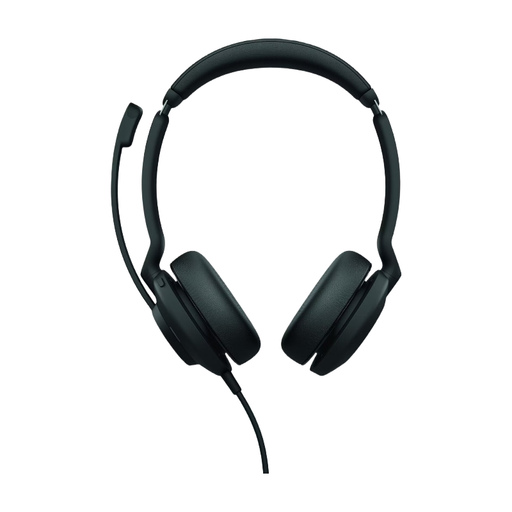
Jabra Evolve2 30 SE
Worth considering if you want to switch between listening and speaking during a group lesson.
View at Joybuy
 No image available
Logitech PC 960 USB
Worth comparing if you’re looking for a wired headset for listening and speaking during lessons.
The product name describes it as a USB headset.
View at Joybuy
 No image available
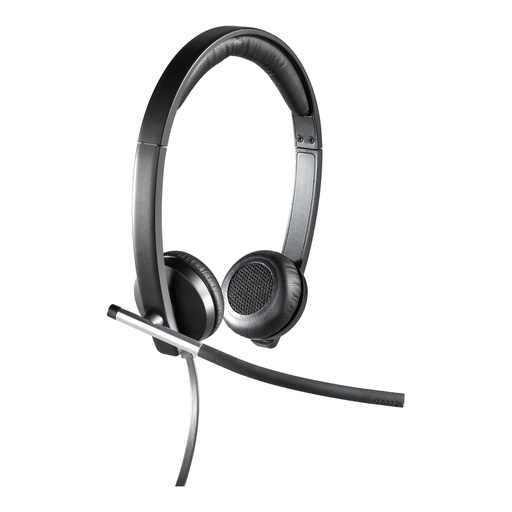
Logitech H650e Stereo
Worth considering if you want to listen through both earcups during lessons with several participants.
The product name describes it as a stereo headset with a wired connection.
View at Joybuy
 No image available
Logitech H340 USB headset, black, wired
Worth considering if you’re looking for a wired USB headset for a lesson where you’ll be listening and speaking.
The product name describes it as a black USB headset with a wired connection.
View at Joybuy
 No image available
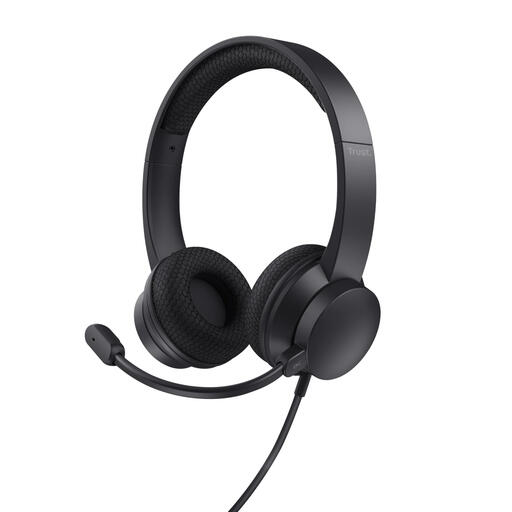
Trust Ayda wired headset, USB Type-A
Worth considering if you want to be able to mute quickly during speaking exercises.
The product name describes it as a wired headset with USB Type-A.
View at Joybuy
Frequently asked questions about USB headsets for group lessons
How can I prevent echo when several learners join?
Check that you’re not using your computer audio and phone audio at the same time. Zoom also lists speakers that are too close to microphones and several active computers in the same room as possible causes. If needed, switch off the extra audio source.
Why can’t the group hear my pronunciation clearly through my headset?
Select the connected headset as both the microphone and speaker in your lesson app, then do a quick speaking test. Zoom warns that audio filters can cause problems if the lesson needs the full recorded sound. Only adjust these settings if a test shows that doing so helps with your lesson.
How do I look after a headset for regular lessons?
Check the fit and condition of the ear cushions. If the manufacturer offers replacement cushions for your version, make sure they fit that exact model; don’t assume they’re interchangeable.
What are my rights if a headset I bought online doesn’t suit me or breaks?
For an online purchase in the Netherlands, you’ll generally have a statutory 14-day cooling-off period after delivery; check the applicable terms and exceptions. ACM ConsuWijzer also explains that your statutory guarantee rights are separate from any manufacturer’s warranty. If a product breaks sooner than you could reasonably expect with normal use, contact the seller to discuss a solution.
Does a CE logo prove that a headset sounds good?
No. The Dutch government explains that CE indicates a product complies with the relevant EU rules; it isn’t a quality mark. So don’t judge microphone quality or suitability for a language lesson by the CE logo.


