
Joining on your own from the room
You’re the only person on the call and want your own microphone, clear audio and a button you can press to mute quickly. Logitech and Poly describe headsets with features for individual callers.


A USB headset with the right connector, a boom microphone and mute controls is a good fit for one person calling from a small room. Choose mono or stereo depending on what you find comfortable to wear. If several people need to join in around the table, consider a USB speakerphone and check where it should be placed. Manufacturer specifications can help you compare features, but they are not a comparative performance test.
You’re the only person on the call and want your own microphone, clear audio and a button you can press to mute quickly. Logitech and Poly describe headsets with features for individual callers.
Several people want to join the same conversation. First decide whether a speakerphone for the group would be more suitable than a headset for one wearer; Jabra describes the Speak2 40 as a speakerphone for this use.
You want to know before buying whether the headset will fit the USB ports on your devices. Poly and EPOS describe specific versions with USB-C and a USB-A connection option.
A good fit if: you’re joining on your own and want to transmit your voice through a boom microphone.
Bear in mind: the headset is designed for the wearer and isn’t intended to pick up voices from around the whole table.
A good fit if: you switch between devices with different USB ports; Poly and EPOS describe these connection options for specific versions.
Bear in mind: check the exact model and version; connections and features don’t necessarily apply across the whole product range.
A good fit if: several people in the room need to listen and speak. Jabra recommends placing the Speak2 40 in the middle of the table, 0.5 to 2.3 m from each participant, for the intended audio quality.
Bear in mind: the placement instructions are the manufacturer’s advice for this model and don’t guarantee the same results in every room.
| What to consider | What should you check? | Who should pay extra attention? |
|---|---|---|
| One caller’s voice | Check the microphone, mute controls and connection on the version you’ve chosen. | If I’m calling on my own, I want to transmit my voice through my own microphone and be able to mute myself. Around 31% of consumers give top priority to being able to hear one speaker clearly. |
| Joining in around the table | Check whether several people need to speak and where the manufacturer recommends placing the device. | If several family members want to join from the same room, I’m looking for a device that serves the table rather than just one wearer. Around 31% of consumers care most about enabling several people to take part. |
| USB connection | Compare your device’s USB-A or USB-C port with the connector and any adapter supplied with the exact version. | If I switch between devices, I want to make sure the connection fits and that my calling app has selected the right microphone and speaker. Around 23% of consumers prioritise the connection and device settings. |
| Fit and controls | Consider whether you want mono or stereo and where the mute and volume buttons are located. | If I wear the headset for longer, the fit and easy-to-reach controls matter. Around 15% of consumers give top priority to wearing comfort and controls. |
A headset with a boom microphone serves the wearer; a speakerphone is designed for people around the table. They’re for different situations.
First decide who needs to speak and listen from the room. If everyone needs to take part, consider a speakerphone and check the recommended placement.
If several people need to take part, you may need a separate speakerphone as well as a headset for one wearer.
USB connections and included adapters vary by model and version.
Compare your computer’s port with the connector and any adapter supplied with the exact product.
Microphone noise reduction affects what others hear of your voice and background noise; it doesn’t tell you how much surrounding noise you’ll hear yourself.
Assess the microphone function, fit and ear cushions separately. Don’t assume a product specification proves a measured effect in your room.
Logitech describes the H390 as a USB-A headset for one caller; Zone Wired is a separate headset range.
The Blackwire 3300 series includes different styles and versions. Poly describes the Blackwire 3320 8X220AA as a stereo version with USB-C and a connected USB-A adapter.
The IMPACT 100 UC Stereo USB-C+A, item number 1001420, is a wired stereo version with USB-C and a USB-A adapter.
The Speak2 40 is a USB speakerphone for several people around one table, not a headset for one wearer.
This selection features headsets for one wearer with a USB connection or USB-A designation. If several people need to join in around the table, a speakerphone is a different type of device to consider.
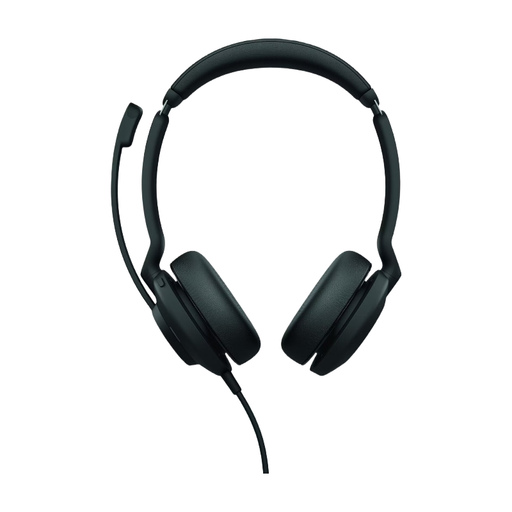 No image available
A headset for one wearer who wants to make calls, with mute and call controls.
Stereo; two integrated microphones; USB-A connectivity; memory foam ear cushions.
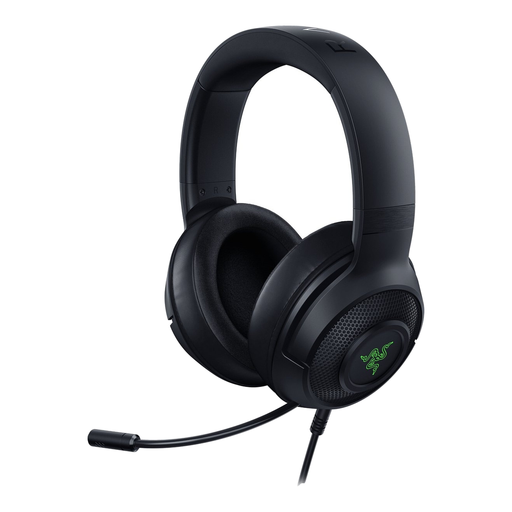 No image available
A wired USB headset with a microphone; check that the connections are compatible with the device you’ll use for the call.
The description lists use with PC and PS4, a cardioid microphone and a weight of 285 g.
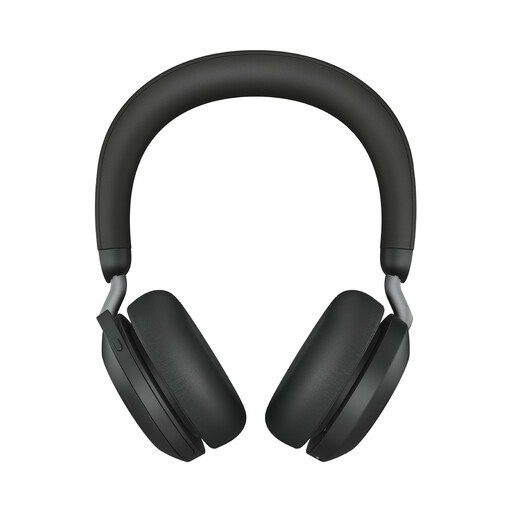 No image available
A headset for calls; check that the USB-A and Teams designation suits your device and calling environment.
The description lists Bluetooth pairing with two devices, eight microphones, active noise cancellation and up to 36 hours of battery life.
 No image available
A wired USB headset with an adjustable boom microphone and mute controls, designed for one wearer on a call.
Stereo sound; mute indicator; 240 cm cable.
 No image available
A wired USB headset for internet calls, with an adjustable microphone and mute controls.
Stereo sound; volume and mute controls; plug-and-play connection.
A headset with a boom microphone is designed for the wearer. If several people in the room need to speak, consider a speakerphone for the table; Jabra recommends placing the Speak2 40 in the middle of the table, 0.5 to 2.3 m from each participant, for the intended audio quality. This is the manufacturer’s advice for that model.
Check that the USB connector fits, then select your preferred microphone and speaker in your calling app. Microsoft describes these separate choices for Teams; check whether your app offers the same settings and test that the mute control works.
Logitech describes the H390 as plug-and-play, and Poly describes the Blackwire 3300 series as plug-and-play for USB devices. Before an important call, check your app’s audio settings and make sure the cable, ear cushions and boom microphone are in place; features can vary by version.
According to ACM ConsuWijzer, online consumer purchases generally come with a 14-day cooling-off period from delivery. In addition, if a product breaks during normal use sooner than you could reasonably expect, the seller must resolve the issue under the applicable terms. A manufacturer’s guarantee doesn’t replace your statutory rights; check the returns policy before buying too.