
Teacher with a hybrid group
You’re leading a discussion around a table, with someone joining remotely. Decide whether that person needs to hear only you or the learners too; this will determine the right microphone setup.


For a lesson where the teacher mainly speaks to someone remotely, a wired USB headset with a boom microphone is a good fit. Just check that the USB connection, mute function and fit suit your setup. If the remote participant also needs to hear learners around the table, don’t rely on a single headset microphone: you’ll need a separate room audio capture solution. A mono headset leaves one ear free so you can keep track of people in the room, while a stereo headset uses both ears for audio from the computer.
You’re leading a discussion around a table, with someone joining remotely. Decide whether that person needs to hear only you or the learners too; this will determine the right microphone setup.
You want a reliable connection to the computer, a microphone close to your mouth and a mute function you can use quickly during activities.
You need to follow both the audio from the computer and the people in the room. A mono headset may suit you if you want to keep one ear free; try the setup to see whether you can follow both conversations clearly.
First decide whose voices need to be heard at the other end. Then choose a fit, connection and controls that work for the teacher and the computer used for the lesson.
| What to consider | What should you look for? | Who is this most important for? |
|---|---|---|
| Hearing all the voices you need | Decide whose voices need to be heard remotely and test from the seats you’ll be using; consider a separate room microphone for group recording. | If I want learners around the table to be heard remotely too, the recording needs to pick up more than just my own microphone. Around 25% of consumers prioritise making the group audible. |
| Making the teacher easy to understand | Check that the microphone boom is adjustable and test your voice in the room where you’ll be teaching. | When explaining things and giving feedback, I want the person I’m speaking to to hear me clearly. Around 25% of consumers give the teacher’s clarity top priority. |
| Staying connected with people in the room | Compare mono and stereo during a real exchange, not just while playing audio. | If I want to notice responses around the table while listening, keeping one ear free may help. Around 20% of consumers prioritise staying connected with people in the room. |
| Connection and controls | Check which USB port is available, whether an adapter is included and how to mute the microphone and adjust the volume. | I want to connect the headset to the computer used for the lesson without needing an adapter that isn’t included, and be able to mute during a conversation. Around 15% of consumers start with connection and controls. |
| Comfort | Try the headband and ear cushions during a session of a similar length. | During longer activities, I want the headband and ear cushions to feel comfortable. Around 15% of consumers prioritise fit. |
A microphone worn by the teacher won’t necessarily pick up the voices of everyone around the table.
Decide in advance who the remote participant needs to hear, then test how clearly they can hear people from every seat you’ll be using.
Connections vary by model. A headset won’t plug directly into a computer port if its connector isn’t designed for it.
Compare the ports on the computer used for the lesson with the headset connection and the stated contents of the exact model’s packaging.
An incompatible connection may mean buying a separate adapter or exchanging the headset.
A name such as Ayda or Blackwire 3220 doesn’t always specify the exact version, connection or package contents.
Check the full model number and version before comparing different options.
The H390 is a wired USB-A option; the H570e is available in separate mono, stereo, UC and Teams versions.
The Ayda USB-ENC is an on-ear headset that mutes the microphone when you flip the boom up.
The Blackwire 3220 series includes wired business headsets; HP specifically describes a stereo version with USB-C and a USB-A adapter.
The IMPACT 100 is a wired business headset range, with versions that may include a USB-C to USB-A adapter.
The Evolve 20 is a wired USB headset range for calls, with mono and stereo versions.
These Joybuy products are wired stereo USB headsets for calls where the teacher uses a computer connection. If learners around the table also need to be heard remotely, you’ll need a suitable room audio solution.
 Image unavailable
A wired stereo USB headset for a teacher who mainly wants to follow the other person through the computer. A headset microphone worn by the teacher isn’t a substitute for a separate solution to pick up voices around the table.
 Image unavailable
A wired stereo USB headset for calls where the teacher mainly listens to audio from the computer. Test the recording in the teaching room if the remote participant also needs to hear the learners.
 Image unavailable
A wired stereo USB headset for a teacher who mainly speaks to one person through the computer. You’ll also need a suitable room audio solution to record the whole group.
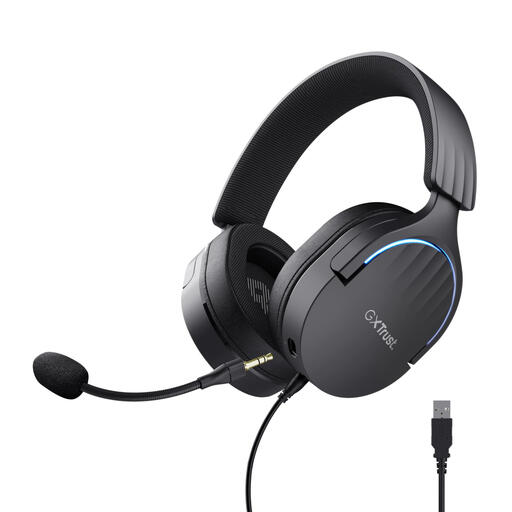 Image unavailable
A wired stereo USB headset for calls where the teacher mainly wants to follow the connection through the computer. If learners around the table also need to be heard, consider a separate room audio solution.
 Image unavailable
A wired stereo USB headset for calls on a computer with a compatible connection. Check that USB Type-A is suitable for the computer used for the lesson; the headset microphone is designed for the wearer, not as a replacement for group recording.
Don’t assume it can. Headset microphones sit close to the wearer; Logitech describes its separate MeetUp microphones as a way to capture audio from further across a meeting room. Test the setup from the seats you’ll be using and choose a suitable room audio solution for group recording. The MeetUp expansion microphone works as part of that system, not on its own.
Connect the right USB version, select it as the input and output device in your calling software, then test the microphone, playback and mute function before the session. The controls available vary by model.
Check the headband adjustment and the position of the ear cushions. When buying, also check the returns policy; a low stated weight doesn’t guarantee a comfortable fit.
According to the Dutch Data Protection Authority, schools have duties including accountability and providing information when they process personal data. The presence of a recording function in a headset or meeting app doesn’t automatically mean recording is permitted; assess the purpose, legal basis and specific recording in advance.
No. The European Commission explains that the manufacturer uses the CE mark to indicate that a product complies with the applicable EU product rules; there is no central EU body that grants general approval for this. The rules that apply depend on the product.