A USB headset is a good fit if you’re speaking from the classroom computer as the organiser and want your voice to be heard online or in a recording. If you also need to record readers elsewhere in the classroom, or need to amplify speech for those present, first decide what microphone and sound setup you need. Then check the headset’s connection and mute controls, and listen back to a test recording in the classroom.
Who is a USB headset suitable for?
Organiser with online listeners
You’re reading poetry yourself or introducing poems using a computer. Compare the microphone boom, mute controls and connection on the exact model. Logitech and Trust list these features for their respective headset models.
Organiser with several readers
You want to make voices from different parts of the classroom audible or record them. First decide who will use the microphone and where the sound needs to go; a personal headset won’t automatically pick up voices elsewhere in the room.
Organiser giving a long presentation
You’ll be speaking for a long time or switching frequently between speaking and listening. Consider the headset style, fit and how easy it is to reach the mute control; if possible, try it out during a reading.
What should you look for when choosing one?
First decide who will be speaking and listening, and where the sound needs to be heard. Only then choose between a personal headset and a setup for the whole classroom.
Personal wired USB headset
Choose this option: if you’re speaking from a computer and mainly need your voice to be heard online or in a recording.
Bear in mind: a cable limits how far you can move, and the microphone is designed to pick up the wearer’s voice.
Microphone and sound setup for the classroom
Choose this option: if several people will speak from different parts of the room or those present need to hear amplified speech.
Bear in mind: the placement and connections need to suit the room and the classroom computer.
| What to consider |
What to look for |
Who is this most relevant to? |
| Who needs to be heard? |
Work out who will be speaking, who will be listening, and whether the sound needs to be heard online, in the classroom or in both places. |
If I also want readers elsewhere in the classroom to be heard, the setup needs to include more than my own headset; around 29% of consumers rank coverage for speakers and listeners as their top buying priority. |
| How clearly your voice comes through |
Record a short sample where you plan to speak, then listen back with the usual classroom noise in the background. |
If the words and nuances of my own reading need to come across clearly, I want to assess the result in the classroom itself; around 29% of consumers put the clarity of their own voice first. |
| USB connection |
Check the classroom computer’s port, the model number and which adapter is included with the exact model. |
If I need to connect the headset to the classroom computer, I’d rather check the plug and packaging than rely on the product range name alone; around 24% of consumers cite compatibility as their top buying priority. |
| Fit and muting |
Try the headset during a reading and test how the mute function works with the app you’re using. |
For a longer reading, I want a comfortable fit and to be able to mute quickly when someone else’s turn comes round; around 18% of consumers give comfort and controls top priority. |
Common pitfalls
-
Assuming a personal headset will pick up every voice in the classroom
A headset is designed to pick up the wearer’s voice. That doesn’t tell you whether it will record other readers or let everyone present hear the reading clearly.
Beforehand, decide where each voice needs to be heard and what microphones and speakers you’ll need.
For several speakers, you may also need a suitable microphone and speaker setup.
-
Assuming all versions and USB plugs are the same
Products in the same range can differ in their connections and controls. For example, Trust distinguishes between the Ayda USB and Ayda USB-ENC, so check the exact model.
Compare the manufacturer’s part number, port, plug and package contents before choosing.
-
Assuming a noise-cancelling claim guarantees a good recording
A product description won’t tell you how your voice will sound against the background noise in this particular classroom.
Record a short sample where you plan to speak and listen back before the reading begins.
Brands to consider
Logitech
The H390 is a personal USB headset for speaking through a computer.
- Logitech lists a rotating microphone boom and in-line controls for the H390.
- Check whether the version you’re choosing has USB-A or USB-C. The manufacturer’s description doesn’t show how well noise cancellation will work in your classroom.
Trust
The Ayda USB is a wired option for speaking yourself, with controls on the earcup.
- Trust says the Ayda USB microphone mutes when you flip it up, and the headset has a 1.8-metre cable.
- The noise-cancelling microphone is listed for the separate Ayda USB-ENC; don’t assume the standard Ayda USB has this feature.
HP Poly
The Blackwire 3200 series includes wired business headsets in different styles and connection options.
- HP lists mono and stereo versions, as well as an adjustable headband, within the series.
- The series description doesn’t mean that every style and connection is available on every individual model.
EPOS
The IMPACT 100 series is a range of wired headsets with versions for different connections and styles.
- EPOS lists mono and stereo versions, in-line controls and, for the versions described, a USB-C-to-USB-A adapter.
- Check the package contents for the version you’re choosing; manufacturer claims about comfort and calls aren’t an assessment of this classroom environment.
Jabra
The Evolve2 30 SE is a business headset option for calls through a computer.
- Jabra describes versions with two microphones and different UC and Teams variants.
- Check the exact version; the product description doesn’t show that it will pick up voices from elsewhere in the classroom.
Joybuy products for speaking through a computer
This selection focuses on wired headsets for speaking through a computer; check the connection and controls for each version.
 No image available
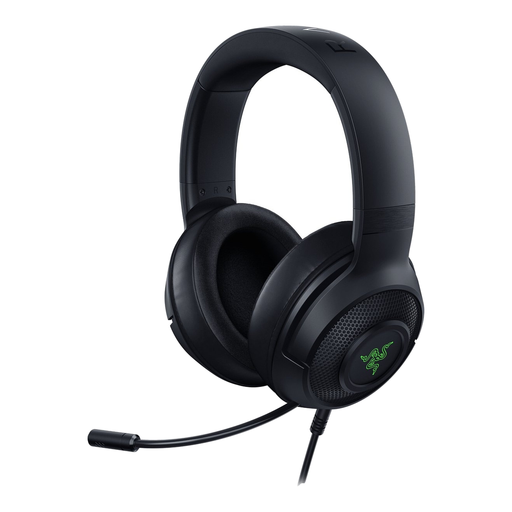
Razer Kraken V3 X
Could suit you if you’re speaking through a computer and looking for a wired headset.
The product name identifies a headset in black.
View at Joybuy
 No image available
Logitech PC 960 USB Wired Headsets
Worth considering if you’re looking for a wired USB headset for speaking yourself.
The product name specifies USB and a wired headset.
View at Joybuy
 No image available
Logitech H340 USB headset
Could work for speaking through a computer if you’re looking for a wired USB headset.
The product name specifies USB, a wired design and the colour black.
View at Joybuy
 No image available
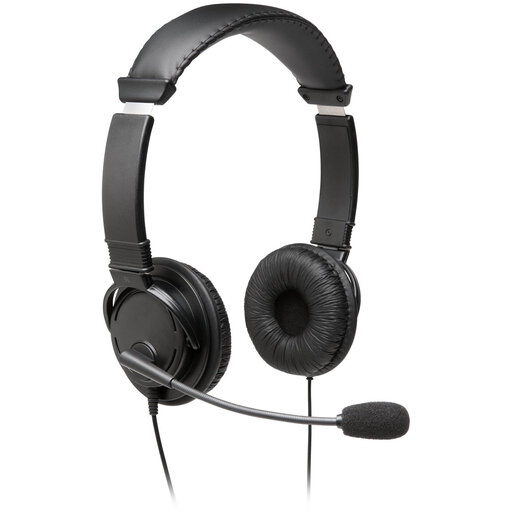
Kingston USB Hi-Fi headphones with microphone
Worth considering if you’re looking for USB headphones with a microphone for speaking yourself.
The product name specifies USB and a microphone.
View at Joybuy
 No image available
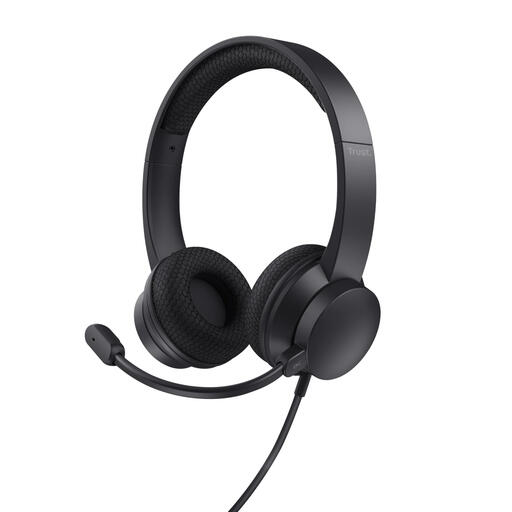
Trust Ayda USB Type-A headset, black
Could suit you if you’re speaking through a computer and looking for a wired USB Type-A headset.
The product name specifies USB Type-A, a wired design and the colour black.
View at Joybuy
Frequently asked questions
Can I use a USB headset to record readers at the other end of the classroom?
Don’t assume so: a personal headset is designed to pick up the wearer’s voice. If there are several speakers, first decide what microphone setup you need and make a test recording.
How do I test the microphone before the reading?
On a Windows computer, select the headset under Input, start a microphone test and play back the recording. Also check that the app has access to the microphone and that the headset isn’t muted.
Who should I contact if my headset is faulty?
Report a faulty product to the seller. According to the Dutch government, the seller must then provide a solution. In the Netherlands, there is no fixed statutory warranty period; what you can expect depends, among other things, on the product and normal use.
Can I read a protected poem aloud or record the event?
Auteursrecht.nl explains that, under certain conditions, an educational exception applies when a protected work is read aloud in class as part of the curriculum. A performance outside the curriculum or sharing a recording isn’t automatically covered. If the school processes data that can identify pupils, GDPR obligations also apply; assess the specific recording and publication plans separately.


