Choose a personal USB headset based on who you want to be heard: a microphone boom is designed for the wearer and won’t automatically make everyone at the table audible to remote participants. HP Poly describes the Blackwire 3310 as a mono model for anyone who wants to keep one ear free, while Logitech describes the H390 as a stereo headset that’s better suited to listening through a computer. Also check the USB connection, mute controls and fit to make sure they’re right for your classroom computer and how you’ll use it.
Who is a USB headset suitable for?
Speaker with remote participants
You’re presenting or discussing the design brief on a computer and want to be able to position and mute the microphone. Lenovo Netherlands and Logitech highlight clear speech and easy-to-reach controls as important for online conversations.
Discussion leader in the classroom
You’re speaking online but also want to follow what your classmates in the room are saying. HP Poly describes the Blackwire 3310 as a mono model that leaves one ear free.
User of a shared classroom computer
You move between workstations and want to check in advance that the USB plug will fit and that you can adjust the volume quickly. Logitech and Trust describe different USB versions and control options for their headsets.
What should you look for when choosing?
Mono USB headset
A good fit if: you’re speaking online and want to keep hearing the classmates beside you. HP Poly describes the Blackwire 3310 as a mono model that leaves one ear free.
Bear in mind: you’ll keep one ear free, but that means less sound isolation on that side.
Stereo USB headset
A good fit if: you mainly listen through your computer and rely less on conversations in the classroom. Logitech describes the H390 as having two ear cushions.
Bear in mind: if you also need to follow what’s being said in class, consider whether you’ll still hear clearly enough with both ears covered.
| What to consider |
What to look for |
Who it matters to |
| Making your voice heard |
Check the position of the microphone boom and whether the mute control is easy to reach. |
When I’m explaining the design brief online, I want my voice to come across clearly and to be able to mute the microphone quickly; around 31% of consumers put clear speech from their own microphone first. |
| Keeping up with what’s happening in class |
Compare mono and stereo models, and consider who needs to be able to speak through the computer. |
When I’m speaking online and want to follow what’s being said in the classroom at the same time, ambient sound matters; around 25% of consumers prioritise being able to hear their classmates in person. |
| Connecting to the computer |
Check that the USB plug fits and whether an adapter is included with the exact model. |
When using a shared classroom computer, I want to connect without any hassle; around 25% of consumers say that a compatible connection is their top priority. |
| Comfort and volume |
Look for adjustability and easy-to-reach volume controls; consider both listening volume and how long you’ll be listening. |
If I’m wearing the headset for a long time, I want it to feel comfortable and the volume to be easy to adjust; around 19% of consumers put listening comfort first. |
Common pitfalls when buying a USB headset
-
Assuming the Ayda USB and Ayda USB-ENC are the same model
Trust lists separate item numbers: the explicit claim about a noise-cancelling microphone applies to the Ayda USB-ENC, item 25089, and doesn’t automatically apply to item 25088.
Before buying, compare the full model name and manufacturer’s item number.
-
Expecting the headset microphone to pick up everyone at the table
The microphones described are designed for the wearer. If several people in the room need to speak online, you may need additional audio equipment.
First decide who needs to be heard, then test the setup with the conferencing software you use.
-
Looking only at the product range
A model range may include different USB connections and versions. So, choosing a product from the same range doesn’t guarantee that its plug or included accessories will work with your computer.
Check the connection, full model number and what’s included with the version you’ve chosen.
USB headset brands to compare
Logitech
The H390 is a wired computer headset worth comparing if you’re looking for a personal headset with in-line controls.
- Logitech lists a positionable microphone boom and volume and mute controls for the H390. It’s available with USB-A or USB-C; check which version you’re choosing.
- A manufacturer’s mention of noise reduction doesn’t, by itself, tell you how voices will sound in your classroom.
Trust
The Ayda USB and Ayda USB-ENC are separate USB headsets for computer conversations.
- For the Ayda USB, item 25088, Trust lists a flip-up microphone for muting and a USB-C-to-A adapter.
- The explicit claim about a noise-cancelling microphone applies to the Ayda USB-ENC, item 25089. Check the version before taking this feature into account.
Jabra
The wired Evolve2 30 range is worth considering if you’re looking for a personal headset for conversations.
- Jabra describes a two-microphone system and soft ear cushions.
- Jabra lists a separate Teams-certified version. Manufacturer descriptions don’t guarantee the same results for every model or classroom discussion.
HP Poly
The Blackwire range includes several versions; the Blackwire 3310 mono is worth considering if you want to keep one ear free.
- HP lists a USB-C cable with a connected USB-A adapter for the Blackwire 3310 mono.
- Other Blackwire model numbers and bundles may refer to different versions. So, check the full item number.
USB headsets on Joybuy for speaking and listening on your computer
These USB headsets are designed for speaking and listening on a computer. For each model, check that the connection and fit are right for your classroom computer and the way you want to keep up with what’s happening in class.
 No image available
Jabra Evolve2 30 SE
An option for anyone who mainly wants to speak and listen through a computer during an online discussion.
View at Joybuy
 No image available
Logitech PC 960 USB
A wired USB headset to consider for computer conversations; check that the plug fits the classroom computer you’ll be using.
View at Joybuy
 No image available
Logitech H340 USB headset, black
A wired USB headset for computer use; check in advance that the connection matches the port available.
View at Joybuy
 No image available
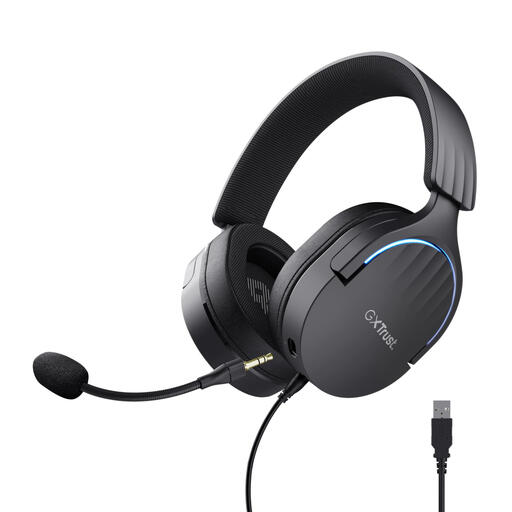
Trust GXT 490 FAYZO Over-Ear 7.1 USB
The product name describes an over-ear USB gaming headset; consider whether this style will suit the planned lesson length and let you keep up with conversations in the classroom.
View at Joybuy
 No image available
Trust Ayda wired USB headset
An option for anyone looking for a wired headset with a microphone; check the full version and which adapter is included with the model you choose.
View at Joybuy
Frequently asked questions about USB headsets for classroom discussions
Can one personal USB headset make everyone in the design group audible online?
Don’t assume it can: the microphones described are designed for the wearer. First work out how each person in the room will be heard by the online participants.
What should you check if the microphone doesn’t work after you plug it in?
Check the connection, test the microphone and make sure the correct microphone is selected on the computer. Microsoft Support recommends these steps for microphone problems; also check that the headset’s mute control is switched off.
How can you use a headset comfortably and responsibly?
Adjust the headband, keep the volume no higher than necessary and take breaks. The Consumers’ Association points out that both volume and listening time affect the risk of hearing damage.
Is CE marking automatically required for every USB headset?
Not automatically for every version: according to the European Commission, CE marking is required only for products covered by EU rules that specifically require it. The manufacturer is responsible for identifying and complying with the applicable rules.


