Start with a wired USB headset that has a connection compatible with the school computer and can be selected as both the microphone and audio output in your calling app. A stereo model keeps the conversation in both ears, while mono leaves one ear free so you can hear what is happening in the classroom. A microphone mute control can be useful, but a noise-cancelling claim doesn’t guarantee that other voices will be filtered out.
Who is this buying guide for?
Calling from a noisy classroom
You want your family to hear you clearly and to be able to mute the microphone quickly when you’re not speaking. Logitech and Trust describe mute controls on specific models, but that alone doesn’t tell you how well a headset handles voices in a classroom.
Calling with privacy in mind
You want to hear the conversation through your headset rather than the classroom speakers. The rules that apply and how to prevent others from appearing on screen also depend on the school’s policy and the set-up.
Using a school computer
You want to know in advance whether the computer has a USB-A or USB-C port. Connections and wearing styles can vary between models in the same headset range, so check the full model name and version.
What should you look for when buying?
Wired stereo USB headset
A good fit if: you want to hear the family call through your headset and will be sitting at a fixed computer workstation.
Bear in mind: both ears are covered, so you’ll hear less of what’s happening in the classroom around you. HP describes stereo as one of the wearing styles available in the Blackwire 3200 series.
Wired mono USB headset
A good fit if: you want to keep one ear free to hear what’s happening in the classroom during the call. HP describes mono as a style that leaves one ear uncovered.
Bear in mind: you’ll also hear more background noise through your uncovered ear. Check that the version you choose is actually mono.
First check the USB port and the wearing style you want, then consider the microphone position and mute control. The percentages below show which concerns are most important to consumers in this classroom scenario.
| What to consider |
What should you look for? |
Who is this more relevant to? |
| Speaking clearly |
Check whether the microphone is adjustable and how to mute it; test the microphone where you plan to use it. |
If I’m calling from a noisy classroom, I want to be able to position my microphone and mute it quickly. Around 33% of consumers put speaking clearly first. |
| Listening privately |
Select the headset as the audio output in your calling app and check that the sound isn’t coming through the classroom speakers. |
If I don’t want the conversation to be heard throughout the classroom, I’ll focus on the audio output and camera set-up. Around 27% of consumers put private listening first. |
| Compatible connection |
Check which USB port is available, the full model name and whether any adapter included is compatible with that specific version. |
If I’m using a school computer, I want to know the headset will fit the available port before I choose one. Around 27% of consumers put connection compatibility first. |
| Fit and volume |
Consider adjustability and whether you want a mono or stereo style; set the volume to a comfortable level. |
If I’ll be wearing the headset for a long time or choosing one for a younger user, I’ll consider the fit and volume. Around 13% of consumers put wearing comfort first. |
Common pitfalls
-
Assuming noise cancellation guarantees privacy
Manufacturers describe microphone features, but that doesn’t guarantee that other voices in a classroom will be filtered out. The audio output you select also determines whether the conversation comes through your headset or the speakers.
Make a test call where you plan to use the headset. Check both the microphone and audio output in your calling app, and test the mute control.
-
Assuming every version is the same
A range can include different USB connections and mono or stereo versions. For example, Trust distinguishes between the Ayda USB and Ayda USB-ENC.
Compare the full model name, connection and wearing style. Also check whether any adapter mentioned is actually included with the version you’ve chosen.
-
Thinking only about sound during a classroom call
Other people may unintentionally be seen or heard. The privacy guidance from the Dutch Data Protection Authority applies to video calls used by educational institutions; it doesn’t automatically determine the arrangements for a private call.
Agree the place and timing with the school, and avoid pointing the camera or microphone at other people unnecessarily.
Relevant brands
Logitech
Logitech describes the H390 as a USB computer headset with in-line controls, and the H340 as a simpler USB-A alternative for computer calls.
- For the H390, Logitech lists an adjustable headband, a positionable microphone, and in-line mute and volume controls.
- The H390 described has a USB-A connection and a 1.9 m cable. Check the version and available port; manufacturer descriptions aren’t independent sound measurements.
Trust
Trust offers several wired Ayda versions for computer calls.
- For the Ayda USB-ENC, Trust lists an adjustable headband and a microphone that flips up to mute.
- The noise-cancellation claim applies to the USB-ENC version and doesn’t automatically apply to the standard Ayda USB. Also check which connection is included.
HP Poly
The Blackwire 3200 series includes wired UC headsets in mono and stereo styles.
- HP describes mono as a style that leaves one ear free, while stereo covers both ears.
- Series information doesn’t confirm that every Blackwire 3220 version has the same connection, adapter or wearing style. Check the exact model.
Jabra
The Evolve2 30 range includes models for computer calls with different connections and wearing styles.
- Jabra lists two microphones and sound-isolating ear cushions for the Evolve2 30 described.
- These are manufacturer descriptions, not independent tests in a classroom. Check the full model name, USB connection and mono or stereo version.
USB headsets at Joybuy
This selection features wired USB headsets for computer calls, with a focus on stereo models. Before buying, check that the connection on your chosen version is compatible with your computer.
 No image available
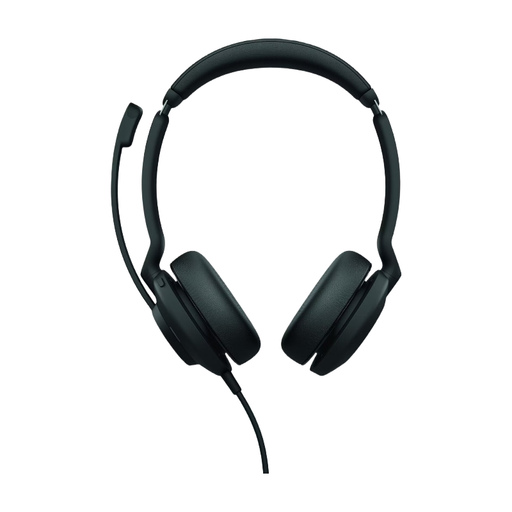
Jabra Evolve2 30 SE
A wired stereo headset for computer calls, with in-line volume and mute controls.
The description lists USB-A, two integrated microphones and memory foam ear cushions. Check that USB-A is compatible with the computer you use.
View at Joybuy
 No image available
Logitech PC 960 USB headset
A wired USB headset for computer calls, with stereo sound and an adjustable microphone.
The description lists a mute control with an indicator, an adjustable headband and soft ear cushions. Check which type of USB connection the version uses.
View at Joybuy
 No image available
Logitech H340 USB headset, black
A wired USB headset for computer calls, with an adjustable microphone.
Logitech describes the H340 as a USB-A model. The product description also mentions digital stereo audio; check that it’s compatible with the port available.
View at Joybuy
 No image available
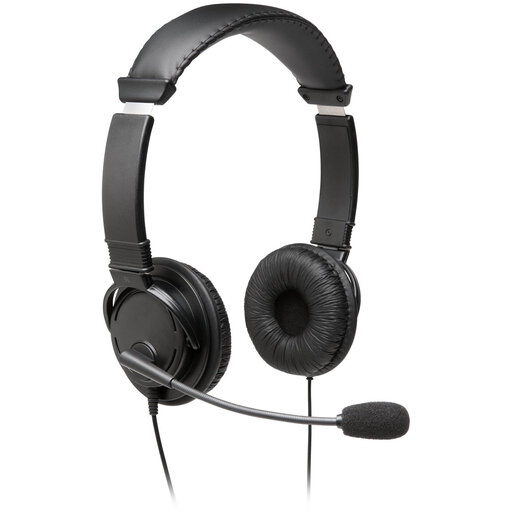
Kingston USB Hi-Fi headset with microphone
A USB headset with stereo sound and a rotating microphone boom for computer calls.
The description lists an adjustable, padded headband. Check that it’s compatible with your computer before choosing.
View at Joybuy
 No image available
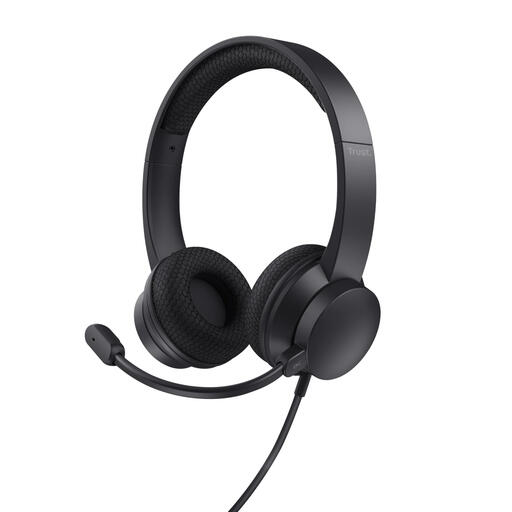
Trust Ayda wired USB headset, black
A wired stereo headset for video calls, with volume and mute controls.
The description lists a microphone that flips up to mute and a USB-A connection with a USB-C adapter cable. Check that the adapter supplied with this version is compatible with your device.
View at Joybuy
Frequently asked questions
How do I set up a USB headset for a family call?
Connect the headset to a compatible port and select it as both the microphone and audio output in your calling app. Make a test call, position an adjustable microphone near your mouth and check that the mute control works.
Can I make a video call with family from a classroom?
Check with the school: the arrangements for a private call depend on its policy and the circumstances. The Dutch Data Protection Authority provides schools with privacy guidance for video calls used by educational institutions; this doesn’t automatically determine whether a separate call is permitted. Make sure other pupils aren’t seen or heard unnecessarily.
How can I tell whether the headset is compatible with the school computer?
Compare the USB connection on the exact headset version with the available port on the computer. Also check whether any adapter mentioned is actually included with that version; connections can vary within the same range.
Is mono or stereo better for a classroom?
Mono may suit you if you want to keep one ear free to hear what’s happening in the classroom; stereo may suit you if you want to use both ears for the call. With mono, you’ll also hear more background noise. Check the wearing style of the exact version and select the headset as your audio output.
What if I’m not happy with the headset or it breaks too soon?
For online consumer purchases in the Netherlands, you generally have up to 14 days after delivery to change your mind; exceptions and applicable returns terms may apply. You’re also protected by statutory rights if a product doesn’t perform as you could reasonably expect under normal use. ACM ConsuWijzer explains that the seller is then responsible for providing a suitable solution at no cost; this doesn’t mean there’s a fixed guarantee period for this headset.


