
Discussion leader with a hybrid class
You want online participants to hear contributions from pupils in the classroom too. So first decide whether you need audio for the whole room; Microsoft describes room audio as a separate set-up choice.


Choose a personal USB headset if you mainly need your own voice to come through online and want to hear participants through your computer. Check the microphone boom, mute button, connection and fit of the exact model. If pupils in the classroom also need to join in online, consider a separate audio set-up that covers the room. A mono headset leaves one ear free so you can hear the class, but it won’t automatically make voices in the room clear to online participants.
You want online participants to hear contributions from pupils in the classroom too. So first decide whether you need audio for the whole room; Microsoft describes room audio as a separate set-up choice.
You do most of the talking and want to hear participants through your computer. A microphone boom and easily accessible mute control can be useful selection criteria; Logitech lists these features for the H390 USB-A model.
You switch between online participants and responses in the classroom. A mono headset leaves one ear free; HP describes this wearing style for the Poly Blackwire 3310 8X216AA.
First decide whose voice needs to come through clearly online, then choose between mono and stereo, and finally check the connection and controls on the exact model.
Suitable when: you do most of the talking and want to hear remote participants through both earcups.
Bear in mind: the microphone is designed for the wearer, not automatically for the whole class; the cable limits where you can stand.
Suitable when: you want to hear online participants while keeping one ear free for the class.
Bear in mind: leaving one ear free won’t make pupils’ voices clear to online participants.
Suitable when: several people in the classroom need to speak to online participants.
Bear in mind: the microphone and speaker need to suit the room; test the set-up for echo or feedback too.
| Consideration | What should you check? | Who is this important for? |
|---|---|---|
| Group participation | Decide who needs to speak online. For a hybrid discussion, test speaker positions and the room audio. | If pupils in the classroom need to join in online too, you’ll want to know whether the set-up picks up their voices. Around 33% of consumers prioritise group participation. |
| Your own voice | Check the position of the microphone boom and the mute control; make a test call before the discussion. | If you’re mainly leading the discussion, you’ll want online guests to hear you clearly. Around 27% of consumers prioritise their own voice. |
| Keeping in touch with the class | Compare mono and stereo, and assess the fit during a discussion about as long as you expect to use it for. | If you want to hear online participants without missing responses in the classroom, keeping one ear free may be important. Around 20% of consumers prioritise staying in touch with the class. |
| Connection and controls | Check the computer port, the connector on the complete model, and the microphone and speaker selected in your meeting software. | If you want to connect, mute or adjust the volume quickly while leading the discussion, make sure the plug and controls suit your computer. Around 20% of consumers prioritise connection and controls. |
A personal headset is designed for the wearer. Microsoft treats audio for a shared room as a separate set-up choice.
Before buying, decide who needs to speak online and, for group participation, test the room audio coverage.
If several pupils need to join in online, you may need a room-based microphone and speaker set-up as well as a personal headset.
Connections, mono or stereo wearing styles, and software variants can differ between models. Logitech, HP and Jabra list different connections for their headset models.
Compare the full model number with your computer’s ports and the meeting software you use. Also check whether the model you’ve chosen comes with any adapter you need.
If the connector doesn’t match your computer’s port, you may need a suitable adapter.
The Dutch Government says consumers buying at a distance have a 14-day cooling-off period in many cases, with some exceptions. According to the Dutch Government, Dutch statutory guarantees do not have a fixed two-year term; a purchase by a school needs to be assessed separately.
Check who is legally making the purchase and ask about the applicable returns, warranty and service terms.
The H390 is a wired USB headset for personal use, with a microphone boom and in-line controls. Check whether the model you choose has USB-A or USB-C.
The Blackwire range includes mono and stereo models. The Blackwire 3310 8X216AA is a mono model for anyone who wants to keep one ear free.
The Evolve2 30 SE is available in a range of mono, stereo, UC and Teams models for computer-based calls.
The IMPACT SC 60 USB ML is a double-sided USB headset for computer-based calls.
These Joybuy options are personal wired USB headsets for discussions where the discussion leader does most of the talking. They include stereo and mono models; for several pupils to be heard clearly, you’ll also need an audio set-up suited to the room.
 No image available
A personal stereo USB headset for discussions where you speak and listen to online guests through your computer.
The microphone boom is adjustable; the in-line controls adjust the volume and mute the microphone. The description also mentions an adjustable headband and soft ear cushions.
 No image available
A wired stereo USB headset for personal computer use during an online discussion.
The description mentions an adjustable microphone boom and headband.
 No image available
A stereo headset with a microphone for discussions where you speak and hear online participants through your computer.
The connection described is wired via 3,5 mm with a USB controller. The stated cable length is 0,95 m, which limits how far you can be from the computer.
 No image available
USB stereo headphones with a microphone for personal use during an online discussion.
The description mentions a flexible, 270-degree rotating microphone boom and an adjustable padded headband.
 No image available
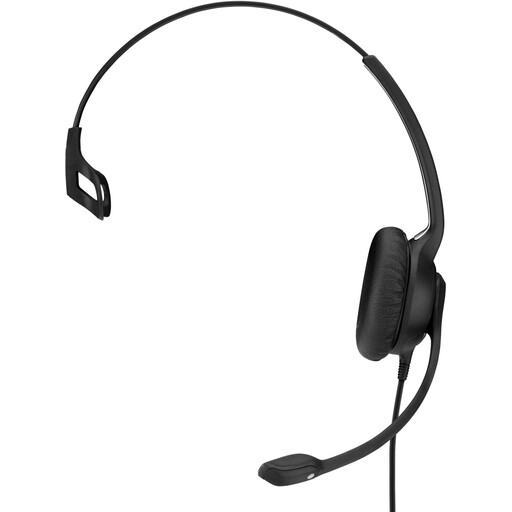
A personal mono USB headset for anyone who wants to hear online participants while keeping one ear free for the class.
The description mentions a flexible microphone boom and in-line controls.
Don’t assume they can: a personal headset is designed for the wearer. If several people in the classroom need to speak online, assess and test a microphone and speaker set-up suited to the room.
Connect the correct USB model, select the intended microphone and speaker in your meeting software, and make a test call. Microsoft Support recommends checking the audio settings; if there are several devices in the same room, test for echo too.
No, these time limits don’t automatically apply to every purchase. The Dutch Government says consumers buying at a distance have a 14-day cooling-off period in many cases, with some exceptions, and explains that Dutch statutory guarantees have no fixed two-year term. A business purchase by a school should be assessed separately.
A headset doesn’t automatically give you permission to record. The Dutch Data Protection Authority reminds schools to assess privacy risks and record agreements about matters such as making and storing recordings. Whether a particular recording is allowed doesn’t depend on the headset you choose.
CE marking is required when the harmonised EU rules applying to a product say it is. Your Europe explains that the same rules don’t apply to every product, so don’t judge whether a particular model complies based only on general product information.