
If you have limited access to sockets
You want to recharge your hand warmer without having to find a spare socket straight away. How much charge you need and when you can recharge the power bank will both help determine your choice.


First, choose a power bank with a wired output and cable that match your USB hand warmer’s charging input. Then decide how much charge you need between opportunities to recharge the power bank. More capacity can mean less portability, and an mAh rating does not guarantee a specific number of charges. The Consumers’ Association measures the usable capacity of power banks separately.
You want to recharge your hand warmer without having to find a spare socket straight away. How much charge you need and when you can recharge the power bank will both help determine your choice.
You may want to charge another device as well as your hand warmer. Check that the available outputs work with your cables and are suitable for charging devices at the same time.
You carry your power bank with you regularly and need to weigh extra charge against size and weight. The Consumers’ Association notes that smaller, lighter models can charge devices fewer times.
First, check that the power bank and cable work with your hand warmer. Then choose a capacity, connections and size that suit how often you can access a socket.
| Buying concern | What to check before buying | Who is this important for? |
|---|---|---|
| Compatible connection | Compare your hand warmer’s charging input and required input with the power bank’s output. Also check which cable you need. | If I want to be sure the cable and charging port will work with my hand warmer, compatibility comes first. Around 31% of consumers are said to consider this their main buying concern. |
| Enough charge in reserve | Compare the capacity with your hand warmer’s charging needs. Don’t use the stated mAh rating to assume a guaranteed number of charges. | If I have few opportunities to recharge my power bank, I want enough reserve for my hand warmer. Around 31% of consumers are said to make charge capacity their top priority. |
| Charging several devices | Check the number and type of outputs, and what the manufacturer says about using them at the same time. Having several outputs does not automatically mean you can recharge the power bank from a socket while it charges a device. | If I want to use my hand warmer and another USB device at the same time, suitable outputs are essential. Around 23% of consumers are said to focus mainly on charging several devices. |
| Portability | Compare the exact model’s weight and dimensions with its capacity. Don’t choose based on the highest mAh rating alone. | If I often take my power bank with me, I want its size and weight to be practical without overlooking whether it will work with my hand warmer. Around 15% of consumers are said to prioritise compactness. |
The capacity shown on the packaging does not, by itself, tell you how much energy the power bank can actually deliver to your hand warmer.
Where available, compare test results for the exact model and check your hand warmer’s energy requirements.
Connecting a hand warmer and another device at the same time is a different function from charging and discharging the power bank simultaneously.
If you need this feature, look specifically for pass-through support in the exact model’s specifications or manual.
The recall notice issued in July 2024 applies to E2038 units with date codes 2313, 2316, 2318 or 2319.
For an existing or second-hand unit, check both the model number and date code. Do not use a unit with one of these codes, and follow the recall instructions.
The Primo Ultra-thin range is a useful reference if you’re looking for a 10,000 mAh power bank with USB-A and USB-C connections.
The Fuel Series 5 FS5100 is a useful reference if you want to compare USB-C and USB-A connections at a capacity of 10,000 mAh.
This selection includes power banks with different stated capacities and charging features. For each model, check that its wired connection and cable work with your USB hand warmer.
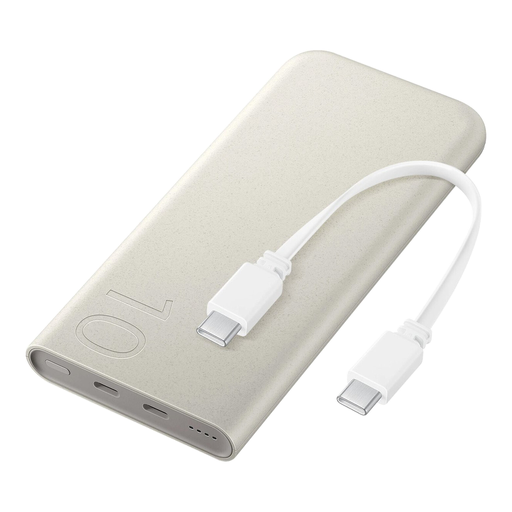 No image available
The stated capacity gives you a point of comparison for charge reserve. Check which type of wired output is available and whether it works with your hand warmer. The product name mentions inductive charging, which is not the same as a compatible wired connection.
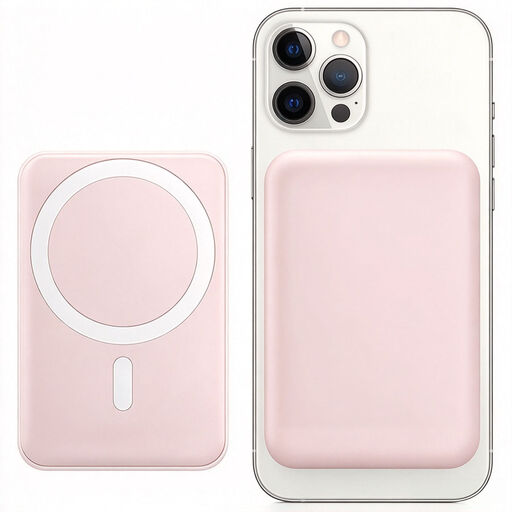 No image available
The stated capacity can help you compare charge reserve. The product name highlights magnetic and wireless charging; check which wired connection it has before choosing this power bank for a USB hand warmer.
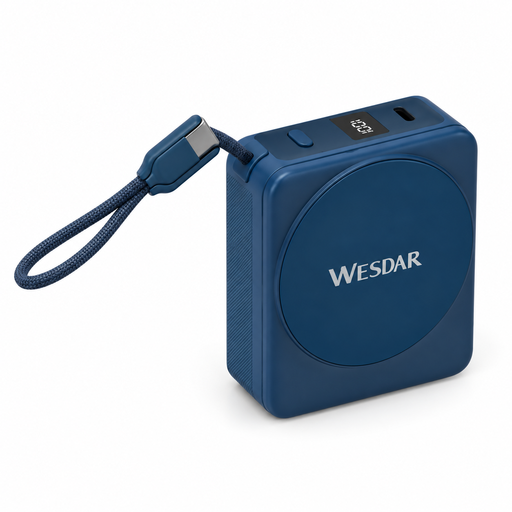 No image available
The product name mentions a built-in USB-C cable and wired charging of up to 22.5 W. Compare your hand warmer’s charging specifications and connection with those of this power bank; the stated output alone does not confirm compatibility.
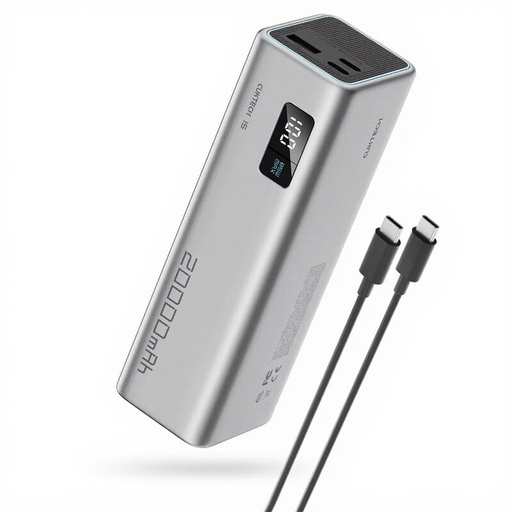 No image available
The stated capacity may be useful if you expect to be away from a socket for a long time. Check the output type and your hand warmer’s charging requirements. The product name also mentions a 65 W laptop charger, but that figure alone does not tell you whether the connection will work with your device.
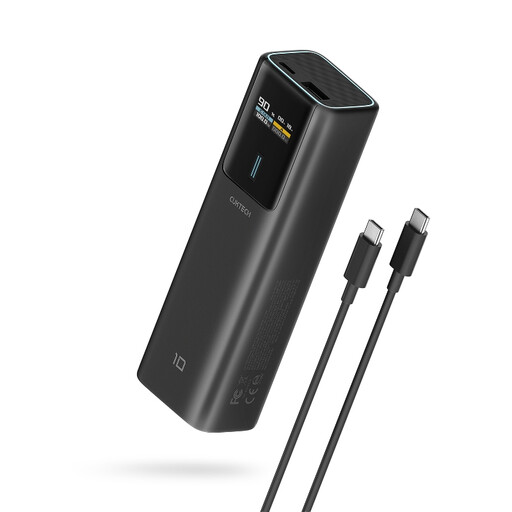 No image available
The product name lists a capacity of 10,000 mAh and a USB-C connection. Check that the wired connection and charging specifications match your hand warmer; the stated output of up to 100 W does not, by itself, prove compatibility.
Not without checking the hand warmer’s specifications. Compare its charging input, cable and required input with the power bank’s outputs. If the charging current is very low, a model-specific low-current mode may be relevant.
This is a separate feature, often called pass-through charging, and is not determined by the number of USB outputs. Check whether the exact model supports it and follow the instructions for both devices.
Follow the manufacturer’s instructions and don’t use a damaged cable. The Fire Service advises placing a device that is charging in a clear space so heat can escape, and not charging it under a pillow or duvet.
According to the Dutch Government, the seller must provide a solution if there is a problem with a product. Whether you are entitled to a solution depends on the circumstances and your statutory right to a product that is fit for purpose.
No. The Dutch Government says that batteries must not go in the bin. You can take them to a collection point, such as a shop that sells batteries.