
Student with one hand warmer
Wants to check first whether a charger they already own meets the hand warmer’s instructions. Ocoopa recommends using the supplied cable and a suitable adapter with its own models; the right choice depends on the model.


If you’re charging one USB hand warmer and its instructions say your existing charger is suitable, you generally won’t need an extra charging station. A multi-port USB charger is a good fit if you want to charge other devices in the same place too; choose an extension lead with USB ports if you also need extra mains sockets. Check the charging instructions for your hand warmer and charge it in a clear, visible spot: the Dutch Fire Service advises charging during the day, when you’re awake and at home.
Wants to check first whether a charger they already own meets the hand warmer’s instructions. Ocoopa recommends using the supplied cable and a suitable adapter with its own models; the right choice depends on the model.
Wants to charge a hand warmer and other devices in one convenient place. Check the available USB-A and USB-C ports, and how the total power is shared between them.
May need both USB ports and sockets for appliances with a mains plug. Check where the wall socket is and consider the space required and load capacity of the extension lead.
Choose this if: you mainly charge one hand warmer and its instructions confirm that your charger and cable are suitable.
Bear in mind: a USB-C port or high wattage alone doesn’t prove that the charger is suitable for your hand warmer.
Choose this if: you also want to charge other USB devices in the same place and the ports are compatible with your cables.
Bear in mind: the total power doesn’t automatically apply to each port; check the output required by your hand warmer.
Choose this if: you genuinely need extra mains sockets as well as USB ports.
Bear in mind: an extension lead takes up more space. The Dutch Fire Service advises against connecting extension leads to one another or plugging too many devices into a single extension lead.
| What to consider | What should you check? | Who is this important for? |
|---|---|---|
| Compatibility | Check the connection, cable and permitted power supply in your hand warmer’s instructions. Compare the required power supply with the output of the individual port, not just the total wattage. | If I want to charge one hand warmer, I want to be sure the cable and power supply are suitable for my model. Around 31% of consumers say compatibility with their hand warmer is their top priority. |
| Safe charging | Use a suitable charger and cable that are in good condition. Place the charger in a clear spot, not under a pillow or duvet; the Dutch Fire Service advises students to charge during the day, when they’re awake and at home. | I want to charge my hand warmer in a clear space and avoid damaged cables. Around 31% of consumers say safe charging is their top priority. |
| Multiple devices | Count the devices you’ll charge at the same time and check that the ports match their plugs. Also check the power available per port when they’re all in use. | If I want to charge other USB devices as well as my hand warmer, I’ll look for enough compatible ports. Around 23% of consumers prioritise charging multiple devices at once. |
| Reach and mains sockets | Measure the distance to the wall socket and work out separately how many USB ports and mains sockets you need. Don’t connect extension leads to one another. | I want a charging spot within reach of my desk and may also need extra mains sockets. Around 15% of consumers say reach and extra sockets are their top priority. |
A charging station’s total power isn’t the same as the power available from each port. Your hand warmer’s instructions specify which power supply is suitable.
First check the charging requirements for the exact hand warmer model, then compare them with the relevant output from the station.
Not every USB port is designed to charge devices. Anker Support says that, for the desktop hub described, the USB-A and USB-C ports transfer data and provide standard power for use, but don’t charge devices.
Look for a clearly specified charging output and check what power supply it requires.
In student accommodation, it can be tempting to plug in another extension lead if the wall socket is a long way away. The Dutch Fire Service advises against connecting extension leads to one another or plugging too many devices into a single extension lead.
Measure the distance first and choose one suitable charging solution for a clear spot.
Worth considering if you want to connect several USB devices in one place.
A desk-friendly option if you use both USB-A and USB-C and also want to connect a laptop.
The estilo Duplex combines USB outputs with mains sockets for a desk where you need both.
These product options are extension leads with USB ports, suitable for a charging spot on a desk or in student accommodation. Before use, check that the output and cable are suitable for your hand warmer.
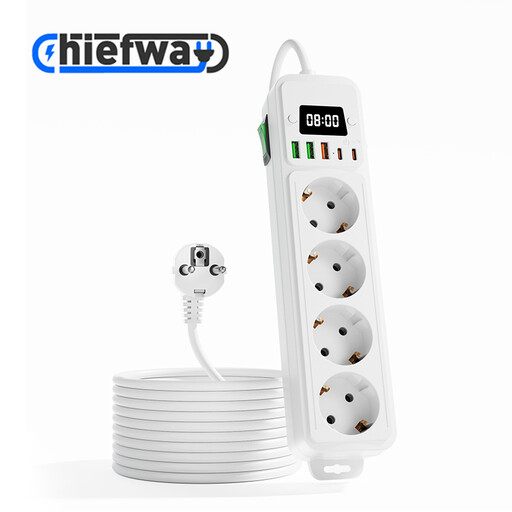 Image unavailable
A good fit for a charging spot where you want to connect several devices and the wall socket is further away.
3 USB-A ports, 2 USB-C ports, 4 mains sockets and a 3 m cable.
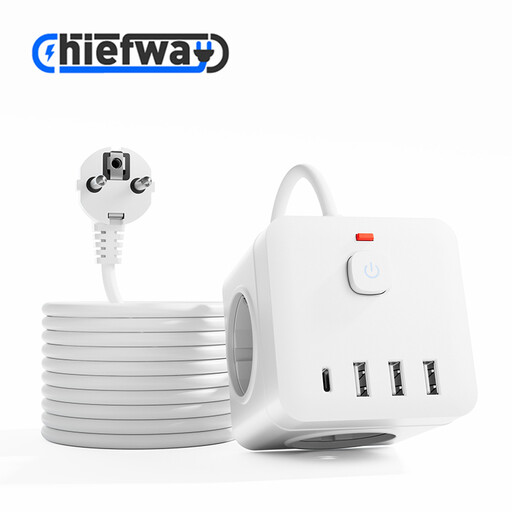 Image unavailable
An option if you want to connect USB devices and mains-powered appliances at one desk.
USB-A and USB-C charging ports, on/off switch and a 1.5 m cable.
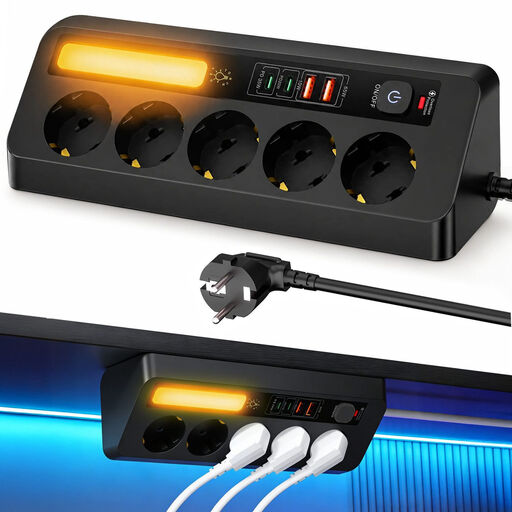 Image unavailable
A good fit for a desk where you want to connect both USB devices and mains-powered appliances.
Four USB ports, five mains sockets, PD 35 W and a 2 m cable.
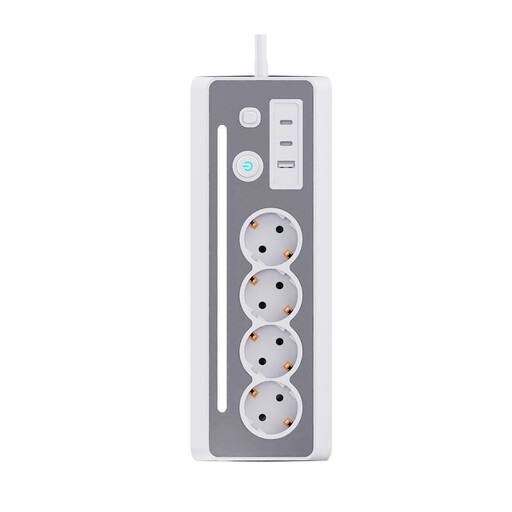 Image unavailable
A handy way to combine USB charging and mains sockets at the same desk.
Three Schuko sockets, three USB charging ports, LED lighting and an on/off switch.
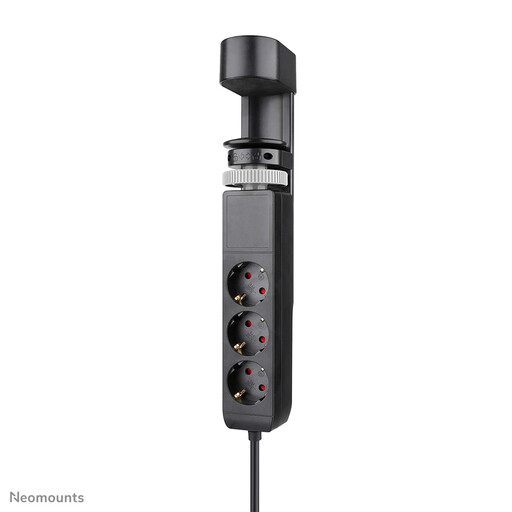 Image unavailable
A good fit for a permanent desk setup where you want a socket unit with a clamp fitting.
USB-C and USB-A ports; clamps onto the desktop.
Not before you’ve checked the charging instructions for your model. Check which cable, connection and power supply the manual specifies. Ocoopa distinguishes between standard and faster charging for its own hand warmers, but those instructions don’t automatically apply to other brands.
Place the hand warmer and charger in a clear spot, not under a pillow or duvet, and don’t use a damaged cable. The Dutch Fire Service advises students to charge devices during the day, when they’re awake and at home.
No. Electrical equipment covered by Dutch regulations must carry a CE mark; this means the manufacturer declares that the product meets the applicable requirements. According to the European Union, it isn’t a separate permit or certificate issued by a central EU body.
Tell your landlord if smoke alarms are missing. The Dutch government states that landlords must install smoke alarms in rented homes; the Dutch Fire Service also recommends smoke alarms in student accommodation.
In the Netherlands, a product must meet what you could reasonably expect from it when used normally. According to ACM ConsuWijzer, the seller is your point of contact for your statutory guarantee and must resolve the issue free of charge if the product breaks too soon; there’s no standard fixed period of exactly two years.