
One socket, several USB devices
You want to charge your hand warmer alongside other small devices without using a separate mains adapter for each one. IKEA’s product information describes multi-port options for use with a single socket.


Start by checking the plug on your hand warmer’s cable and how many devices you want to charge at once. A wall charger lets you power several devices from a single socket; choose a desktop charger if you want the charging ports closer to hand. When charging several devices at once, check the power distribution across the ports and follow your hand warmer’s instructions.
You want to charge your hand warmer alongside other small devices without using a separate mains adapter for each one. IKEA’s product information describes multi-port options for use with a single socket.
You use devices with different plugs and want to check that the ports are compatible with your cables. IKEA and UGREEN product information describes both USB-A and USB-C connections.
You want the charging ports within easy reach on your desk, even if the socket is further away. Belkin describes a desktop charger with a power cable and a separate USB-C-powered splitter.
Choose this if: you can charge your devices near one socket and the ports are compatible with your cables.
Keep in mind: the devices share the available power, and the distribution may change when you use more ports. IKEA notes this for the SMÅHAGEL and SJÖSS.
Choose this if: your cables have different plugs and you’re looking for one mains charger with both types of port. UGREEN describes the Nexode 65W 10335 as having two USB-C ports and one USB-A port.
Keep in mind: the charger’s maximum power rating doesn’t tell you how much power your hand warmer will receive when other devices are connected at the same time.
Choose this if: you want to use the ports on your desk while the socket is further away. Belkin lists a 2 m power cable for the P-WCH010.
Keep in mind: Belkin’s stated maximum of 108 W isn’t, on its own, a reason to choose this charger just for a hand warmer.
Choose this if: you already have a suitable USB-C power source and want extra connections. Belkin describes the BUZ001bt2MBKB7 as a splitter that plugs into a USB-C port.
Keep in mind: the splitter isn’t a standalone mains charger and doesn’t give you an extra socket.
First, check the plug on the charger end of your hand warmer’s cable. Then consider whether you’ll charge other devices at the same time and where you want to charge them.
| What to consider | What to look for | Who is this important for? |
|---|---|---|
| Sharing ports | Count the devices you’ll charge at the same time and check that the ports are compatible with their cables. | If you want to use one socket for your hand warmer and other devices, the port layout comes first. Around 33% of consumers also prioritise sharing one socket. |
| Cable plugs | Check the plug on the charger end of your hand warmer’s cable and any other cables. | If you want to connect your existing cables without mixing up the port types, this is a key consideration. Around 27% of consumers put compatible USB plugs first. |
| Power when charging simultaneously | Compare your hand warmer’s instructions with the charger’s output ratings when using several ports. IKEA lists the SJÖSS at 45 W with one USB-C port in use and 22 W per connection with two ports in use. | If you want to charge your hand warmer alongside other devices, check how the power is distributed when they’re all connected. Around 20% of consumers put charging power first. |
| Charging location and reach | Check that there’s enough space for heat to escape and that the power cable is long enough. Brandweer Nederland advises placing chargers in an open space. | If you want the ports within easy reach and need to place the charger somewhere with good airflow, this is important. Around 20% of consumers prioritise accessibility and a suitable place to charge. |
The power output may differ depending on whether you use one connection or several. For example, IKEA lists different output ratings for the SJÖSS when one or two USB-C ports are in use.
Compare the specifications for the number of devices you’ll actually connect at the same time.
Belkin’s BUZ001bt2MBKB7 plugs into a USB-C port, so it relies on a suitable power source you already have.
Choose a mains charger if you need one that plugs into a socket; only use a splitter with a suitable USB-C power source.
You may also need a suitable USB-C power source for the splitter.
A covered charger has less room to release heat. Brandweer Nederland advises placing chargers in an open space.
Keep the charging area clear, and don’t use a damaged cable or charger.
The SMÅHAGEL and SJÖSS offer different types of port for charging from one socket.
According to UGREEN, the Nexode 65W 10335 is a wall charger with two USB-C ports and one USB-A port.
Belkin describes both a desktop charger with a power cable and a USB-C-powered splitter. They serve different purposes.
This selection includes multi-port wall chargers for charging a USB hand warmer and other devices from one socket. Check the port layout and your hand warmer’s instructions before choosing a charger.
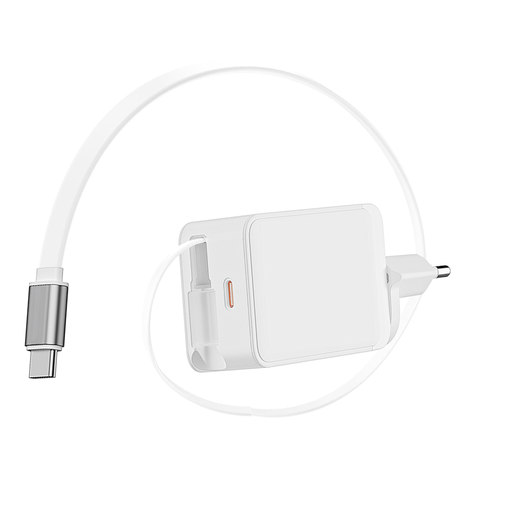 Image unavailable
A good fit if you want USB-C connections for several devices and like the convenience of a built-in cable.
The product information lists a maximum of 65 W, two USB-C ports and a 70 cm retractable USB-C cable.
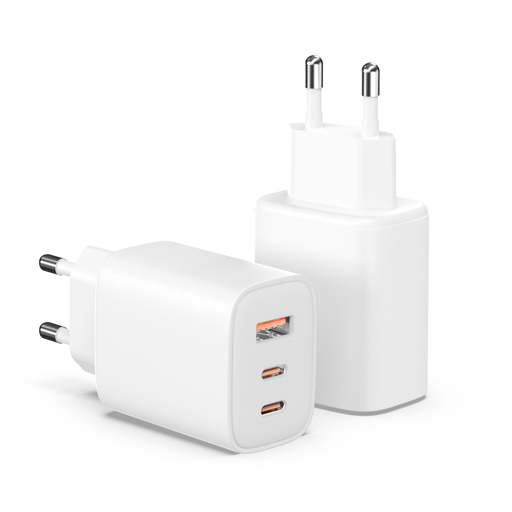 Image unavailable
A good fit if you want to connect USB-C and USB-A cables to one wall charger.
The product title lists a maximum of 65 W, two USB-C ports and one USB-A port. It doesn’t specify how the power is distributed when charging several devices at once.
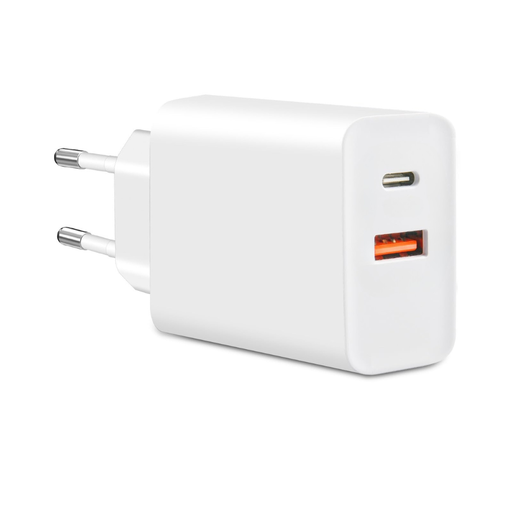 Image unavailable
A good fit if you’re looking for a compact charger with both USB-C and USB-A ports.
The product title lists a maximum of 30 W, with one USB-C port alongside one USB-A port.
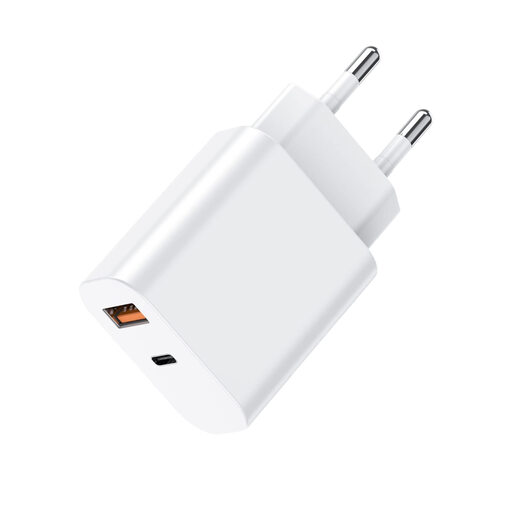 Image unavailable
A good fit if you want to connect USB-C and USB-A cables to one wall charger.
The product title lists a maximum of 20 W, with one USB-C port alongside one USB-A port.
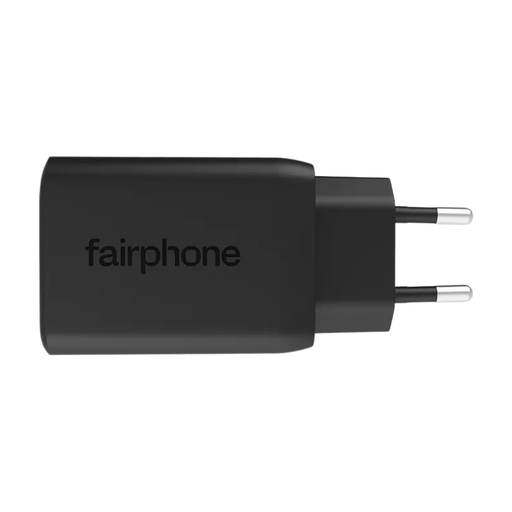 Image unavailable
A good fit if you’re looking for a wall charger with both USB-C and USB-A ports.
The product information lists a maximum of 65 W, two USB-C ports and one USB-A port. It also states that charging cables aren’t included.
Check the instructions for your specific hand warmer, along with its cable and the charging adapters it supports. A multi-port charger’s maximum wattage doesn’t, by itself, determine how your hand warmer will charge. OCOOPA recommends using a suitable adapter and the supplied cable with its hand warmers.
Place the charger in an open space so heat can escape, and don’t use a damaged cable or charger. This is the safety advice from Brandweer Nederland; you should also follow your hand warmer’s instructions. OCOOPA recommends not leaving its hand warmers connected while they’re in use.
Keep the product information and contact the seller if the product seems unsafe. ACM ConsuWijzer states that sellers must provide a legal guarantee for unsafe products.
The Netherlands Food and Consumer Product Safety Authority (NVWA) states that CE marking is required for electrical products. Check the product information for the specific charger; a CE mark alone isn’t independent proof that an individual product is safe.
The Dutch government describes the USB-C requirement for certain categories of new devices, but doesn’t state that every USB hand warmer is covered. Check the connection on your hand warmer rather than assuming it has USB-C.