
Student using different computers
You copy files between devices and need to check whether you need USB-A, USB-C or both. Kingston and SanDisk offer models with different connectors.


First, choose a USB flash drive that fits the ports on the computers you’ll use to copy your handouts. USB-A is enough if both devices have that port, while a drive with both USB-A and USB-C is useful if you switch between the two. Match the capacity to your files and keep a separate copy. If the files contain personal data, follow your school’s security policies.
You copy files between devices and need to check whether you need USB-A, USB-C or both. Kingston and SanDisk offer models with different connectors.
As well as handouts, you may need to carry images or video files. Compare their combined size with the drive’s capacity and check the file system. Microsoft states that FAT32 has a maximum file size of 4 GiB.
If files contain identifiable pupil data, check your school’s security policies. The Dutch Data Protection Authority says that schools must be able to demonstrate that they have appropriate technical and organisational measures in place.
Start by checking the ports on the devices you’ll use. Then consider your file sizes and available space, and check how you’ll store your files and what your school’s policies say about personal data.
| What to consider | What to look for | Who is this most relevant to? |
|---|---|---|
| Connector | Check the ports on both the source and destination computers, and whether your school allows you to use your own USB storage. A USB-A drive won’t connect directly to a device with only USB-C; a dual drive has both connectors. | When I move files between computers with different ports, I don’t want to find that the connector won’t fit. Around 36% of consumers say compatibility with all their devices is their main concern. |
| Storage and files | Add up the size of your files and remember that the usable space will be less than the stated capacity. Microsoft states that FAT32 has a maximum file size of 4 GiB; for larger files, check whether exFAT will work on both devices. | When I also need to carry images or video, I want to know how much space my files take up and whether I can transfer them. Around 29% of consumers prioritise having enough storage for project files. |
| Carrying files | Check how the connector is protected if you’ll be carrying the drive around often. A cap or retractable connector is no substitute for keeping a separate copy of your files. | When I carry my project files with me, I don’t want the USB flash drive to be my only copy. Around 21% of consumers are most concerned about keeping their files safe while travelling. |
| Personal data | Check whether the handouts contain personal data and what your school’s policies say about carrying, sharing and protecting it. The Dutch Data Protection Authority says that losing a USB flash drive containing unencrypted personal data may constitute a data breach. | When I need to carry pupil data, I want to know what security measures my school allows and requires. Around 14% of consumers prioritise protecting personal data. |
A USB-A drive won’t connect directly to a device that only has USB-C.
Check both devices first. Choose a drive with USB-A and USB-C only if you need both connectors.
Depending on your devices, you may also need a suitable adapter.
A stated maximum read speed doesn’t tell you how quickly handouts will copy to a drive. The stated speed may also vary between versions.
Compare the details for the exact version you’re considering, and check the write speed if copying time matters to you.
A portable drive can be lost or damaged, which could mean losing your files.
Keep a separate copy somewhere your school allows.
The right measures depend on the contents and your school’s policies. The Dutch Data Protection Authority says that losing a drive containing unencrypted personal data may constitute a data breach.
Check whether your files contain personal data and what your school’s policies say about carrying and sharing them. Hardware encryption isn’t automatically required for every school project.
The DataTraveler Exodia M is a USB-A range for everyday file transfers. The IronKey Locker+ 50 G2 is a separate range with hardware encryption.
The Ultra Dual Drive Go is designed for devices with USB-A and USB-C. The Ultra Flair is a separate USB-A version.
The BAR Plus 64 GB is a USB-A version with a metal casing and a carrying loop.
The JetFlash 790 is a USB-A drive with a retractable connector, including a 64 GB version.
These product picks are USB-A drives for carrying and copying handouts and project files. Check that the devices you want to use them with have a USB-A port.
 No image available
A USB-A version for copying files on computers with USB-A.
64 GB; USB 3.0.
 No image available
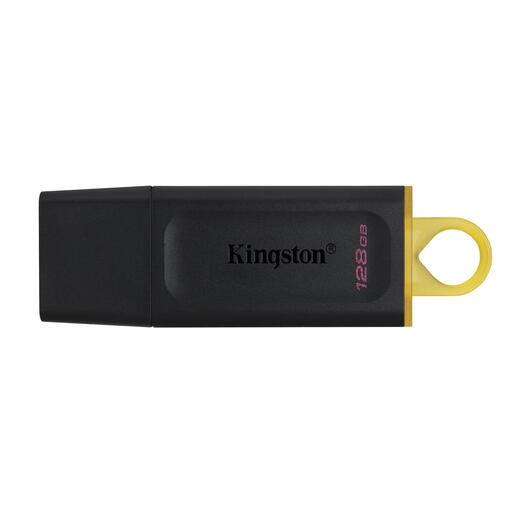
A USB-A drive for carrying documents between devices with USB-A.
128 GB; USB Type-A; protective cap and keyring loop.
 No image available
A USB-A drive for handouts and documents on devices with USB-A.
64 GB; USB Type-A; protective cap and keyring loop.
 No image available
A USB-A version for carrying files on devices with USB-A.
64 GB; metal casing; capless design and keyring loop. The product description lists read speeds of 220 MB/s and write speeds of 100 MB/s.
 No image available
A USB-A drive for project files on devices with USB Type-A.
512 GB; metal casing and keyring loop. The product name lists 220 MB/s.
No, not if the drive uses FAT32: Microsoft states that this file system has a maximum file size of 4 GiB per file. Before formatting the drive, check its file system and whether the computer you’re transferring the file to can use an alternative such as exFAT.
No, keep a separate copy. A USB flash drive can be damaged or lost, so store your extra copy somewhere your school allows.
Don’t assume you can do this without checking your school’s policies. The Dutch Data Protection Authority says schools must be able to demonstrate that they have appropriate technical and organisational measures in place, and losing a drive containing unencrypted personal data may constitute a data breach. Ask how you’re allowed to carry and share these files.
No. According to the Dutch government, the Netherlands has no fixed statutory warranty period: you’re entitled to a product that works properly for as long as you could reasonably expect it to. A manufacturer’s warranty is additional; if a product is faulty, contact the seller.