Choose a USB flash drive based on the size of your project folders, the ports on the studio computers and how often you write large files to it. Don’t use the drive as your only archive copy: the Digital Trust Center recommends keeping a separate copy in another location and testing periodically that you can restore files. If the material contains personal data, choose appropriate access controls based on the risks.
Who is this relevant to?
Manager of a growing project archive
You store complete project folders and versions. Consider the storage you need separately from whether you also have a second, tested copy. The Digital Trust Center recommends keeping backups in different locations and testing periodically that you can restore them.
Editor who regularly transfers large projects
You often write large files to the drive or switch between USB-A and USB-C computers. Check the write speed of the specific model, as well as the ports and equipment in your studio.
Manager of confidential footage
You decide who can access shared or portable copies. If your organisation processes personal data, the Dutch Data Protection Authority says it should choose appropriate security measures based on the risks.
What should you look for when choosing?
First, work out how much space your project folders and versions need. Then consider write speed and connections, and plan for a separate copy and a restore test.
| What to consider |
What should you check? |
Who is this important for? |
| Space for projects and versions |
Compare your project folders and planned versions with the capacity of the specific model. Bear in mind that formatting uses some of the stated capacity. |
I want to keep complete project folders and versions without leaving a copy incomplete; around 25% of consumers put archive storage at the top of their list. |
| Recoverability |
Record where the separate copy is kept and who will test periodically that the files can be restored. |
I want to avoid losing my only usable copy if a drive is lost or damaged; around 25% of consumers prioritise recoverability. |
| Write speed |
Compare the stated write speed of the specific model and check the studio’s port and any hub. |
I often write large project files to the drive and want to factor in transfer times; around 20% of consumers put copying time first. |
| Sharing files between computers |
Check which USB ports the drive and studio computers have. Also test the file system with a large project file: according to Microsoft, FAT32 cannot store a single file larger than 4 GB. |
I share files between computers with different connections or settings; around 15% of consumers give compatibility top priority. |
| Access to confidential material |
Decide who needs access and how authorised team members will retain access if someone is unavailable or leaves. Choose security measures based on the risks. |
I need to control access to confidential project files; around 15% of consumers put access security first. |
What to watch out for when buying
-
Using the drive as your only archive copy
If a portable drive is your only storage location, losing it or an incident could leave you unable to access your files.
Plan a separate copy in another location and test that you can restore your files from it before the drive becomes your only available copy.
-
Confusing read speed with write speed
Write speed matters when filling an archive. Samsung states that the BAR Plus 512GB writes more slowly than its stated maximum read speed.
Compare the write speed of the specific model and take the studio’s equipment into account.
-
Assuming a different connection or model variant is the same product
The Kingston DataTraveler Max Type-A and Type-C are separate models. The Samsung FIT Plus MUF-512AB is also a different model from the BAR Plus MUF-512BE3/APC.
Before buying, check the full model code, connection and specifications of the model on offer.
-
Letting confidential files circulate without protection
For personal data, the organisation should choose appropriate security measures based on the risks. Losing a drive containing unencrypted personal data could constitute a data breach.
Decide in advance who needs access and whether encryption and a recovery procedure are suitable for your needs.
For shared use, also allow time for risk assessments and managing access and passwords.
Brands to consider
Kingston
The DataTraveler Max range has separate USB-A and USB-C models for different connections. The IronKey Locker+ 50 G2 offers another option for hardware encryption.
- Kingston specifies capacities of up to 1 TB for DataTraveler Max models, with read speeds of up to 1,000 MB/s and write speeds of up to 900 MB/s. Speeds can vary depending on the host, software and usage.
- According to Kingston, the G2 offers hardware-based XTS-AES-256 encryption, has a maximum capacity of 256 GB and a stated write speed of 115 MB/s. Check that the storage capacity and management of recovery access suit your needs.
Transcend
The JetFlash 930C could suit a studio where files are shared between USB-A and USB-C computers.
- Transcend specifies capacities of up to 512 GB, with read speeds of up to 420 MB/s and write speeds of up to 400 MB/s.
- The two connectors cannot be used at the same time. Also check that the capacity you choose is large enough for your project folders.
SanDisk
The USB-A Extreme PRO Flash Drive is an option to consider for computers with that connection.
- For model SDCZ820-1T00-G46, SanDisk specifies 1 TB, USB 3.2 Gen 2, read speeds of up to 1,000 MB/s and write speeds of up to 900 MB/s.
- These specifications apply to the USB-A model listed. Check the exact model and the connections on your studio equipment.
Samsung
The BAR Plus 512GB is worth considering for a USB-A project copy if its capacity meets your needs.
- Samsung Netherlands specifies read speeds of up to 400 MB/s for model MUF-512BE3/APC.
- Samsung states that write speed is lower than read speed. So the maximum read speed alone doesn’t tell you how quickly a video archive can be written to the drive.
Lexar
The JumpDrive P30 is a USB-A alternative to compare for large files.
- Lexar lists capacities of up to 1 TB for the P30 range, with read and write speeds of up to 450 MB/s.
- Check that the model on offer has the capacity you need; the speeds quoted are manufacturer specifications.
USB flash drives at Joybuy
These USB flash drive options at Joybuy are a starting point for storing and transferring video projects. Check the capacity and connection of each model to make sure it suits your studio.
 No image available
Kingston DataTraveler Exodia DTX 256 GB
Suitable for transferring project files if the capacity and connection fit your workflow.
256 GB; USB 3.2 Gen 1; write speed of up to 625 MB/s.
View at Joybuy
 No image available
SanDisk Ultra Dual Drive Go USB 3.1/USB-C 512GB
An option to consider if you want to share project files between devices; check which connections your studio computers use.
512 GB; USB 3.1/USB-C.
View at Joybuy
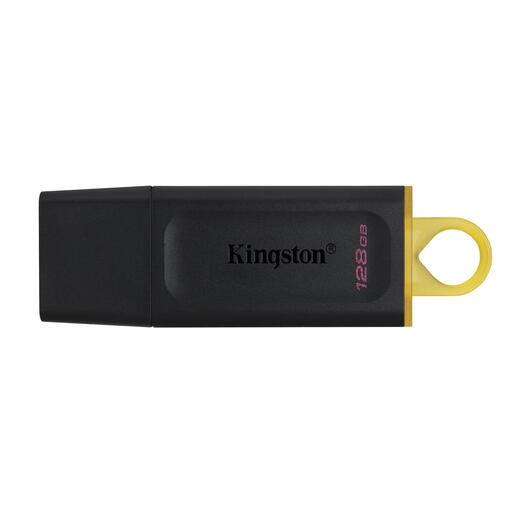 No image available
Kingston DataTraveler Exodia USB 3.2 Flash Drive
A USB flash drive option for project copies; check that the model you choose has enough space for the files you want to keep.
USB 3.2.
View at Joybuy
 No image available
Kingston DataTraveler Exodia USB 3.2 Flash Drive
A USB flash drive option for project copies; check that the model you choose has enough space for the files you want to keep.
USB 3.2.
View at Joybuy
 No image available
Kingston DataTraveler 512GB 220MB/s Metal USB 3.2 Gen 1 SE9 G3
An option for larger project copies if 512 GB suits your archive; check the connection on your studio equipment.
512 GB; USB 3.2 Gen 1; read speed of up to 220 MB/s; metal design.
View at Joybuy
Frequently asked questions
Can one USB flash drive be the studio’s only video archive?
It’s best to keep a separate copy in another location too. The Digital Trust Center recommends keeping backups in different locations and testing periodically that you can restore them.
Why won’t a large video file fit on a drive with enough free space?
Check the file system: Microsoft states that FAT32 cannot store a single file larger than 4 GB. Microsoft describes exFAT as suitable for very large files; also test that the studio computers you need to use can open the formatted drive.
What should you consider when setting up and maintaining a drive in a shared studio?
Check the connection and file system, copy a representative project and test whether you can restore it from the separate archive copy. Agree who will make copies and carry out restore tests; Kingston says that speeds can vary depending on the host, software and usage.
Is an encrypted USB flash drive compulsory for every video project?
The Dutch Data Protection Authority does not impose a blanket encryption requirement for every USB flash drive or project. If the studio processes personal data, it must protect it properly and choose appropriate measures based on the risks; encryption may be one such measure.
Does losing a drive containing personal data have to be reported?
According to the Dutch Data Protection Authority, this depends on the possible consequences for the people concerned. Losing a drive containing unencrypted personal data could constitute a data breach; assess the specific incident before deciding what action is needed.


