Who is this guide for?

Teachers building up a teaching archive

If you want to keep project folders and later versions, you can choose a capacity that suits your files and keep a copy somewhere else too. The National Cyber Security Centre and Veilig Internetten highlight the importance of keeping multiple backups.

Teachers who often copy large folders

If you regularly transfer large project folders, compare the stated write speed and check that it is compatible with your computer’s port. Kingston Technology and Transcend provide manufacturer figures, but these are not measurements of your backup task.

Teachers who work with pupil data

If you want to keep a portable copy of pupil data, first check what your institution’s policy allows and which security and recovery procedures apply. The Dutch Data Protection Authority outlines schools’ responsibilities for protecting personal data.

What should you consider when choosing?

Factor What to look for Who is this important for?
Space for the whole folder Compare the folder size and the versions you want to keep with the usable capacity of the exact model. As my teaching archive grows, I want enough space for the whole project folder and the versions I want to keep. Around 33% of consumers prioritise having enough storage space.
Writing to the drive Compare the stated write and read speeds separately, and check your computer port and any hub. If you regularly copy large folders, you’ll want to know how quickly files are written to the drive. Around 27% of consumers give copy time top priority.
Connector and file system Check the ports on the computers you’ll use to copy and restore files, and whether the file system supports individual large files. If I work on different computers, the drive and its files need to work when I restore them too. Around 20% of consumers prioritise compatibility and readability.
Protecting pupil data Check whether portable storage is allowed and which security and recovery procedures your institution requires. When project folders contain pupil data, I want to know whether I’m allowed to store them on a portable drive under my school’s policy. Around 20% of consumers give this protection top priority.

Common pitfalls

  • Looking only at read speed

    When you back up files, you write data to the drive. Read speed therefore won’t tell you how quickly your files are saved; your computer’s port may also limit the transfer speed.

    Look up the stated write speed for the exact model and check which port and any hub you’re using.

  • Confusing a large folder with one large file

    A folder may fit on a drive overall, even if an individual file can’t be copied. Microsoft Learn states that FAT32 has a maximum file size of 4 GiB.

    Check the size of your largest files and the file system. Make a copy of existing files elsewhere before reformatting a drive.

  • Keeping the USB flash drive as your only backup

    If the drive fails or gets lost, you could lose your only recovery copy. The National Cyber Security Centre recommends keeping important data in multiple versions, on different media and in different locations.

    Keep at least one other copy separately. If you’re handling pupil data, follow your institution’s security policy too.

Brands to compare

Kingston

The DataTraveler Max is a USB-C range for transferring large files.

  • Kingston lists capacities from 256 GB to 1 TB and maximum read and write speeds of 1,000 MB/s and 900 MB/s respectively. For optimum performance, Kingston recommends a suitable USB 3.2 Gen 2 port.
  • These are manufacturer figures, not real-world tests with teaching project folders. Check that your computer port and any hub are suitable.

Transcend

The JetFlash 930C has both a USB-A and a USB-C connector, so it works with different ports.

  • Transcend lists 128, 256 and 512 GB models, with maximum read and write speeds of 420 MB/s and 400 MB/s respectively.
  • The connectors cannot be used at the same time. The stated maximum speeds don’t guarantee the speed of a complete backup task.

Samsung

The BAR Plus MUF-256BE4/APC is a 256 GB USB-A model.

  • Samsung lists a sequential read speed of up to 400 MB/s for this model.
  • That figure is not a write speed, and the model does not have a USB-C connector.

SanDisk

The Extreme PRO USB 3.2 SDCZ880-256G-G46 is a 256 GB USB-A model.

  • SanDisk describes a USB 3.2 Gen 1 interface and a metal casing.
  • The software-based vault described does not prove that the drive has hardware encryption or that storing pupil data on it is allowed under school policy.

iStorage

The datAshur PRO² offers PIN access and hardware encryption, if portable storage is permitted under your institution’s policy.

  • iStorage lists AES-XTS 256-bit hardware encryption and capacities of up to 512 GB.
  • These are manufacturer specifications. Encryption alone does not give you permission to store personal data outside the school environment approved for this purpose.

USB flash drives at Joybuy

These USB flash drives are options for teaching project folders that fit within the usable space of the model you choose. Before making your choice, check the capacity, connectors and support for individual large files.

Kingston DataTraveler Exodia DTX 256 GB USB 3.2 Gen 1

Kingston DataTraveler Exodia DTX 256 GB

An option if your entire project folder fits within the usable space of 256 GB.

The product name lists USB 3.2 Gen 1 and a stated write speed of up to 625 MB/s; this is not a measured speed for your backup.

Joybuy

32 GB USB flash drive with USB 3.0, Lightning, USB-C and Micro-USB

32 GB USB flash drive with USB 3.0, Lightning, USB-C and Micro-USB

Only suitable if your entire project folder fits within 32 GB of usable space.

The product name lists USB 3.0, Lightning, USB-C and Micro-USB. Check that the connectors work with the devices you’ll use to copy and restore files.

Joybuy

SanDisk Ultra Flair 64 GB USB 3.0 flash drive

SanDisk Ultra Flair 64 GB USB 3.0

An option for project folders that fit within the usable space of 64 GB.

The product description lists USB 3.0 and a read speed of up to around 150 MB/s; this read speed is not a write speed.

Joybuy
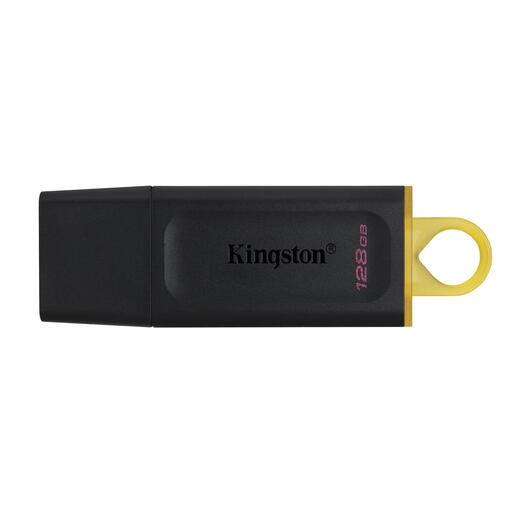
Kingston DataTraveler Exodia USB 3.2, SKU 10316595

Kingston DataTraveler Exodia USB 3.2 (SKU 10316595)

Check that the exact model offers enough usable space for your entire project folder and the versions you want to keep.

The product name lists USB 3.2; check that the connector works with the computer you’ll use to back up and restore your files.

Joybuy

Kingston DataTraveler Exodia USB 3.2, SKU 10316623

Kingston DataTraveler Exodia USB 3.2 (SKU 10316623)

Check that the exact model offers enough usable space for your entire project folder and the versions you want to keep.

The product name lists USB 3.2; check that the connector works with the computer you’ll use to back up and restore your files.

Joybuy

Frequently asked questions

How do I work out how much storage space my teaching backup needs?

Check the whole folder, including media and files in subfolders, and decide how many copies or versions you want to keep. Compare this with the usable space on the exact drive; some of the stated capacity may not be available for files.

Why won’t one large project file fit on a drive that still has space available?

Check the file system: Microsoft Learn states that FAT32 has a maximum file size of 4 GiB, while exFAT has a higher limit. Before reformatting, make a copy of any existing files and check that the computers you want to restore your files on can read the format you’ve chosen.

How do I use a USB flash drive as a backup?

After copying your files, check that you can read back the ones you need, and keep another copy separately. The National Cyber Security Centre recommends keeping important data in multiple versions, on different media and in another location; a single USB flash drive is not enough.

What can I expect from the seller if my USB flash drive fails?

As a consumer in the Netherlands, you can expect a product to do what you could reasonably expect of it under normal use. ACM ConsuWijzer explains that there is no general fixed two-year guarantee period in the Netherlands. If a product is faulty, contact the seller for an appropriate solution. Keep your files somewhere else too: a product guarantee does not guarantee data recovery.

Can I take pupil data with me on a USB flash drive?

That depends on your school’s policy and the security measures it requires. The Dutch Data Protection Authority says schools must be able to demonstrate technical and organisational measures for pupil data, and cites the loss of a drive containing unencrypted personal data as a possible data breach. Before copying any files, check which storage locations are allowed and which security and recovery procedures apply; encryption alone does not give you general permission.
