Start by checking the ports on the source computer and the computer you’ll use to make the archive copy. USB-A is sufficient if both devices have that port, while a drive with both USB-A and USB-C is useful if they have different ports. Netwerk Digitaal Erfgoed warns that physical storage media are vulnerable, so keep a separate copy too and check it by opening files, as advised by the National Cyber Security Centre. If the handouts contain personal data, consider what access protection is appropriate. A quoted read speed does not automatically tell you how quickly files will be written to the drive.
Who is this guide for?
Archive copy manager
You copy handouts for future use and want to check that the files are also stored and accessible somewhere other than on the USB flash drive. Netwerk Digitaal Erfgoed describes physical storage media as vulnerable; the National Cyber Security Centre advises testing a back-up by opening files.
Volunteer using different computers
You move handouts between devices and need to make sure the USB ports at both ends are compatible. Kingston describes the DataTraveler Exodia M as a USB-A model; SanDisk states that the Ultra Dual Drive Go has both USB-A and USB-C connectors.
Manager of confidential handouts
If a portable drive goes missing, you need to consider who could access files containing personal data. The Dutch Data Protection Authority identifies the loss of a USB flash drive containing unencrypted personal data as a potential data breach.
What should you look for when choosing?
First check the ports on both computers, then measure the folder of handouts, and finally consider whether the contents need extra access protection.
| What to consider |
What to look for when buying |
Who should give this extra consideration? |
| Capacity and archive copy |
Measure the folder and allow for different versions. Compare the space you need with the usable capacity, then open a few files from the separate copy after copying them; the National Cyber Security Centre advises testing back-ups this way. |
If I’ll need the handouts again later, I want enough space and a way to check that the files open. Around 36% of consumers prioritise having a recoverable archive copy. |
| Connection to both devices |
Check the ports on both the source computer and the device you’ll use to store the files. A drive with both USB-A and USB-C does not automatically resolve differences in file system support. |
When I move handouts between computers with different USB ports, I want to connect the drive directly. Around 29% of consumers give device compatibility top priority. |
| Access to personal data |
First check what the handouts contain. If they include personal data, consider the risks if the drive is lost and what security is appropriate; the Dutch Data Protection Authority identifies the loss of unencrypted personal data as a potential data breach. |
If the handouts contain personal data or other confidential information, I want to think in advance about who could access them if the drive went missing. Around 21% of consumers prioritise confidentiality. |
| Time spent copying files repeatedly |
If time is a factor, compare the quoted write speed for the exact model and take the computer and files into account. A quoted read speed, such as the sequential read speed Samsung gives for certain FIT Plus models, is not a write speed. |
If I regularly save files to the drive, I want to know how quickly data transfers in the right direction. Around 14% of consumers prioritise copying time. |
Pitfalls when buying and using a drive
-
Treating a USB flash drive as your entire archive plan
Physical storage media cannot be relied on to remain readable indefinitely; an unchecked copy may not be there when you need it. Netwerk Digitaal Erfgoed highlights the vulnerability of these storage media.
Keep the handouts somewhere else too, and open a few files from that copy after transferring them, as advised by the National Cyber Security Centre.
-
Checking only the port on your own laptop
A USB-A drive and one with both USB-A and USB-C suit different combinations of devices. Having two connectors does not guarantee that every device supports the same file system.
Check the ports on both the source computer and the archive device before choosing a model.
-
Confusing read speed with the speed of copying files to the drive
A quoted read speed does not establish the write speed you’ll get with your files and computer. Samsung lists a sequential read speed for certain FIT Plus models under test conditions; this does not tell you how quickly handouts will be written to the drive.
If you need to save files quickly, look for write-speed information for the exact model you’re considering.
-
Choosing a standard drive without checking what the handouts contain
According to the Dutch Data Protection Authority, losing a USB flash drive containing unencrypted personal data may constitute a data breach.
Check whether the files contain personal data and decide what access protection is appropriate based on the risks.
Brands to consider
Kingston
Kingston describes the DataTraveler Exodia M as a USB-A range for items such as documents. IronKey Locker+ 50 G2 is a separate range with hardware encryption.
- Kingston says the Exodia M has a sliding cap and a five-year warranty.
- The Exodia M does not have a built-in USB-C connector. For the IronKey Locker+ 50 G2, check that its supported operating systems and password options suit the archive computers.
SanDisk
SanDisk describes the Ultra Dual Drive Go as a model for transferring files between USB-A and USB-C devices.
- Two connectors can be useful when your devices have different ports.
- Check that both devices support the file system. Having two connectors does not replace a separate archive copy.
Samsung
Samsung describes the FIT Plus MUF-128AB/APC as a compact 128 GB USB-A model.
- For this model, Samsung quotes a sequential read speed of up to 400 MB/s under test conditions.
- This quoted read speed is not a measured write speed for handouts. Samsung also notes that usable capacity may be lower than the stated capacity.
Transcend
Transcend describes the JetFlash 790 as a USB-A drive with a retractable connector, available in different capacities.
- The retractable connector means there’s no loose cap to keep track of.
- The product specifications do not confirm a built-in USB-C connector.
Verbatim
Verbatim describes the Store ’n’ Go Dual USB Drive #49966 as a 32 GB model with USB-A and USB-C.
- The manufacturer says it can be used to transfer files between compatible USB-C devices and computers.
- Check that the ports are compatible and that 32 GB is enough for the archive folder you’ve measured.
USB flash drives for USB-A devices
These USB-A drives are selected for transferring workshop handouts between devices with a USB-A port. Compare their capacity with your own folder, and don’t use a drive as your only long-term archive copy.
 Image unavailable
Kingston DataTraveler Exodia 128 GB USB 3.2 Gen 1 Type-A
A USB-A model for transferring documents between devices with this type of port.
128 GB; USB 3.2 Gen 1; USB Type-A. The product name also mentions USB 2.0 and the colours black and blue.
View at Joybuy
 Image unavailable
SanDisk Ultra Flair 64 GB USB 3.0
A USB-A drive for transferring documents; compare its capacity with the size of your handout folder.
64 GB; USB 3.0. The product description mentions password protection and 128-bit AES encryption via SanDisk software. Check that the software is compatible with the computers you use.
View at Joybuy
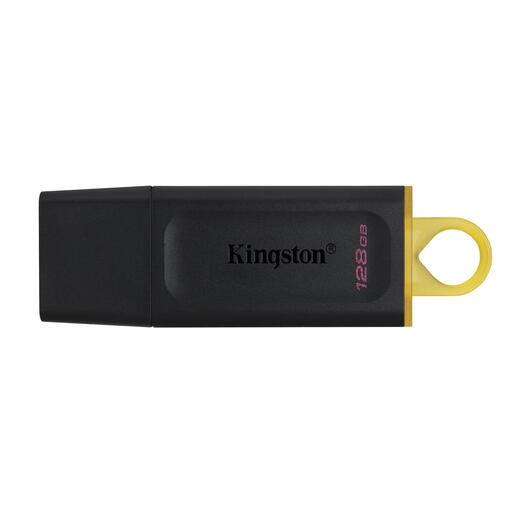 Image unavailable
Kingston Technology DataTraveler Exodia USB 3.2 Flash Drive
A USB 3.2 flash drive for storing and transferring documents.
The product description mentions plug-and-play use and compatibility with multiple operating systems. Check the connection and support on the computers you’ll use to access the handouts.
View at Joybuy
 Image unavailable
Kingston Technology DataTraveler SE9 G3 64 GB USB 3.2 Gen 1
A USB Type-A model for transferring files, including documents.
64 GB; metal casing. The product description lists read speeds of up to 220 MB/s and write speeds of up to 100 MB/s; actual transfer speeds also depend on the computer and how you use the drive. Keep small parts away from children under three.
View at Joybuy
 Image unavailable
Kingston Technology DataTraveler SE9 G3 512 GB USB 3.2 Gen 1
A USB Type-A model for storing and sharing files; compare 512 GB with the size of your archive folder.
512 GB; metal casing. The product name lists 220 MB/s, but this specification does not state the direction of transfer.
View at Joybuy
Frequently asked questions
How do I work out how much storage space the handouts need?
Measure the current folder and include any versions you want to keep. Compare that with the usable space; Samsung notes that the actual capacity may be lower than the stated capacity.
Is a USB flash drive enough for a long-term community archive?
No. Treat the drive as a way to transfer files or as one copy, not as your entire archive. Netwerk Digitaal Erfgoed highlights the vulnerability of physical storage media; keep a separate copy and test it by opening a few files.
What warranty applies to the Kingston DataTraveler Exodia M?
Kingston states that the DataTraveler Exodia M comes with a five-year warranty. This applies to the product range mentioned; check the terms for the exact model. A warranty cannot restore files lost from a missing or faulty drive.
Do handouts containing participant details always need to be stored on a hardware-encrypted USB flash drive?
Not all handouts contain personal data, and the right security measures depend on the content and the risks. The Dutch Data Protection Authority says organisations must protect personal data properly and identifies the loss of a drive containing unencrypted personal data as a potential data breach. Consider what access protection is appropriate for your situation.
Can a community archive simply copy and share other people’s handouts?
Not necessarily. According to the Dutch government, permission from the creator is generally required to use copyright-protected material. A private copy for personal use must not be distributed or made publicly available. Check the rights to the handouts and how you plan to use them.


