
Private listening on a laptop
You want to listen through wired headphones rather than your laptop speakers. Microsoft Support recommends selecting your preferred output device when there are multiple audio outputs.


A compact USB DAC is all you need if you’re looking for a suitable headphone output. If your laptop’s wired connection already works well, select your headphones as the audio output first, before buying another device. A desktop model is worth considering if you’ll actually use its volume knob, extra inputs or line outputs. Check the connections and power requirements for each model, and don’t assume that an adjustable display will be easy to read by a bright window.
You want to listen through wired headphones rather than your laptop speakers. Microsoft Support recommends selecting your preferred output device when there are multiple audio outputs.
You’re comparing the plug and the power rating for the output and load you’ll actually use. FiiO notes that the stated power depends on the output and, for the KA13, on desktop mode too.
You want controls you can reach without constantly having to read a display, and you’re mindful of desk space and power requirements. Features such as adjustable brightness don’t, on their own, tell you how easy a screen is to read in direct sunlight.
A good fit if: your headphones can connect to your laptop and its current output meets your needs.
The trade-off: you won’t be adding another device, but this won’t solve the problem if you’re missing a suitable connection or need more power to drive your headphones.
A good fit if: you’re short on desk space and a single suitable headphone output is all you need.
The trade-off: check the USB connection and headphone plug. A compact model won’t automatically offer the extra inputs or line outputs you’d get with a desktop model.
A good fit if: you’ll use an easy-to-reach volume knob, extra inputs or line outputs. FiiO says the K11 has optical and coaxial inputs, while the iFi ZEN DAC 3 has RCA line outputs according to its manual.
The trade-off: allow for the space it takes up and the power supply required by your chosen model. A display setting doesn’t prove that the screen will be easy to read by your window.
| What to consider | What to look for when buying | Who is this important for? |
|---|---|---|
| Private listening through the right output | Check the USB audio connection and that there’s a suitable headphone output; then select the DAC as your output device. | I want my wired headphones to play audio instead of my laptop speakers, so I check the selected audio output first. Around 36% of consumers make private listening their top buying priority. |
| Connection and power | Check the headphone plug and, if known, compare the impedance and sensitivity with the specifications for the exact output you’ll use. | If I want to connect specific headphones, I check for a suitable output and its corresponding power rating. Around 29% of consumers put headphone compatibility first. |
| Controls by a bright window | Check whether you can adjust the volume and select your preferred output without reading display text; assess how easy the screen is to read where you’ll use it. | I want to adjust the volume easily without relying on a small screen. Easy-to-reach controls by the window are the top priority for around 21% of consumers. |
| Space, power and cables | Check which USB port or power adapter is needed, which cables are included and how much room connected plugs will take up. | At a compact workstation, I want to know in advance which power supply and cables I’ll need. Space and cabling are top priorities for around 14% of consumers. |
Windows may still use a different device when there are multiple audio outputs, so sound might not come through the headphones you want to use.
After connecting the DAC, select it explicitly as the audio output and check the sound at a low volume first.
A power rating applies to a particular output and load, and sometimes to a specific mode. For example, FiiO notes that the K11’s rating for the balanced output doesn’t automatically apply to the 6.35mm output.
Only compare ratings for the output and load you’ll actually use.
FiiO describes display contrast, while TOPPING offers a brightness setting. These features don’t show how easy the screen will be to read by your window.
Prioritise controls you can use without looking at the display, and check how easy it is to read in your own lighting conditions.
Power requirements and outputs vary by model, so the cables or adapter you need may vary too.
Before buying, check the exact connections, what’s included and who is listed as the seller.
Depending on the version, you may need a suitable cable or adapter, so check what’s included with the device.
The KA13 is a compact USB DAC with 3.5mm and 4.4mm outputs. The K11 is a desktop model with a volume knob, extra digital inputs and a line output.
The ZEN DAC 3 is designed for a permanent USB setup, with a volume knob, headphone outputs and line outputs.
The Sound Blaster PLAY! 4 is a compact option if you make calls using a compatible wired headset microphone.
The DX3 Pro+ is a desktop model to consider if you’re looking for a volume knob, multiple inputs and adjustable display brightness.
These product picks are wired headsets and earphones for listening on a laptop, not standalone desktop DACs.
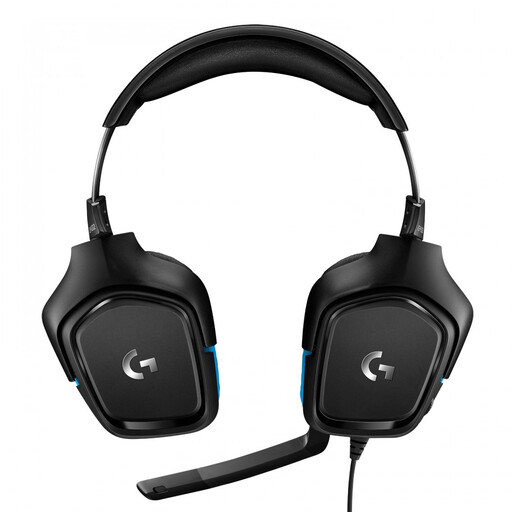 No image available
A wired gaming headset for anyone looking for a headset for a permanent desktop setup.
The product name specifies 7.1 Surround Sound.
 No image available
A wired in-ear headset for anyone who needs a USB Type-C connection.
The product name specifies use for calls and music, and the colour black.
After connecting your headphones or DAC, select the intended device as the audio output in Windows. FiiO also describes selecting USB as the input for the K11. Start at a low volume after connecting.
No. The features described route audio to wired headphones, but don’t show that fan noise or sunlight will be reduced. A screen brightness setting isn’t proof that the display will be easy to read in direct sunlight.
Not all models. According to the manual, the iFi ZEN DAC 3 can be powered via USB or with a separate 5V power supply; the TOPPING DX3 Pro+ specifies DC15V/1A. Check the power requirements and box contents for the exact version.
Start at a low volume, especially after changing headphones or the gain setting. The World Health Organization recommends paying attention to sound levels, listening time and repeated exposure to loud sounds. This doesn’t guarantee that any particular setting or model is safe.
According to ACM ConsuWijzer, the seller is responsible for providing an appropriate solution. Check who is listed as the seller on the listing, and if you’re buying from an international seller, review the applicable terms and any return costs too.