
Speaker owners looking for a suitable charger
You want to know whether the charger's connection, cable and output are compatible with your speaker model. A USB-C port doesn't mean every speaker has the same charging requirements.


Start with the connection and charging requirements of your speaker model: a charger's maximum wattage alone won't guarantee faster charging. Choose multiple ports if you genuinely want to charge devices at the same time, and check the power available from each port and which cable you need. Before buying a mains charger, also check the CE marking on the specific product.
You want to know whether the charger's connection, cable and output are compatible with your speaker model. A USB-C port doesn't mean every speaker has the same charging requirements.
You want to charge a speaker and a second device at the same time, while taking the power available from each port into account.
You want to check the marking on the specific product and what's included in the box, as well as your rights when shopping online.
A good fit if: you only want to connect a speaker and its charging requirements are compatible with the charger.
Bear in mind: there's no second charging port for a colleague or another device.
A good fit if: you regularly connect a speaker and a second USB-C device at the shared desk at the same time.
Bear in mind: the power available from each port may differ when both are in use from the maximum for a single port.
A good fit if: you also use an older device or a USB-A cable at the same desk.
Bear in mind: check the power distribution for the exact combination of ports. UGREEN lists 65 W for C1 when used as a single port.
| What to consider | What to look for | Who is this important for? |
|---|---|---|
| Connection and charging requirements | Check the charging input, charging requirements and cable needs of the exact speaker model, then compare them with the charger's outputs. | If my main concern is finding a charger that's compatible with my speaker, I'll first check the exact model and its charging requirements. Around 36% of consumers put compatibility first. |
| Charging at the same time | Check the number and type of ports, and the stated power distribution when multiple devices are connected. | If I want to connect a second device at a shared charging point, I'll check the power available from each port when they're in use at the same time. Around 29% of consumers prioritise simultaneous charging. |
| Marking and product identity | Check that the specific mains charger has the required CE marking. If there's a safety warning, compare the full product identity, such as the model and batch. | If I want to check the specific charger and any relevant warnings before buying, I'll look at its marking and product identity. Around 21% of consumers put product safety first. |
| Cable and convenience | Check whether a cable is included and whether your existing cable will reach your charging point. | If I want a practical set-up without an unexpected cable purchase, I'll check what's in the box and how long the cable needs to be. Around 14% of consumers prioritise practicality and avoiding extra costs. |
When charging multiple devices at once, the power available from each port may differ. So the highest figure on a charger doesn't automatically tell you how much power each connected device will receive.
Check the stated power distribution when multiple devices are connected, and compare it with the charging requirements of both devices.
Charging requirements vary between speaker models. A higher maximum wattage for the adapter doesn't guarantee that your speaker will charge faster.
Look up the specifications for your exact speaker model and compare them with the charger's output.
What's included varies by version. Samsung, for example, states that the EP-T2510NWEGEU doesn't include a USB-C-to-USB-C cable; JBL says some of its products are supplied without a charging cable.
Check what's in the box with both the charger and the speaker, and see whether you already have a suitable cable.
CE marking is compulsory for a mains-powered USB charger placed on the market in the Netherlands. The marking is a declaration by the manufacturer; on its own, it doesn't prove that an individual item has been independently tested.
Check the marking on the specific product and, if there's a safety warning, compare its full product identity.
The SJÖSS 805.744.38 is an example of a compact charger with two USB-C ports.
The 40W charger and BoostCharge Pro WCH013 show different power distributions across two USB-C ports.
The EP-T2510NWEGEU is an example of a 25W adapter with one USB-C charging port.
The EU version of the Nexode 65W reviewed here has two USB-C ports and one USB-A port.
This selection includes Joybuy USB chargers, power strips and a travel adapter with USB ports. Check each model to make sure its connection and charging requirements are compatible with your speaker.
 No image available
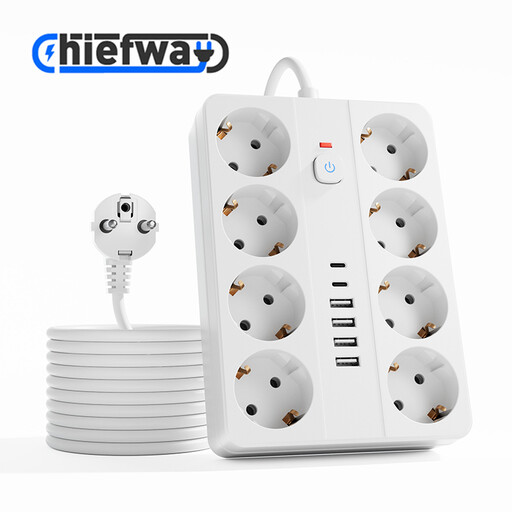
Multiple USB ports may be useful if you're connecting several devices at a shared desk. Check that the charging output is compatible with your speaker.
According to the product title: 8 AC sockets, 4 USB-A ports, 2 USB-C ports, up to 2500 W and a 3 m cable.
Before buying, check the CE marking on the specific product and the charging power available when several ports are in use at once.
 No image available
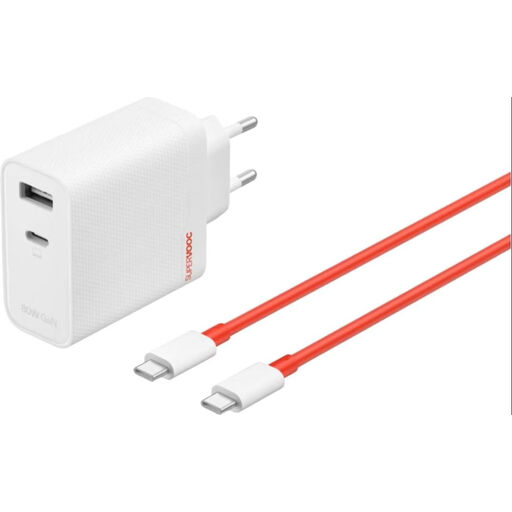
The Type-A and Type-C outputs may be useful if you use different types of cable. Check that the charging requirements are compatible with your speaker.
The product title lists 80 W and one Type-A port and one Type-C port.
Check the power distribution when charging multiple devices and the CE marking on the specific product. The stated maximum doesn't guarantee a shorter charging time for your speaker.
 No image available
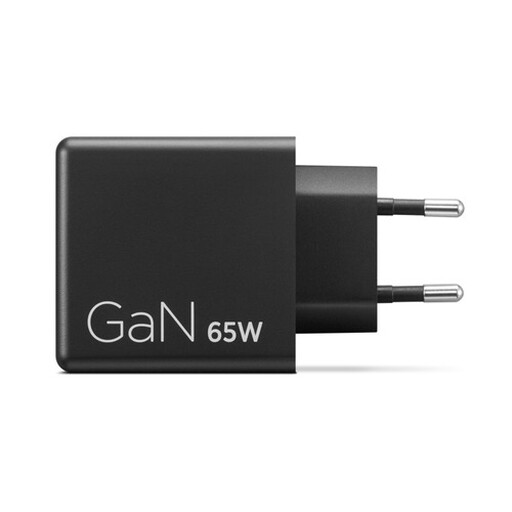
The two USB-C ports may be handy if you want to connect a speaker and a second USB-C device at the same time at a shared desk.
The product description lists up to 45 W through USB-C1 and 18 W through USB-C2 when both are in use, plus an included 1.5 m USB-C cable.
Compare the power distribution with the charging requirements of both devices, and check the CE marking on the specific product.
 No image available
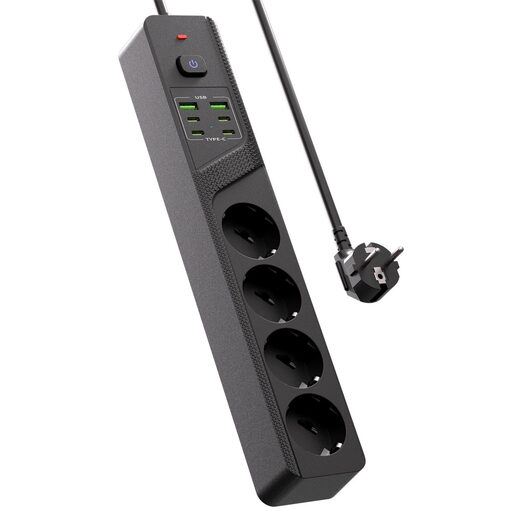
The different types of USB port may suit a shared workspace where people use different cables. Check that the charging output is suitable for your speaker.
According to the product title: 4 Schuko sockets, 4 USB-C ports, 2 USB-A ports and an on/off switch.
Check the power distribution when charging multiple devices and the CE marking on the specific product.
 No image available
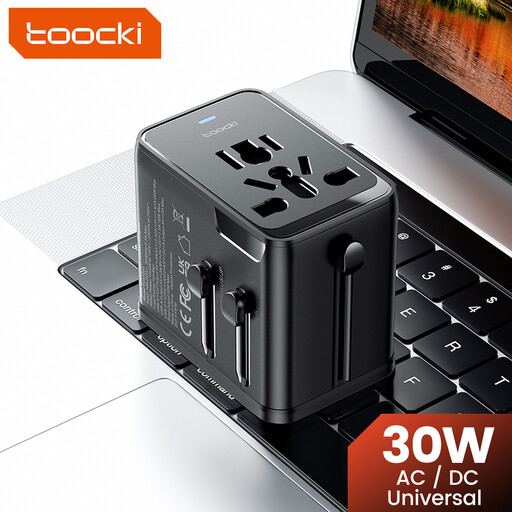
The three USB ports may be useful if you're connecting several devices while travelling. Check that the adapter is suitable for your intended charging point and speaker.
The product information lists 30 W PD, two USB-C ports and one USB-A port.
Check the power distribution when charging multiple devices and the CE marking on the specific product.
No. Check the charging requirements of your exact speaker model. The European Commission says that, since 28 December 2024, the common charger rules have applied to the specified categories of newly sold portable speakers. This doesn't retroactively change the connection on a speaker you already own. For example, JBL/Harman specifies 5 V / 2 A for the Flip Essential 2.
Check the specification for simultaneous charging and look at the power available from each port. IKEA Netherlands lists 45 W when using one USB-C port on the SJÖSS, and 22 W per port when using both. Then check that the cables and both devices are compatible.
Follow the instructions for your exact speaker model. JBL advises against charging the Charge 6 until it is completely clean and dry. This guidance applies to that model.
For a distance purchase by a consumer, a 14-day cooling-off period applies in many cases, according to the Dutch government. You also have the right to a product that is fit for purpose; if there's a problem, the seller must provide a solution.
Yes. CE marking is compulsory for a mains-powered USB charger placed on the market in the Netherlands as an electrical product. The Netherlands Food and Consumer Product Safety Authority explains that the marking is a declaration by the manufacturer; it doesn't prove that every individual item on sale has been independently tested.