
Fan owners who are unsure which connection they need
If you’re looking for a suitable charger, first check your fan’s connection and the cable supplied with it. Tristar and Duux describe different charging connections for their fan models.


First, check the cable supplied with your fan and its charging instructions. Then choose a charger with the right port and output, rather than simply going for the highest wattage. Charge it on a dry, stable surface away from splashes. Extra ports are most useful if you also want to charge other devices.
If you’re looking for a suitable charger, first check your fan’s connection and the cable supplied with it. Tristar and Duux describe different charging connections for their fan models.
If you charge your fan in the kitchen, you’ll need a dry, stable place where the charger, cable and fan won’t come into contact with moisture or splashes. Brandweer Nederland warns about the risks of moisture around batteries.
If you want to charge another device as well as your fan, compare the number of ports and the output per port. Belkin lists different output levels for its multi-port chargers.
First, check your fan’s connection and charging instructions. Then decide whether you just need a suitable charger or want to charge several devices at once.
| What to consider | What to look for | Who this matters to |
|---|---|---|
| Connection and charging compatibility | Check the fan model, the cable supplied, the connection at the charger end and the specified input. | I want to avoid buying a charger that isn’t suitable for my fan. Around 33% of consumers prioritise connection and charging compatibility. |
| A dry spot on the worktop | Choose a stable place away from splashes, and don’t use a damaged cable or charger. | If I charge my fan in the kitchen, I want to keep the charging set-up away from moisture. Around 33% of consumers prioritise a dry, safe place to charge. |
| Charging multiple devices | Compare the ports and output per port, including when devices are charging at the same time. | I want to be able to charge another device from the same socket. Around 17% of consumers prioritise extra ports. |
| Reusing an existing charger or cable | Check that your existing charger and cable meet the fan’s instructions, and whether a new charger comes with a cable. | I don’t want to buy an unnecessary charger or cable if I already have a suitable option at home. Around 17% of consumers prioritise reusing what they have. |
The connection alone doesn’t confirm that a charger is suitable for your fan’s input and charging method. Tristar describes charging via the USB cable supplied; Duux specifies USB-C for the Icy hand-held fan.
Check the exact fan model, cable and specified input. A 20 W or 25 W label doesn’t, on its own, prove that a fan will charge faster with that charger.
The total output doesn’t necessarily tell you how much power is available to each device. For example, Belkin lists separate outputs for its combined USB-A and USB-C charger.
Read the specifications for each port and check what applies when devices are charging at the same time.
Duux lists a replacement adapter for specific Whisper Flex (Ultimate) models; that doesn’t mean it’s automatically suitable for other fans.
If the manual specifies a dedicated adapter, search using the full model number and check the stated compatibility.
Belkin offers USB-A, USB-C and combination wall chargers. Check which port type matches your fan’s cable.
The Samsung EP-T2510XBEGEU is a USB-C mains adapter which, according to Samsung, comes with a USB-C-to-USB-C cable.
According to UGREEN, the Nexode version combines a USB-C charger with USB-C cables.
Here you’ll find USB-A and USB-C wall chargers for fans with a compatible USB cable, as well as a fixed power strip option for a charging spot on your kitchen worktop. Check your fan’s instructions and the product specifications before choosing.
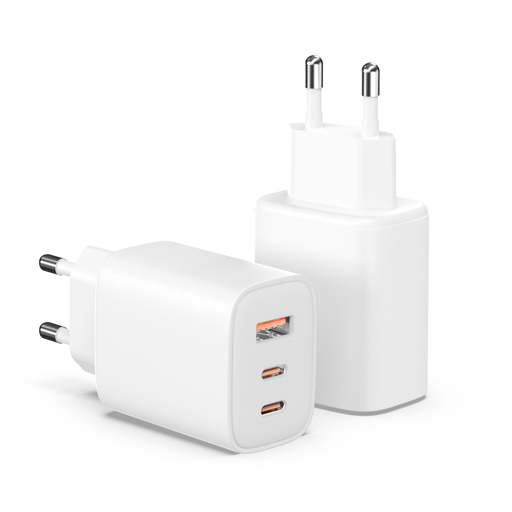 No image available
May be suitable if your fan cable has a USB-A or USB-C connection at the charger end; check the fan’s required input.
65 W; two USB-C ports and one USB-A port. Compatible charging cables are not included.
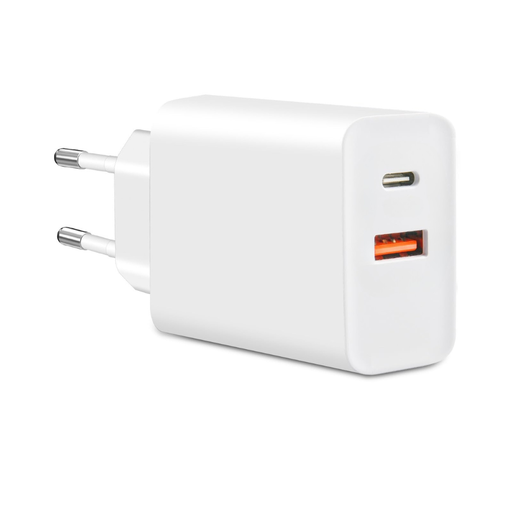 No image available
May be suitable for a fan cable with a USB-C or USB-A connection at the charger end; check that the output is suitable for your fan.
30 W combined output and two ports: USB-C and USB-A. For indoor use only in a dry place.
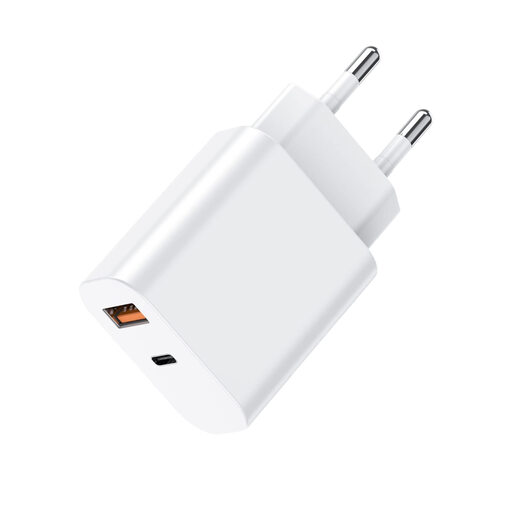 No image available
May be suitable for a fan cable with a USB-C or USB-A connection at the charger end; follow the instructions for your fan model.
20 W total output and two ports: USB-C and USB-A. For indoor use only in a dry place.
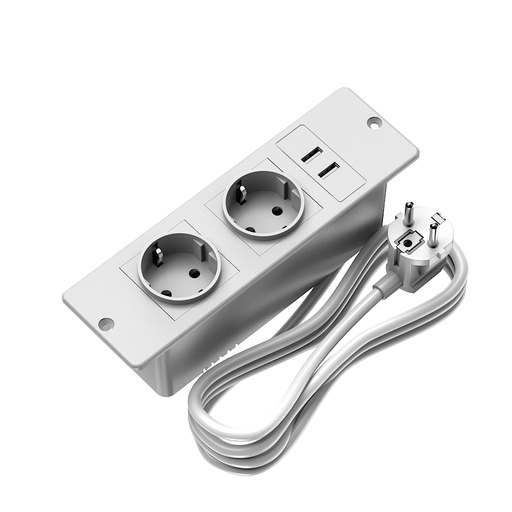 No image available
A fixed option if you’re considering an integrated charging point; this isn’t a plug-in wall charger. Check that it can be fitted to your worktop.
Two USB-A ports, rated at up to 5 V/2,1 A, and a 1,5 m extension cable. For indoor use only in a dry place.
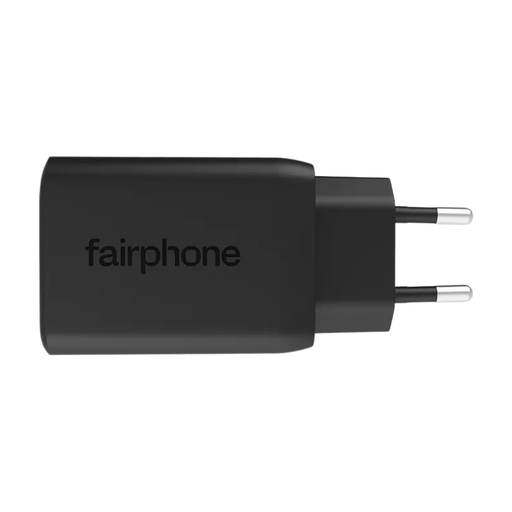 No image available
May be suitable if your fan cable has a USB-A or USB-C connection at the charger end; check the fan’s required input.
65 W; two USB-C ports and one USB-A port. Cables are not included.
No, this doesn’t automatically apply to every fan. The Dutch government outlines USB-C requirements for certain categories of radio equipment from 28 December 2024; the European rules are limited to the categories specified. Check the connection on your fan model.
It’s better to choose a dry, stable place where the charger, cable and fan are out of reach of splashes. Brandweer Nederland warns that moisture around batteries can pose a risk; this advice doesn’t specify a set distance in centimetres.
Check the cable and charger for damage, keep the charging area dry and follow your fan’s instructions. Brandweer Nederland advises charging when you’re nearby and unplugging the charger once charging is complete.
In the Netherlands, a product must meet the standards you’re entitled to expect; if it’s faulty, the seller must provide a solution. According to the Dutch government, a manufacturer’s warranty doesn’t replace your statutory rights. There isn’t a fixed two-year statutory warranty period for all products.
CE marking is compulsory for electrical products covered by the applicable rules. The Netherlands Food and Consumer Product Safety Authority explains that the manufacturer uses it to declare that the product meets the relevant requirements; CE marking alone isn’t proof of an independent safety test.