
Students looking for a compatible charger
You already have a rechargeable fan and want to check that the connector, cable and power supply are compatible before buying a mains charger.


Choose a USB charger based on the connector on the charger end of your fan cable and the power requirements in the manual. USB-C or a higher wattage does not automatically mean the charger is compatible or will charge your fan faster. If you also want to connect another device, check the number of ports and the power available per port when used simultaneously. For a mains charger, check that it has the required CE marking, and charge with undamaged cables in a clear space.
You already have a rechargeable fan and want to check that the connector, cable and power supply are compatible before buying a mains charger.
You want to plug your fan and another device into the same socket. In that case, the number of ports and the power available when using them simultaneously are important.
You want to charge your fan in line with the instructions, using an undamaged cable and leaving the charger in a clear space.
First, check your fan’s connector and power requirements. Then consider how many devices you want to connect at once and which cables you’ll need.
| What to consider | What to look for | Who is this most important for? |
|---|---|---|
| Connector and power supply | Compare the connector on the charger end and the power requirements in your fan’s manual with those of the charger. | If I want to make sure my existing fan and cable will work together, I check the connector and power supply first; around 36% of consumers put compatibility first. |
| Safe charging | Check the CE marking and instructions; don’t charge with a damaged cable or under bedding. | If you charge your fan in a small room or beside your bed, you’ll want to know how to do so safely in line with the instructions; around 29% of consumers give safe charging their highest priority. |
| Number of ports | Check the port types and the power available from each port when using multiple devices at once. | If there’s only one spare socket and I also want to charge another device, I look for suitable connections for both; around 21% of consumers prioritise this shared connection. |
| Total cost | Check whether a compatible cable is included and allow for the cost of a separate cable if you need one. | If you don’t want to spend money on an unsuitable charger or a cable you weren’t expecting to need, check what’s in the box beforehand; around 14% of consumers put the total cost first. |
A USB-C connector on its own doesn’t tell you whether the cable and power output are suitable for your fan.
Read the manual and compare the connectors and power requirements before choosing a charger.
On a charger with multiple ports, the stated power output can vary from port to port, especially when you use several ports at once.
Check the specifications for the ports you actually intend to use together.
The cable included can vary between versions. A charger without a compatible cable may not connect straight to your fan.
Check what’s included and the cable connectors for the exact version you’re buying.
If the right cable isn’t included, you may need to buy one separately.
Bedding can restrict heat dissipation. The Fire Service also warns against using damaged cables.
Charge your fan in a clear space and follow the instructions. Replace any damaged cables.
The models reviewed offer USB-A, USB-C or both types of port. Compare the version with your fan cable.
The 15 W Power Adapter reviewed is a USB-C option if it’s compatible with your fan cable and power requirements.
The 20 W Nexode USB-C charger reviewed is worth considering if it matches your fan’s cable and charging requirements.
The Nano Pro versions reviewed include USB-C chargers with one or two ports.
This selection includes mains chargers with USB-A, USB-C or both types of port for use with a rechargeable fan. Always check that the cable and power output are suitable for your fan.
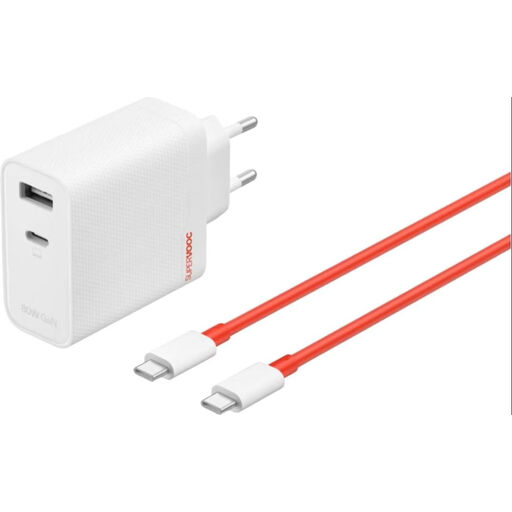 No image available
Compare the USB-A and USB-C connectors with your fan cable.
Stated power: 80 W. Connectors: USB-A and USB-C.
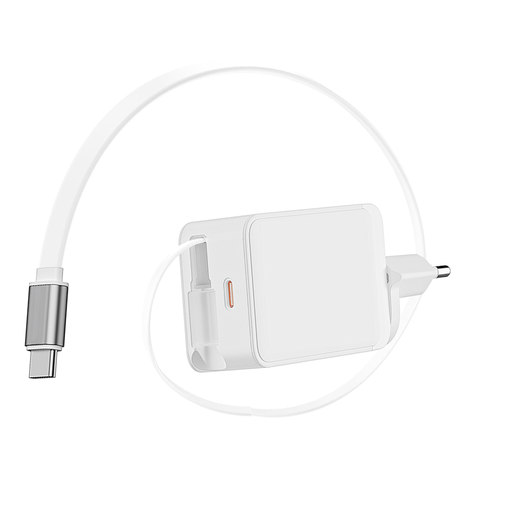 No image available
Compare the USB-C ports and built-in cable with your fan’s charging connection.
Stated power: 65 W. Two USB-C ports and a built-in retractable USB-C cable.
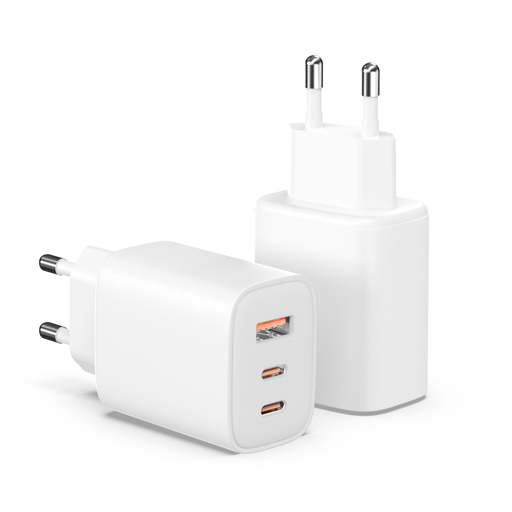 No image available
The different port types are worth comparing if you use cables with different connectors.
Stated power: 65 W. One USB-A port and two USB-C ports.
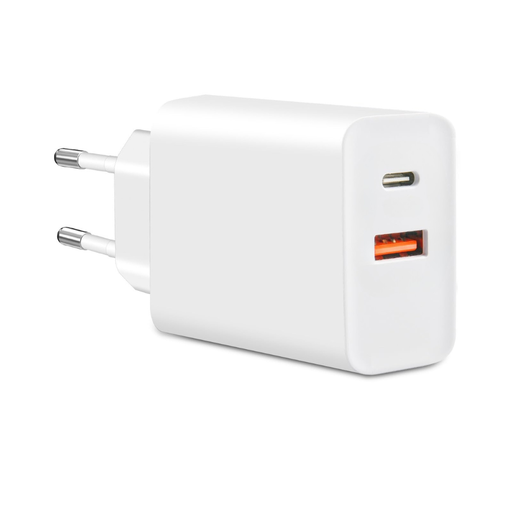 No image available
Check which of the two port types matches your fan cable.
Stated power: 30 W. Connectors: USB-A and USB-C.
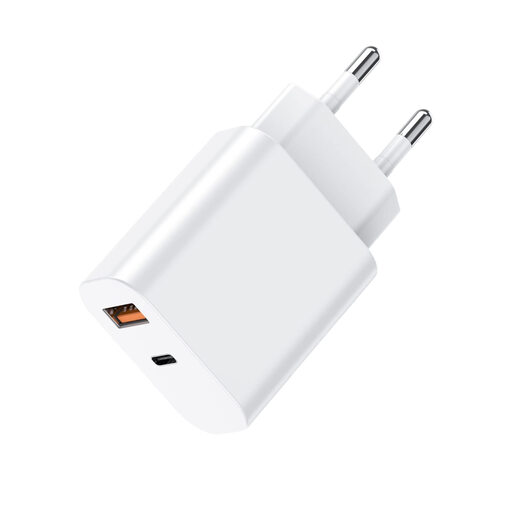 No image available
Check which port type matches your fan cable and whether you need a second connection.
Stated power: 20 W. Connectors: USB-A and USB-C.
The EU common charger rules specify device categories that must use USB-C, but fans aren’t on that list. The European Commission publishes these categories, so check your fan’s connector and manual.
Not necessarily: the wattage stated on the charger doesn’t prove that your fan can use that power output. Compare the power requirements in the manual with the charger specifications.
Charge your fan in a clear space, following the instructions, and don’t place it under a pillow or duvet. The Fire Service advises leaving chargers uncovered so heat can dissipate, and warns against using damaged cables.
No. According to the Netherlands Food and Consumer Product Safety Authority, CE marking is mandatory for the type of mains charger covered here. It represents the manufacturer’s declaration that the product complies with the applicable European rules; it isn’t proof of an independent test.
There’s no fixed statutory warranty period in the Netherlands, but you are entitled to a product that works as it should. The Dutch Government explains that any manufacturer’s or seller’s guarantee may be in addition to your statutory rights; the remedy depends on the circumstances of the fault.