What should you look for when buying?
First, compare the connector and charging specifications with your speaker’s manual. Then decide whether one port is enough or whether you want to charge a second device at the same time.
| What to consider |
What to look for |
Who is this important for? |
| Connector and charging specifications |
Compare the port, cable and stated output with the manual for your exact speaker model. |
I want to avoid choosing a charger that isn’t right for my speaker; around 33% of consumers therefore prioritise connector type and charging compatibility. |
| Safe place to charge |
Choose a spot with a hard surface and follow the instructions for the charger and speaker. The NVWA outlines the applicable product safety requirements and CE marking rules for electrical devices; a CE mark is not independent proof that a product has been tested. |
If my room has little spare space, I want somewhere safe to put my speaker while it charges; around 27% of consumers prioritise having a suitable place to charge. |
| Charging multiple devices at once |
Check the number and type of ports, as well as how the power is shared when multiple devices are connected. |
I want to connect my speaker and, for example, my phone at the same time without constantly swapping cables; around 20% of consumers therefore prioritise simultaneous charging. |
| Cable and what’s included |
Check what comes with the exact version and which cable your speaker needs. |
If I already have a compatible cable or charger, I want to avoid unnecessary purchases; around 20% of consumers focus on reusing what they own and on what’s included in the box. |
USB-C chargers on Joybuy
These options are USB-C chargers for speakers with a compatible USB-C port. Compare the charging specifications with your speaker’s manual and check that the charger complies with the applicable Dutch safety requirements and CE marking rules; compliance cannot be confirmed from the product specifications below alone.
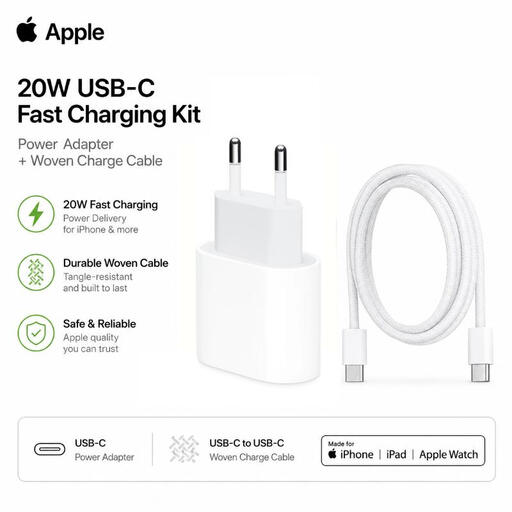 Image unavailable
Apple 20 W USB-C adapter with USB-C cable
An option if your speaker charges via USB-C and you’d like a cable included with the charger. The product information lists a 20 W adapter and a 1 m USB-C to USB-C cable.
View at Joybuy
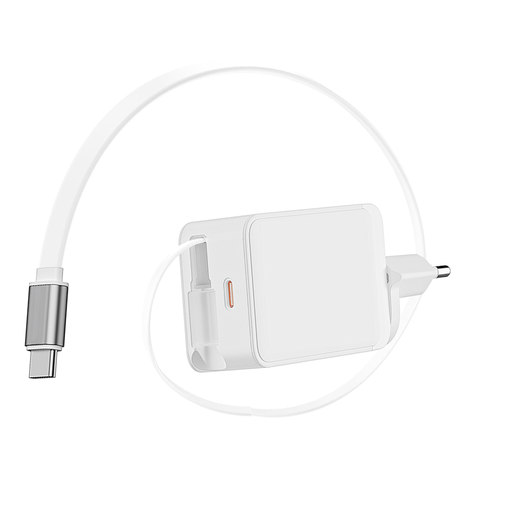 Image unavailable
65 W charger with 2 USB-C ports and retractable cable
An option if you’re looking for an integrated cable and two USB-C ports. The product title lists 65 W; check how the power is shared when you connect multiple devices at once.
View at Joybuy
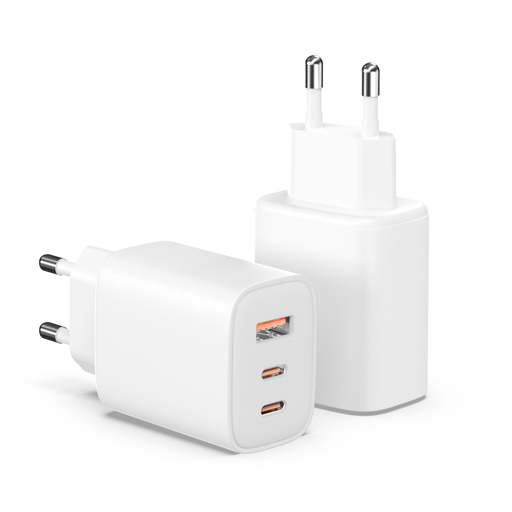 Image unavailable
65 W charger with 2 USB-C ports and USB-A
An option if you want to connect a USB-A device as well as a USB-C speaker. The product title lists two USB-C ports, one USB-A port and 65 W; check how the power is shared when using multiple ports at once.
View at Joybuy
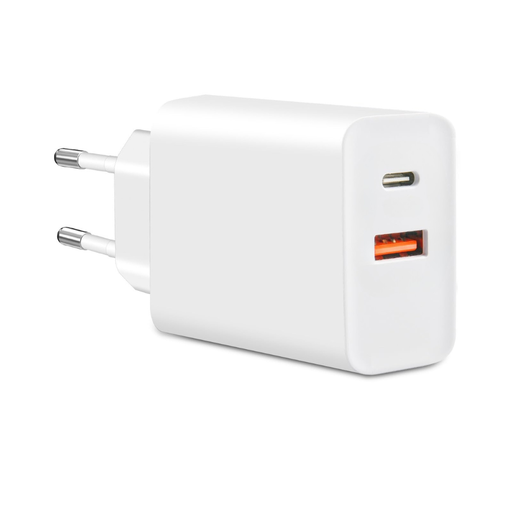 Image unavailable
30 W charger with USB-C and USB-A
An option if you want to connect a USB-C speaker and a USB-A device. The product title lists a 30 W output and one port of each type; check the output specifications for your speaker.
View at Joybuy
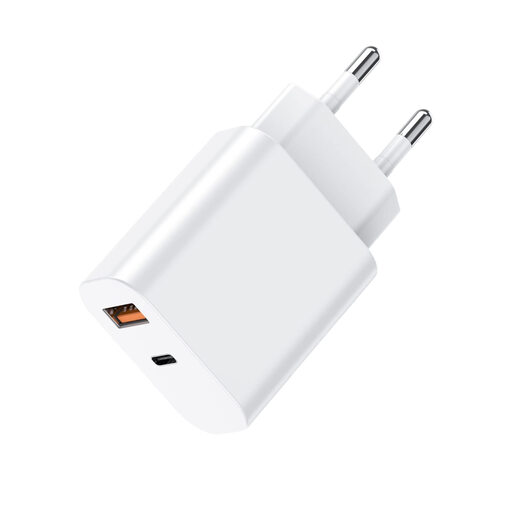 Image unavailable
20 W charger with USB-C and USB-A
An option if you want to connect a USB-C speaker and a USB-A device. The product title lists a 20 W output and one port of each type; compare the charging specifications with your speaker’s manual.
View at Joybuy
Frequently asked questions
Does every portable speaker in the Netherlands need to have a USB-C port?
No, that doesn’t automatically apply to every speaker you already own. The EU’s common charging rules have applied since 28 December 2024 to new portable speakers that are covered by the rules and placed on the EU market. Check the connector and manual for your own model.
Will my speaker charge faster with a higher-wattage charger?
Not necessarily. Compare your speaker’s charging specifications with the charger’s output. For example, JBL lists a charging time for the Flip 6 at 5 V / 3 A; this model-specific figure doesn’t automatically apply to other speakers.
Where should I put my speaker while it’s charging?
The Netherlands Fire Service recommends using a hard surface and, if possible, charging when you’re nearby. Unplug the charger once the battery is full; this is safety advice, not a separate legal requirement for students.
Who should I contact if my charger breaks too quickly during normal use?
Contact the seller, who is responsible in the Netherlands for the statutory guarantee if a product is faulty. ACM ConsuWijzer explains that there is no fixed guarantee period of exactly two years: what matters is how long you could reasonably expect the product to last.
What rules apply to a mains charger sold in the Netherlands?
Electrical chargers are subject to applicable product safety requirements and CE marking rules. The NVWA outlines these obligations for electrical products; a CE mark is not an independent safety check of an individual product being sold.


