
A charger by the bed
You want to charge your headphones or case in a clear space, not under a pillow or duvet. The Netherlands Fire Service advises leaving chargers uncovered so heat can escape.


Start by checking the connector and charging instructions for your headphones or case, then choose a compatible cable and adapter. Comparing the maximum wattage alone isn’t enough. Charge your device on a clear, hard surface, not under a pillow or duvet. One port is enough if you’re charging one device; a second port is useful if you genuinely want to charge another device at the same time.
You want to charge your headphones or case in a clear space, not under a pillow or duvet. The Netherlands Fire Service advises leaving chargers uncovered so heat can escape.
You want to check that the connector on your headphones or case, the cable and the adapter are all compatible. Even within the same product range, different models may need different cables.
You might want to connect your headphones and another device, for example. So check how many ports you need and whether the port type works with both cables.
First, check the connector on your device and cable. Then work out how many ports you need and whether the adapter will fit in your available charging space. The maximum output alone doesn’t guarantee a particular charging speed for your headphones.
| What to consider | What to look for | Who is this important for? |
|---|---|---|
| A safe place to charge | Leave the charger uncovered so heat can escape, and place the device on a hard surface, not under bedding. | When I charge by my bed, I want the charger and case to have space around them. Around 36% of consumers give top priority to a clear, safe place to charge. |
| A compatible connector | Check the exact model of your headphones or case, both ends of the cable, and whether a cable is included. | I want to make sure my existing cable fits both the case and the adapter. Around 29% of consumers put the right connector and cable first. |
| Charging two devices at once | Count the USB-C and USB-A ports you need, and check the output for each port. | If I also want to charge a second device by the bed, I need ports that work with both cables. Around 21% of consumers give simultaneous charging top priority. |
| Size and space | Compare the adapter’s dimensions with the space around the socket, and check the connector too. | If there’s little room around my socket, I want an adapter that fits without getting in the way of the cable or charging space. Around 14% of consumers give compactness top priority. |
An adapter’s stated output doesn’t automatically tell you how much power your headphones or case will draw. The connector and charging instructions for your exact model are still what matter.
Check your device and both ends of the cable first. Then compare the adapters’ power specifications.
A second USB-C port won’t work with a cable that needs USB-A at the adapter end. The maximum output can also vary from port to port.
For each device, note the connector type at the adapter end of the cable and check the specifications for every port.
Bedding can trap heat. The Netherlands Fire Service advises against charging devices under a pillow or duvet.
Place the case on a hard, clear surface, and don’t use a damaged cable or charger.
The EP-T1510NBEGEU is a USB-C mains adapter with a stated maximum output of 15 W. No cable is included.
The models listed range from a single USB-C port to two ports: one USB-C and one USB-A.
The European Anker 511 Charger (Nano Pro), model A2637, is a single-port USB-C adapter with a stated maximum output of 20 W.
The Nexode 20W PD 3.0 PPS USB-C Charger is a single-port adapter with USB-C.
This selection includes USB mains adapters with USB-C, including models with USB-A ports or an integrated cable for charging one or more devices. Before choosing, check that the ports and cables are compatible with your headphones or case.
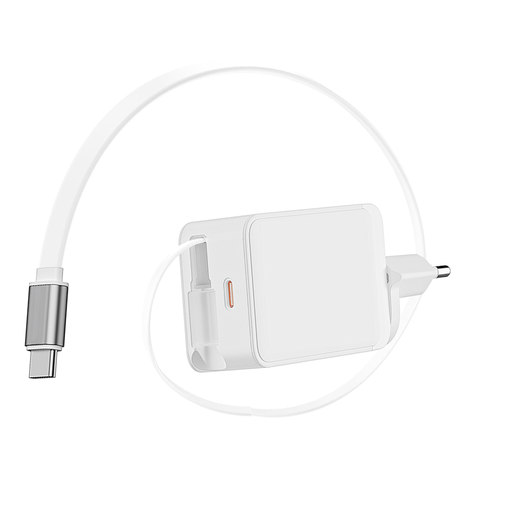 No image available
An option if you want two USB-C ports and an integrated cable in one charging spot.
65 W; 2 × USB-C; 70 cm retractable integrated USB-C cable.
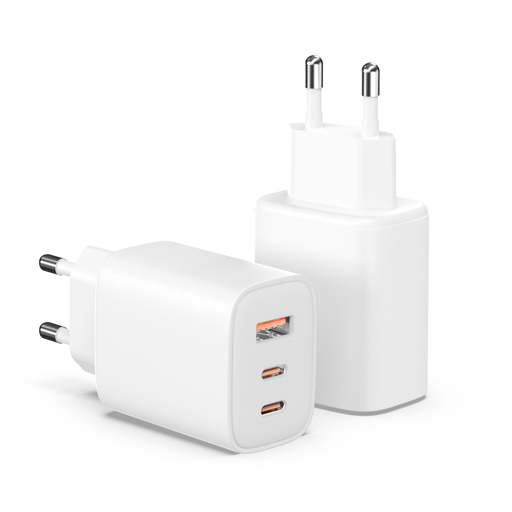 No image available
Suitable for a charging spot where you want to connect devices using both USB-C and USB-A cables.
65 W; 2 × USB-C and 1 × USB-A.
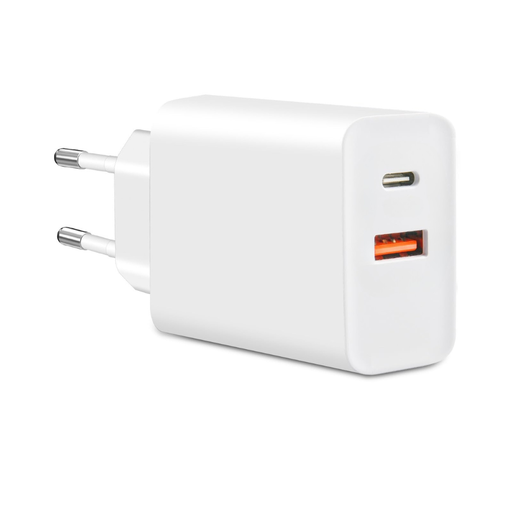 No image available
An option if you want to connect both USB-C and USB-A cables to the same adapter.
30 W combined output; one USB-C port and one USB-A port.
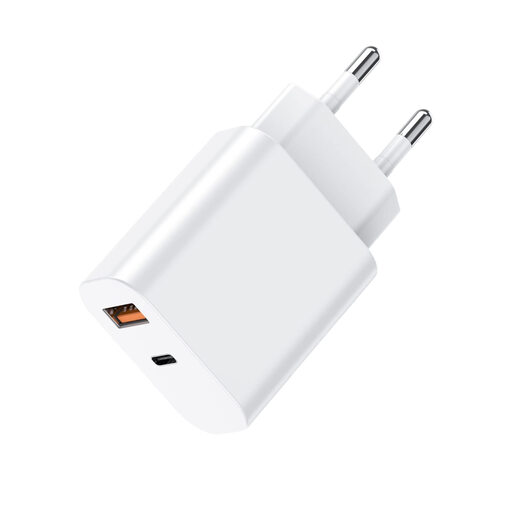 No image available
An option if your devices need both USB-C and USB-A.
20 W total; one USB-C port and one USB-A port.
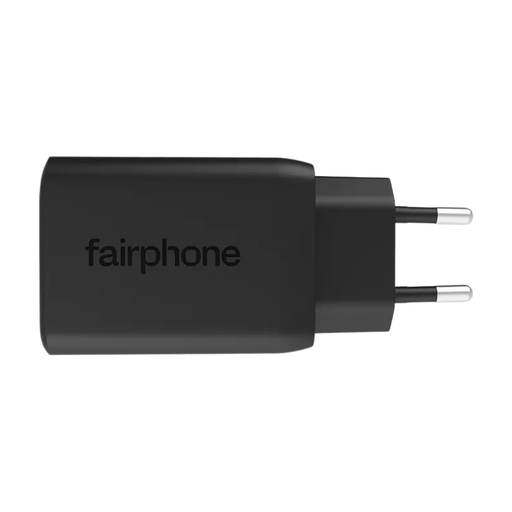 No image available
An option if you want to connect several devices with USB-C or USB-A cables in the same charging spot.
Up to 65 W; 2 × USB-C and 1 × USB-A. Cables not included.
Check the charging instructions and connector for your exact headphones or case, as well as the cable you use. Under EU rules, USB-C is required for headphones and earphones placed on the market since 28 December 2024, according to the European Commission. Older cases may have a different connector; Apple, for example, also offers Lightning versions.
No, don’t charge them under a pillow or duvet. The Netherlands Fire Service advises placing devices on a hard surface and leaving the charger and device uncovered so heat can escape. Ideally, charge them when you’re nearby.
According to the Netherlands Food and Consumer Product Safety Authority, separate testing isn’t mandatory for this product group. CE marking is, however, a legal requirement for the relevant electrical products. CE marking alone doesn’t prove that an individual product has undergone mandatory independent testing.
If you’ve used a product normally and it breaks sooner than you could reasonably expect, the seller is responsible for providing a suitable solution, such as a repair, replacement or refund, according to ACM ConsuWijzer. For a standard online purchase, you generally have a statutory 14-day cooling-off period from delivery. Check the applicable terms and exceptions.