First, check your hand warmer’s input, permitted charging values and cable instructions. Then choose a mains charger with a suitable output. USB-A, USB-C or a combination of ports may be suitable, depending on the cable specified, but a higher wattage doesn’t prove that the hand warmer will charge faster. Charge it in a dry, clear space and also check that the charger meets Dutch requirements; a CE mark alone does not independently prove that a product is safe.
Who is this buying guide for?
Users of the supplied cable
You want a mains charger with a connection and output that suit your hand warmer’s cable and charging requirements. Lifesystems and Zippo provide model-specific charging and cable instructions, so check the guidance for your own device.
Anyone sharing a socket
If you want to charge another device as well as your hand warmer, compare the number of ports and the power available from each one. Belkin, for example, lists different port combinations and output values for specific models.
Careful kitchen chargers
You want a dry, clear space on the worktop where the charger can dissipate heat and won’t come into contact with splashes. Brandweer Nederland advises placing chargers in a clear space and not using damaged cables or counterfeit chargers.
What should you look for in a USB charger?
Start with your hand warmer’s manual: check the specified cable and input before comparing port types, extra features or maximum power.
| What to consider |
What should you check? |
Who is this important for? |
| Connection and charging compatibility |
Compare the hand warmer’s specified cable and input with the charger’s port type and output values. |
I want to make sure first that I can connect my hand warmer using the specified cable and charging values. Around 42% of consumers put this compatibility first. |
| Safe charging spot |
Choose a dry, clear spot away from splashes, and follow the instructions for both the charger and hand warmer. |
On a kitchen worktop, I want to avoid moisture and leave the charger in a clear space so heat can dissipate. For around 33% of consumers, finding a safe place to charge is their main concern. |
| Number of ports |
Check the port types and power available from each port, including when connecting two devices at once. |
If I’m charging another device in the same place, I want to know whether both cables will fit and what each port can supply. Around 17% of consumers prioritise sharing a socket. |
| Cable and features you need |
Check whether a suitable cable is included, and don’t pay for extra power based on an unproven assumption about charging time. |
I’m looking for an option that works with the specified cable, without features I don’t need. That’s the main priority for around 8% of consumers. |
Common buying mistakes
-
Placing the charger by the sink
A charging spot where water could reach the charger or cable isn’t in keeping with the advice to charge battery-powered equipment in a dry place.
Choose a dry, clear spot on the worktop, away from splashes. Brandweer Nederland advises placing chargers in a clear space and not using damaged cables.
-
Assuming the maximum wattage determines charging speed
A mains charger’s maximum power doesn’t, by itself, tell you how quickly a hand warmer will charge. The device’s permitted input and cable also matter.
Compare your hand warmer’s charging values with the output from each port. Don’t estimate charging time based only on the wattage printed on the charger.
-
Choosing a USB-C charger without checking the cable
The connection on the charger may differ from the cable specified in the hand warmer’s manual.
Check both ends of the specified cable and consult the manual before choosing a charger.
Brands to consider
Belkin
Belkin lists wall chargers with USB-A, USB-C and combinations of the two. These models give you a starting point for comparing port types, but their specifications don’t confirm that a charger will work with every hand warmer.
- According to Belkin, the WCB002 delivers a maximum of 12 W per USB-A port.
- Belkin lists a maximum output of 20 W via USB-C for the WCA006 and states that the packaging mentioned does not include a cable.
- Check your own hand warmer’s charging values and cable instructions; the charger’s maximum output values are not proven charging speeds for that device.
Samsung
The Samsung USB-C Power Adapter EP-T1510XBEGEU is an example of a single-port USB-C mains charger.
- Samsung lists a maximum of 15 W for this model and describes protection against issues including overcurrent and overheating.
- This model has USB-C, so it isn’t suitable for a cable that requires USB-A at the charger end. The stated protection does not represent an independent test with a hand warmer.
Philips
Philips’ product catalogue includes a wall charger with multiple USB connections, as an example of a mixed port combination.
- Philips lists three ports and protection against overheating, overloading and overcurrent for the DLP2681/12.
- Philips specifically marks model DLP2681/12 as no longer available, so don’t treat it as a confirmed current buying option.
USB mains chargers at Joybuy
Below are mains chargers with USB-C, or with both USB-A and USB-C. Before buying, check that the connection, cable and charging values suit your hand warmer; the listed wattages don’t confirm compatibility or charging speed.
 No image available
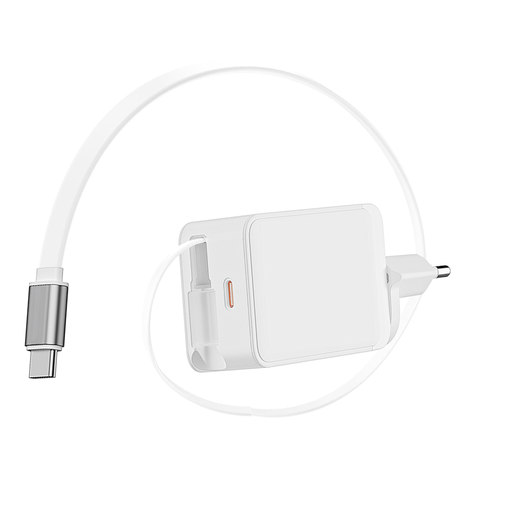
65W wall charger with two USB-C ports and retractable cable
Consider this if your hand warmer’s manual allows for a suitable USB-C cable and charging settings; check those requirements before using the charger.
The product name lists 65 W, two USB-C ports and a retractable USB-C cable. The product description advises against using it in damp environments.
View at Joybuy
 No image available
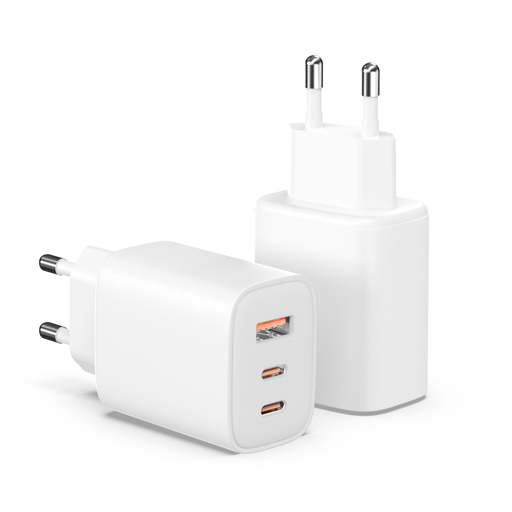
65W wall charger with USB-A and two USB-C ports
This may be suitable if your hand warmer’s specified cable matches one of the ports and the charging values fall within the instructions.
The product name lists 65 W, USB-A and two USB-C ports. According to the product description, cables are not included and use in a damp environment is not recommended.
View at Joybuy
 No image available
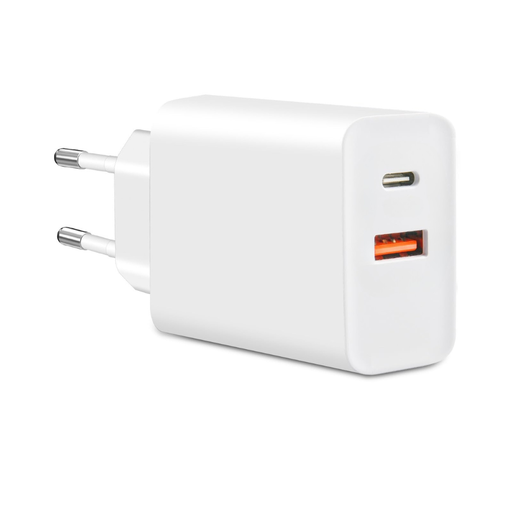
30W wall charger with USB-A and USB-C ports
Consider this port type only if it matches your hand warmer’s cable and charging requirements.
The product name lists 30 W, USB-A and USB-C. The product description says to use it indoors in a dry place.
View at Joybuy
 No image available
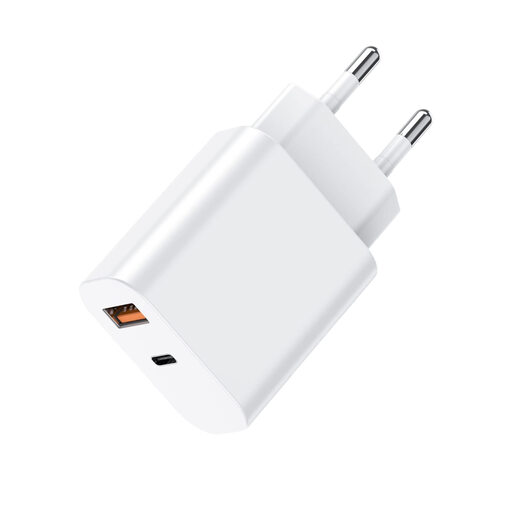
20W wall charger with USB-A and USB-C ports
This combination may be suitable if your hand warmer’s cable and input match one of the ports and output values.
The product name lists 20 W, USB-A and USB-C. The product description limits use to dry conditions indoors.
View at Joybuy
 No image available
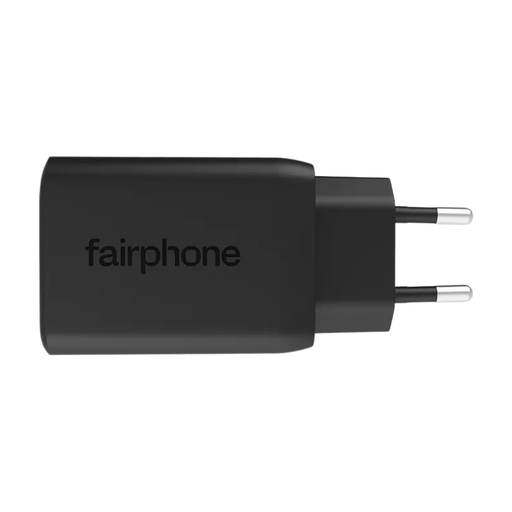
Fairphone Dual USB-C + USB Fast Charger 65W Black
Consider this model if you’re looking for a mixed port combination, but first check that it works with your hand warmer’s specified cable and charging settings.
The product name lists 65 W. The product description mentions USB-C and USB-A connections, states that cables are not included and advises against using it in damp environments.
View at Joybuy
Frequently asked questions
Can I use any USB-C fast charger for my hand warmer?
You can’t tell without checking the details of your hand warmer. Compare the device’s input, permitted charging values and cable instructions with the charger’s output. Lifesystems lists a 5 V/2 A input for one specific hand warmer model; this is not a general specification for all hand warmers.
Where can I charge my hand warmer on the kitchen worktop?
Choose a dry, clear space where the charger can dissipate heat and won’t come into contact with water from the sink. Brandweer Nederland advises placing chargers in a clear space and not using damaged cables or counterfeit chargers. Also follow your hand warmer’s manual.
Is a CE mark compulsory, and does it mean the charger has been independently approved?
The applicable CE marking is required for a mains-powered electrical USB charger offered on the Dutch market. According to the Netherlands Food and Consumer Product Safety Authority, electrical products do not have to undergo an inspection; the European Union also explains that there is no central EU body that issues a certificate authorising the use of the CE mark. A CE mark alone therefore does not independently prove that a product is safe.
Do EU rules require my hand warmer to have a USB-C connection?
That does not follow from the EU rules on a common charger described here. The European Commission lists specific categories of devices, which do not include hand warmers. So check the actual connection and cable instructions for your hand warmer.


