
Readers with an older e-reader
If you use an older model, it’s worth checking the exact model and both ends of the cable. Some older e-readers use micro-USB, according to Rakuten Kobo.


First, check that your current cable and charger are suitable for your e-reader’s port and charging guidance; you may not need a new adapter. If you share a socket, an adapter with multiple ports can be useful, but check the power output per port and follow the manufacturer’s advice. For charging problems, Kobo recommends a 10 W adapter at 5 V and advises against high-wattage fast chargers.
If you use an older model, it’s worth checking the exact model and both ends of the cable. Some older e-readers use micro-USB, according to Rakuten Kobo.
If you also want to charge a colleague’s device or a second device of your own, the number of ports, the port types and the power output per port are all relevant.
If you have a suitable cable and a power source that meets your e-reader’s charging guidance, first check whether they’re still fit for purpose before replacing the adapter.
First, check your e-reader’s port and charging advice. Then work out how many ports you’ll need to use at the same time at your shared desk.
| What to consider | What should you check? | Who is this important for? |
|---|---|---|
| Port and cable | Check the exact e-reader model and the connectors at both ends of the cable, including the type of output on the adapter. | If I have an older e-reader, I want to make sure the cable and adapter connect to my device. Around 36% of consumers mainly prioritise a suitable port and cable. |
| Charging multiple devices | Count how many devices need charging at the same time, and check both the total power output and the output per port. | If I share a socket or charge another device alongside my e-reader, usable ports and suitable cables matter. Around 29% of consumers prioritise charging multiple devices at once. |
| Charging advice and electrical safety | Compare the adapter’s output specifications with the manufacturer’s charging guidance, and check the safety and product information too. | If I want to follow the advice for my e-reader and choose a mains adapter carefully, I look beyond the maximum wattage alone. Around 21% of consumers put charging advice and safety first. |
| Cable and desk setup | Check whether the suitable cable is included, whether it’s long enough and whether the socket will remain accessible. | At a shared desk, I want to connect my e-reader without a missing or awkwardly short cable making the setup difficult. Around 14% of consumers mainly consider the cable and desk setup. |
The cable also needs to fit the adapter. This is especially important with older e-readers that may have a micro-USB port, for example.
Check the exact e-reader model and both ends of the cable before choosing an adapter.
For the IKEA SMÅHAGEL, 17 W total and a maximum of 12 W per port are separate specifications, according to IKEA.
Check both the output per port and the total power when several ports are in use, then compare them with your e-reader’s guidance.
A high-wattage adapter doesn’t prove that your e-reader will charge faster. Rakuten Kobo advises against high-wattage fast chargers for Kobo e-readers.
Follow the advice for your e-reader model first. Choose extra charging capacity for other devices only if you need it.
Relevant if you have a Kobo e-reader and want to follow the manufacturer’s charging advice.
The SMÅHAGEL model reviewed is a three-port USB-A option for a shared socket.
The BoostCharge models reviewed offer different port combinations for use with a shared socket.
These products offer USB connections for a shared workspace. Before use, check that the port, cable and charging guidance are suitable for your e-reader; a high maximum wattage doesn’t automatically mean the reader will charge faster.
 No image available
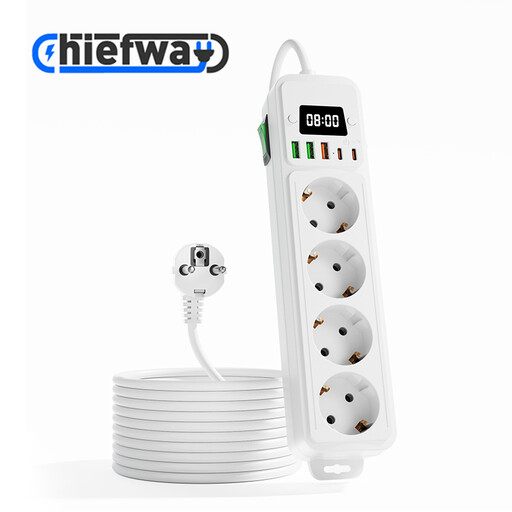
The five USB ports provide connections for several devices at a shared desk.
The power strip has 3 USB-A ports, 2 Type-C ports, 4 AC outlets and a 3 m cable. The stated maximum load is 2500 W.
Check the output specifications and advice for your e-reader; the stated maximum load alone says nothing about the reader’s charging speed.
 No image available
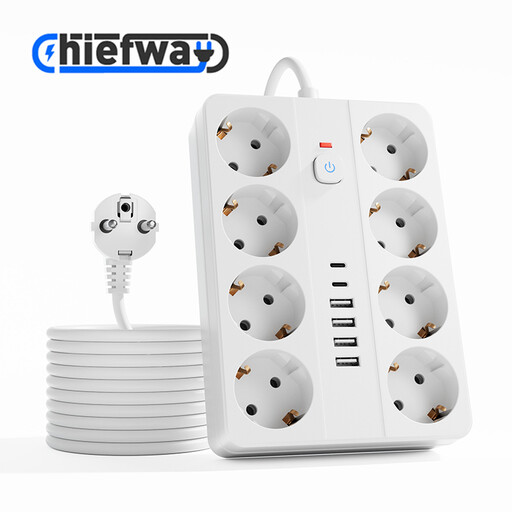
The six USB ports provide connections for several devices in one shared workspace.
The power strip has 4 USB-A ports, 2 Type-C ports, 8 AC outlets and a 3 m cable. The stated maximum load is 2500 W.
Check the port and charging advice for each device; the total maximum doesn’t indicate how much power each USB port delivers.
 No image available
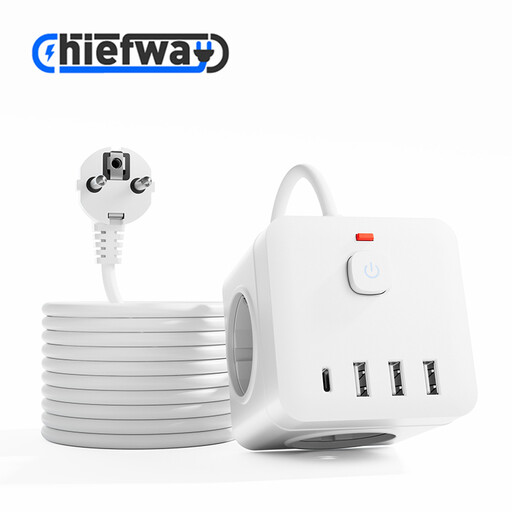
This power strip combines USB ports with AC outlets for devices in a shared workspace.
The description lists 3 USB-A ports, 1 USB-C port and 3 AC sockets, each with its own switch. The cable is 1.5 m long and the stated maximum load is 2500 W.
Check that the cable length suits your desk setup and that the charging output matches your e-reader’s guidance.
 No image available
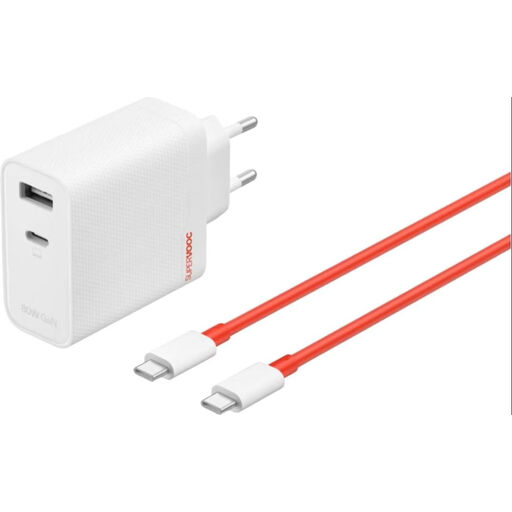
The two different port types may be useful if devices connected to the same socket use different connections.
The product name lists a maximum output of 80 W and USB-A and USB-C ports.
A high maximum output doesn’t prove that an e-reader will charge faster. Check the advice for your model before using this adapter.
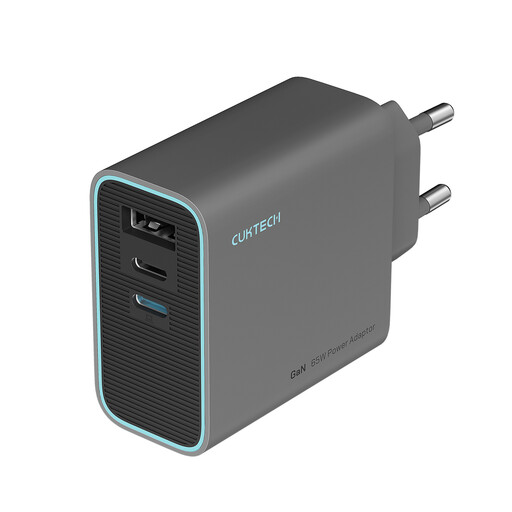 No image available
The three ports may be useful if you want to connect several devices in the same place.
The product name lists up to 65 W, three ports and a folding plug.
Check the port types and your e-reader’s charging advice; the maximum power alone doesn’t confirm compatibility or faster charging.
Not necessarily: first check that your existing charger and cable are suitable for your e-reader and the manufacturer’s charging guidance. The European Commission states that the EU rules on the common USB-C charging port have applied to the relevant category of e-readers since 28 December 2024; an older e-reader won’t therefore automatically have a USB-C port.
Rakuten Kobo recommends trying a different USB cable or computer port and removing any USB hub between the devices. For charging problems, Kobo also suggests trying a 10 W adapter at 5 V.
According to the Netherlands Food and Consumer Product Safety Authority, electrical products must carry a CE mark. Check the marking and product information; a CE mark alone isn’t proof of an independent assessment.
Yes. In the Netherlands, statutory warranty is separate from a commercial warranty, according to ACM ConsuWijzer. If a product breaks sooner than you could reasonably expect under normal use, the seller is responsible for providing an appropriate solution; the period isn’t automatically two years for every product.