What should you look for when buying?
Start with your phone’s port and cable, then check which charging technology it supports. Only then decide how many ports you need.
| What matters when buying |
What to look for |
Who is this for? |
| Port and cable |
Check your phone model, both ends of the cable and whether a compatible cable is included. |
I want to be sure the adapter, cable and phone are compatible before I buy; around 33% of consumers say port and cable compatibility is their main priority. |
| Safe charging |
Use undamaged cables and adapters, and choose an open space where heat can escape. |
I want to leave my charger in an open space and avoid using damaged parts; around 25% of consumers say safe charging is their main priority. |
| Fast-charging speed |
Check the requirements for your exact phone model and whether the cable and adapter support the required charging technology. |
If I’m often short on time, I want to know which charging technology my phone actually supports; around 25% of consumers prioritise fast-charging speed. |
| Charging two devices at once |
Compare the number and type of ports, and the power available from each one. |
If I want to charge a second device as well as my phone, the ports and their power output are key; around 17% of consumers say simultaneous charging is their main priority. |
USB chargers at Joybuy
This selection of USB chargers at Joybuy is designed for phones in a student room, from an adapter supplied with a cable to models with multiple ports.
 No image available
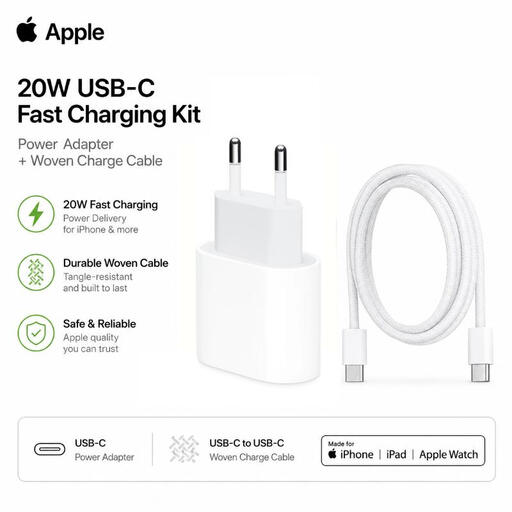
Apple 20 W USB-C charging kit with braided cable
An option if you’re looking for a USB-C adapter and cable in one kit; check that your phone supports this port and charging technology.
20 W adapter with PD charging and a 1 m USB-C-to-USB-C cable.
Joybuy
 No image available
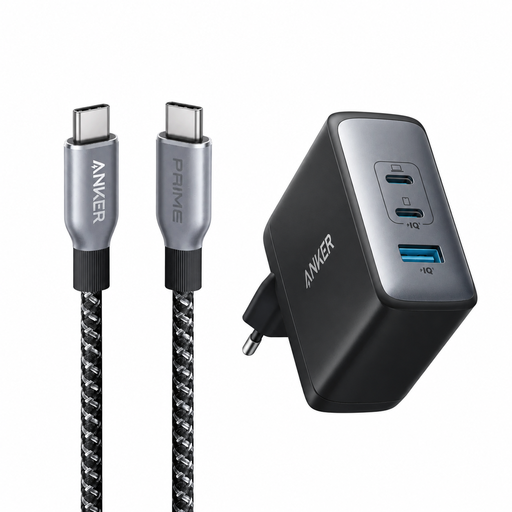
Anker 736 Nano II 100 W charger with USB-C cable
An adapter-and-cable bundle for anyone looking for a USB-C-to-USB-C cable; make sure it meets your phone’s charging requirements.
100 W charger; the included cable is rated at 240 W and measures 90 cm.
Joybuy
 No image available
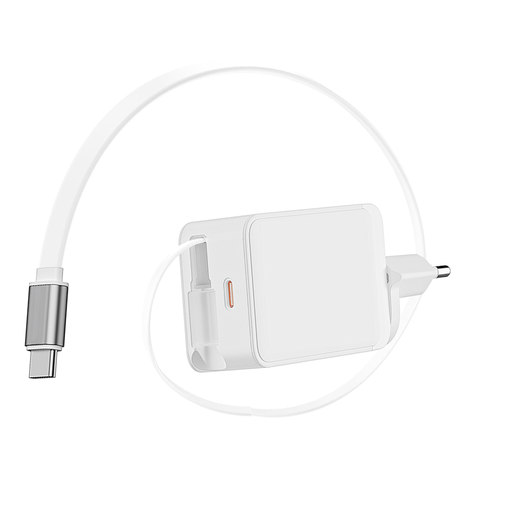
65 W wall charger with retractable cable and two USB-C ports
An option if you want a retractable USB-C cable and extra USB-C ports; check which charging technology your phone supports.
65 W; two USB-C ports and a retractable USB-C cable.
Joybuy
 No image available
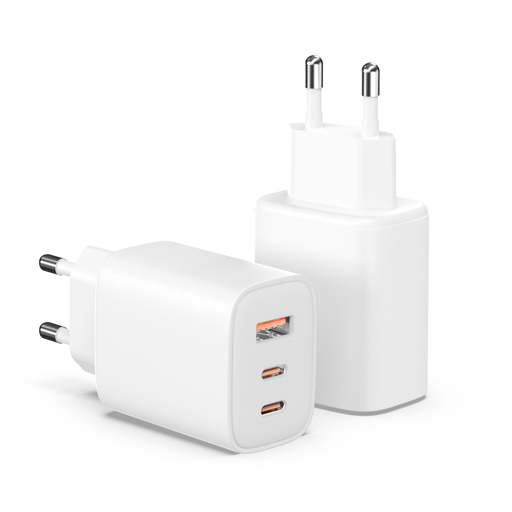
65 W wall charger with two USB-C ports and USB-A
An option if you want to charge several devices at once; check that the ports match the cables for your phone and other devices.
65 W; two USB-C ports and one USB-A port. The product description says it can charge three devices at once.
Joybuy
 No image available
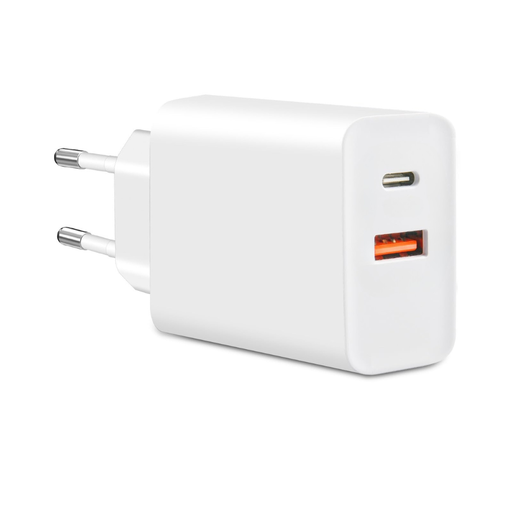
30 W wall charger with USB-C and USB-A
An option if you want to charge a phone and a second device from one adapter; check that both devices are compatible with the ports.
30 W; one USB-C port and one USB-A port. The product description says it can charge two devices at once.
Joybuy
Frequently asked questions
Will a USB-C charger work with every phone?
Not always without the right cable. Check your phone’s port; Apple Support recommends a USB-C-to-Lightning cable for wired fast charging on older iPhones with a Lightning port. Also check that your phone and adapter support the required charging technology.
Can I charge my phone under my pillow overnight?
No. The Netherlands Fire Service advises leaving your phone and charger in an open space so heat can escape, and recommends against charging under bedding. It also advises students to charge devices during the day, when they’re awake and at home.
Should I always contact the manufacturer about a faulty charger?
No. According to ACM ConsuWijzer, if a product is used normally and doesn’t do what you could reasonably expect, the seller is responsible for providing a suitable solution, such as a repair, replacement or refund. The statutory guarantee doesn’t have a fixed period of exactly two years for every product.
Have all standalone phone chargers had to use USB-C since 2024?
No. The European Commission outlines the rules that have applied since 28 December 2024 to the ports on certain devices, including phones newly placed on the market; this is not the same as requiring every standalone charger to have USB-C. According to the European Commission, the new requirements for external power supplies under Regulation (EU) 2025/2052 will apply from 14 December 2028. In the meantime, a mains-powered charger must still meet the applicable product safety requirements.


