
Readers with an existing lamp cable
If you want to keep using your current cable, compare the plug at the charger end with the available output port.


Choose a mains charger with an output that matches the plug on your lamp cable, then compare its output specifications with the lamp’s charging input in the manual. One port is enough if you only need to charge the lamp; extra ports are useful mainly if you also want to charge other devices from the same socket. If you’re buying a new mains charger for the Dutch market, check for the CE mark and charge it in an open space, not under bedding.
If you want to keep using your current cable, compare the plug at the charger end with the available output port.
If you need to charge your book light and another device at the same time, the number of ports and the power available from each port are important considerations.
It’s important to keep the charger and cable in a clear, uncovered space when charging the lamp near bedding. The Fire Service advises placing chargers in the open and not charging them under a pillow or duvet.
Choose this option: if your existing lamp cable has a USB-A plug and you want to keep using it.
Bear in mind: the USB-A models listed don’t have a USB-C output; check the power available from each port too.
Choose this option: if you have a compatible cable with USB-C at the charger end and mainly need one connection.
Bear in mind: the USB-C cable for the IKEA SJÖSS 20W is sold separately.
Choose this option: if you want to connect a device with a different type of plug as well as your lamp cable.
Bear in mind: extra power or ports won’t necessarily offer a practical benefit if you’re only charging your book light.
| What to consider | What should you check? | Who is this important for? |
|---|---|---|
| Connection and compatibility | Check the plug at the charger end of the lamp cable and the charging input in the manual. Compare these with the charger’s output. | I want to use my existing lamp cable and make sure the connection and charging input are compatible. Around 39% of consumers cite compatibility as their main reason for buying. |
| Safe charging by the bed | Check for the CE mark on a new mains charger intended for the Dutch market. The NVWA explains that this mark isn’t proof of an independent assessment; place the charger in the open. | I charge my lamp in a small room and want to keep the charger and cable clear of pillows and duvets. Around 23% of consumers put safe charging first. |
| Number of ports | Count the devices you’ll connect at the same time and compare the USB-A and USB-C outputs, including the power available from each port and the total output power. | I want to connect another device to the same socket as the lamp. Around 23% of consumers give simultaneous charging top priority. |
| Total cost | Check whether a compatible cable is included, and only pay for extra ports or power if you need them for another device. | I want to avoid paying for a missing cable or extra capacity I won’t use. Around 15% of consumers focus mainly on the total cost. |
A charger’s stated maximum power doesn’t tell you what charging input your book light requires. The USB-C cable for the IKEA SJÖSS 20W is also sold separately.
Check the manual and both ends of the lamp cable before choosing a port. Then compare the required input with the charger’s output specifications.
The models listed offer different connection options: the SMÅHAGEL has USB-A ports, while the SJÖSS 20W has one USB-C port.
The wall chargers listed include a model with two USB-A ports and one with USB-A and USB-C.
The Maxo 45W listed is a USB-C mains charger supplied with a 2 m cable.
This selection includes USB-A, USB-C and combined USB-A and USB-C outputs. For your book light, always check the cable plug and the charging input in the manual; the stated power alone doesn’t confirm compatibility.
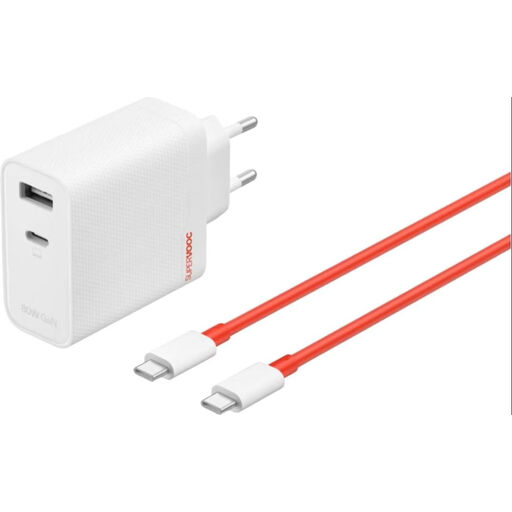 No image available
May suit a lamp cable with USB-A or USB-C at the charger end; check the lamp’s charging input before choosing.
The product title lists 80 W and Type A + Type C.
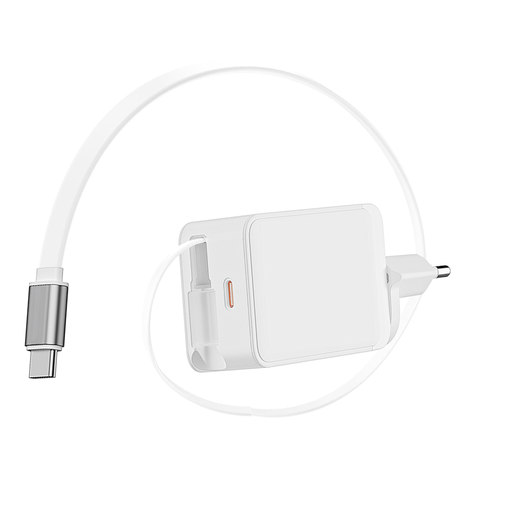 No image available
This is a suitable connection option if your lamp cable has USB-C at the charger end; a USB-A lamp cable won’t plug directly into a USB-C output.
The product title lists two USB-C ports; the product description mentions a retractable USB-C cable.
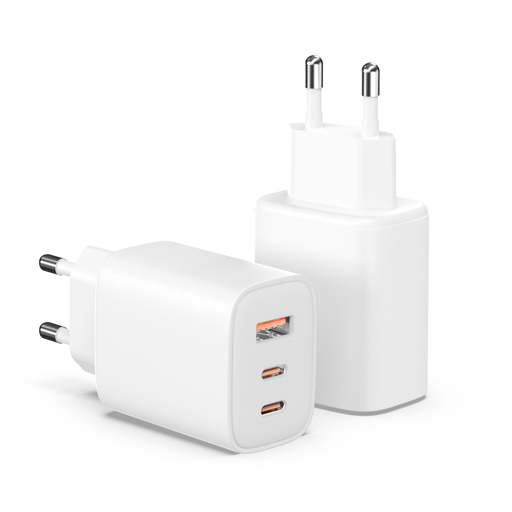 No image available
The combination of USB-A and USB-C may suit a lamp cable with either type of plug; check the lamp’s charging input first.
The product description lists up to 65 W and simultaneous charging for up to three devices.
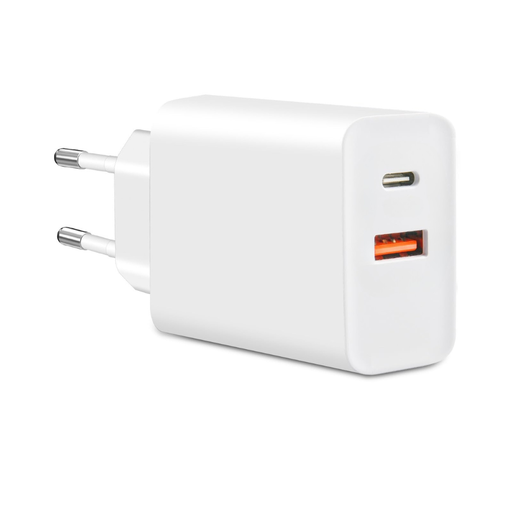 No image available
The two types of output may suit different lamp cable plugs; check that the port you choose matches the lamp’s charging input.
The product information lists up to 30 W combined.
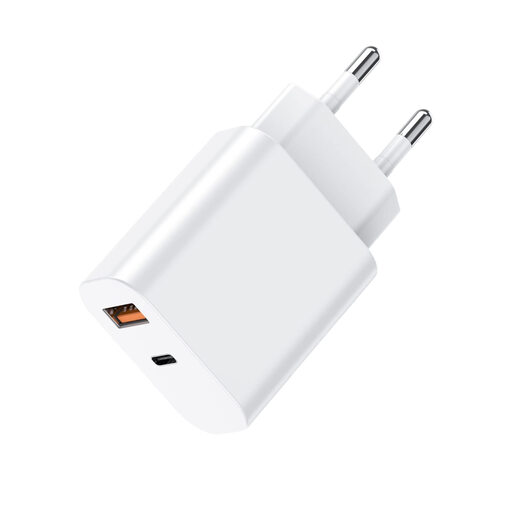 No image available
The USB-A and USB-C outputs give you two possible connection options; check whether either matches the lamp cable and charging input.
The product title lists a total output power of 20 W.
Don’t assume that it does based on the European common charger rules. The European Commission lists specific categories of devices covered by the USB-C requirement; book lights aren’t on that list. Check the connection and manual for your own lamp.
No. The Fire Service advises placing chargers in the open so heat can escape, and not charging devices under a pillow or duvet. Don’t use a damaged cable either.
Compare the charging input in your lamp’s manual with the output specifications of the charger you’ve chosen, and check that the plug at the charger end of the cable fits. Follow the manufacturer’s instructions too.
For an online product purchase in the Netherlands, ACM ConsuWijzer says you generally have a statutory cooling-off period of up to 14 days after delivery, although exceptions may apply. Separately, the statutory guarantee may apply if the product doesn’t do what you could reasonably expect under normal use; contact the seller about this.
No. The Netherlands Food and Consumer Product Safety Authority states that CE marking is compulsory for electrical products, but assessment isn’t compulsory for this product group. So don’t treat the mark as an independent quality rating.