
Traveller with one book light
Simply wants a charger and cable that work with their book light, without unnecessary extra ports.


Start by checking your book light’s connection, charging requirements and cable, then choose the smallest charger that can also handle your other devices. Extra ports or a charger with a mains cable can be useful if you want to charge several devices or the socket is awkwardly positioned. You only need a travel adaptor if your charger’s plug won’t fit the socket at your destination. Check the product information and use a suitable charger that’s in good condition.
Simply wants a charger and cable that work with their book light, without unnecessary extra ports.
Wants to charge their book light alongside, for example, a mobile phone when there are few sockets available.
May find a charging station with a cable useful, provided it can be positioned safely and suitably.
Choose this option: if the port and cable are compatible with your book light and the socket is easy to reach.
Bear in mind: a charger with USB-A only won’t have a USB-C connection.
Choose this option: if you want to connect several devices or the socket is some distance from where you charge them.
Bear in mind: a station and mains cable take up more space in your luggage than a small wall charger.
Consider this option: only if your charger’s plug won’t fit the socket at your destination.
Bear in mind: check the country, plug type and charging outputs; a travel adaptor doesn’t replace these checks.
First, check your book light’s charging requirements and compare them with the output of each port, not just the charger’s total power. The NVWA states that the Low Voltage Directive applies to electrical equipment with a rated AC voltage of 50 to 1,000 V; the manufacturer is responsible for the required conformity documentation. According to Your Europe, CE marking is only mandatory when the relevant EU rules require it.
| What to consider | What to check when buying | Who is this most relevant to? |
|---|---|---|
| Connection and charging requirements | Check your book light’s manual or label for the connection, cable and specified power supply. Compare these with the output of the port you’ll use. | I want to know in advance whether I can charge my book light with the cable and charger I’m bringing. Around 29% of consumers prioritise this compatibility. |
| Charging several devices at once | Count the devices you want to connect at the same time and check the port types and how the total power is distributed. | If I want to charge another device as well as my book light, the available ports matter. Around 23% of consumers prioritise charging several devices at once. |
| Safety and product information | Check the manufacturer’s details and relevant conformity information. Don’t use a damaged cable or charger, and don’t charge devices under bedding. | I want a charger with clear product information and instructions that I can position safely. Around 18% of consumers prioritise safety and product information. |
| Distance from the socket | Check the length of any mains cable and make sure the charger and book light can be placed with plenty of space around them. | If the socket is out of reach of a suitable charging spot, I need more flexibility in where I can place the charger. Around 18% of consumers prioritise the location of the socket. |
| Overseas socket | Check the socket type in your destination country, your charger’s input voltage and any destinations that a travel adaptor can’t be used in. | When I come across a different plug type while travelling, I want to know that I can connect my charger. Around 12% of consumers prioritise the mains connection at their destination. |
Belkin lists the WCB002vfWH as providing up to 12 W per USB-A port and up to 24 W in total. These figures describe different things.
Compare the specification of the port you’ll use with your book light’s charging requirements, rather than going by the highest wattage on the packaging alone.
Hama describes a USB hub that is powered via USB. This serves a different purpose from a charging station that plugs into a mains socket.
Check whether the product is mains-powered and which outputs are intended for charging devices.
If the product doesn’t have its own mains power supply, you may also need a separate mains charger.
The product information for the Travel Y25 lists destinations where the adaptor isn’t suitable.
Before you leave, check the socket type and your charger’s input voltage for the country you’ll be staying in.
Brandweer Nederland advises keeping chargers clear so heat can escape, and not charging devices under a pillow or duvet.
Choose a clear spot for charging and don’t use a damaged cable or charger.
Belkin BoostCharge wall chargers offer a compact option if you’re looking for USB-A ports.
Hama offers multi-port charging stations for travellers who want to connect different devices.
Voomy offers travel adaptors for travellers who may need a different plug type.
UGREEN Nexode charging stations are designed to connect several devices.
This selection includes compact USB wall chargers with USB-A and/or USB-C ports, as well as a travel adaptor. Before buying, check your book light’s charging requirements and, if you’re buying a travel adaptor, the socket at your destination.
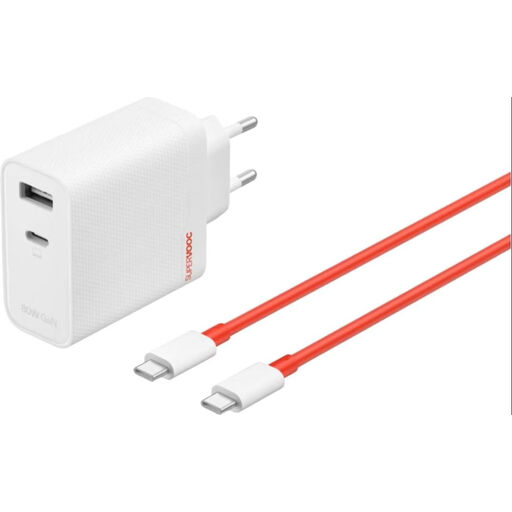 No image available
Could suit a book light that permits one of these port types and a compatible cable; check the specified power supply. The product name lists 80 W and USB-A and USB-C ports.
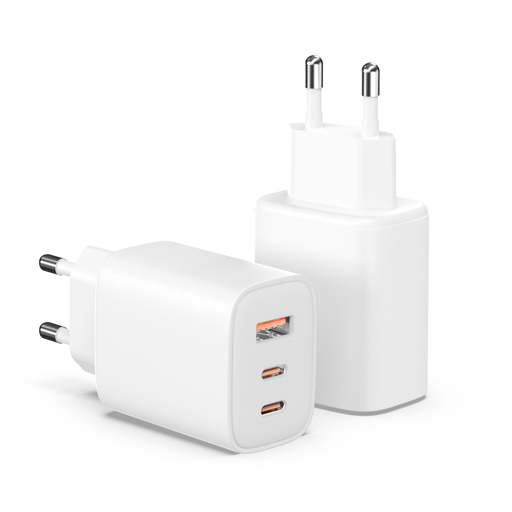 No image available
The three listed USB outputs could suit anyone who wants to connect several devices; check your book light’s charging requirements first. The product information states that it’s for indoor use and advises avoiding damp environments.
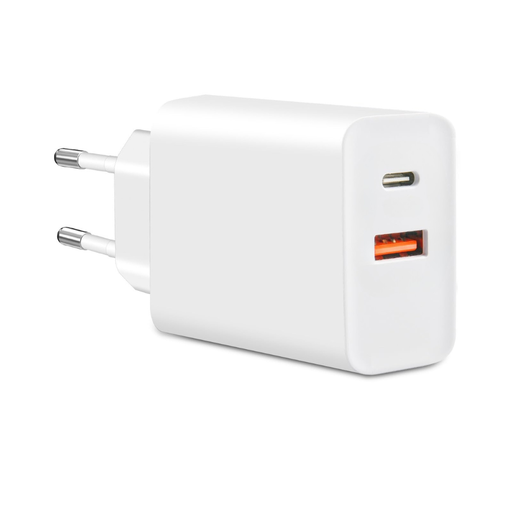 No image available
The two listed port types give you a choice if your cable and book light are compatible with either; check the charging requirements. The product information states that it’s for indoor use in a dry place.
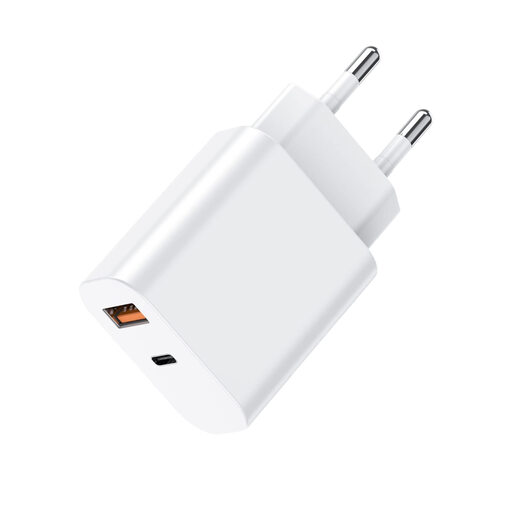 No image available
Could be suitable if the port and charging requirements match your book light. The product information states that it’s for indoor use in a dry place; stop using it if the charger or cable is damaged.
 No image available
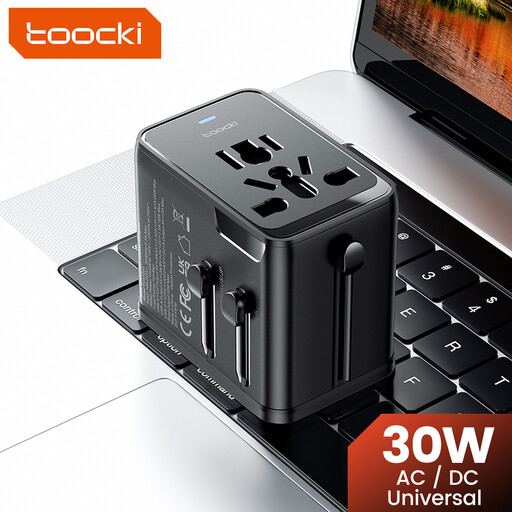
A travel adaptor can be useful if your charger’s plug won’t fit the socket at your destination. The product name lists plug types for the EU, UK, US and AUS; check they’re suitable for your destination.
Not simply because you want to charge a book light. Read your book light’s charging requirements and compare them with the output of the port you’ll use. The 65 W listed by Hama for model 00201979 is a specification for that multi-port model.
Place the charger and device being charged somewhere clear so heat can escape. Brandweer Nederland advises against charging under a pillow or duvet, and recommends not using damaged cables or chargers.
No. First check the socket at your destination, and the plug and input voltage of your own charger. You only need a travel adaptor if the mains plug doesn’t fit; also check whether the adaptor has any restrictions for your destination.
Electrical equipment within the scope of EU safety rules must meet the applicable requirements. The NVWA states that the Low Voltage Directive applies to rated AC voltages of 50 to 1,000 V; the manufacturer is responsible for the required documentation. According to Your Europe, CE marking is only mandatory when the relevant EU rules require it.
If you buy from a trader in the EU, faulty goods are covered by a minimum legal guarantee of two years. Your Europe, the European Union’s website, explains that a commercial guarantee can’t limit those rights. Check who the seller is and what contact details they’ve provided.