
You already have a charging cable for your fan
You’re looking for a wall charger that matches your fan’s cable and charging requirements. A USB-C connection on the fan doesn’t automatically tell you which connection you need on the charger.


First, check your fan’s charging requirements and cable. Then choose a USB-A or USB-C charger with a suitable output, rather than simply opting for the highest wattage. Charge the fan on a hard, clear surface in a room with a working smoke alarm, preferably while you’re awake and nearby. An extra port is useful if you also want to charge another device.
You’re looking for a wall charger that matches your fan’s cable and charging requirements. A USB-C connection on the fan doesn’t automatically tell you which connection you need on the charger.
You’re looking for a suitable place to charge it and want to keep the fan, cable and charger off your bedding while charging. Twente Fire Service recommends placing devices on a hard surface while they charge.
You may also want to charge a second device, provided the charger’s ports and outputs are suitable for both.
Start with your fan’s connection and charging requirements. Then consider whether you can set up a safe place to charge it and whether extra ports would genuinely be useful to you.
| What to consider | What to look for | Who is this important for? |
|---|---|---|
| Connection and charging output | Check the connections at both ends of the cable and compare the required input with the output from each charger port. | If I’m looking for a charger that works with my fan and existing cable, I want to check both the connection and the charging output. Around 40% of consumers prioritise compatibility. |
| Safe charging beside the bed | Set up a clear charging space on a hard surface, away from bedding, and check the condition of the cable and charger. | If I charge my fan beside my bed, I want a safe place to do so and a working smoke alarm in the room. Around 30% of consumers prioritise safe charging in this location. |
| Charging two devices at once | Check that there’s a suitable port for each device and look at the output from each port. | If I’m sharing one socket with a second device, I want to be able to connect both devices to suitable ports. Around 20% of consumers prioritise charging two devices at once. |
| Positioning and cable reach | Check whether your existing cable will reach a hard charging surface and which cable is supplied with the charger. | If the socket isn’t beside the spot where I want to charge my fan, I want to know whether my cable will reach far enough. Around 10% of consumers focus mainly on positioning and cable reach. |
A plug that fits doesn’t confirm that the charging output is suitable for your fan. A charger’s maximum power rating also doesn’t, by itself, tell you how quickly it will charge your fan.
Check your fan’s manual, the existing cable and the output of the port you plan to use.
If the connection isn’t suitable, you may need a different cable.
Twente Fire Service recommends placing a device on a hard surface while it’s charging.
Choose a clear spot on a hard surface in a room with a working smoke alarm, and preferably charge your fan while you’re awake and nearby.
For the Belkin WCB002, the manufacturer specifies a maximum of 24 W in total and a maximum of 12 W per USB-A port. The stated maximums for the WCB009vfWH also vary by port.
Read the specifications for the specific port you’ll use for your fan.
The models mentioned may be worth considering if you’re looking for a USB-A connection or a combination of USB-A and USB-C.
The Nexode USB-C charger mentioned may be worth considering if your fan charges with a suitable USB-C cable.
The range includes USB-C chargers and models with both USB-C and USB-A ports.
This selection includes wall chargers and a travel adaptor with USB-A and USB-C ports. Before buying, check which port and output are suitable for your fan. CE marking is required for mains-powered chargers placed on the market in the Netherlands. The NVWA explains that the mark is a declaration by the manufacturer and, by itself, doesn’t prove that the product has been independently tested.
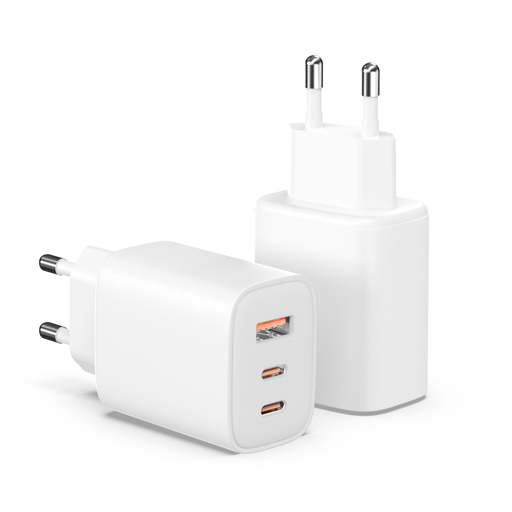 Image unavailable
May be worth considering if your fan’s cable fits one of these ports; check the required charging output.
The product name specifies 65 W, two USB-C ports and one USB-A port.
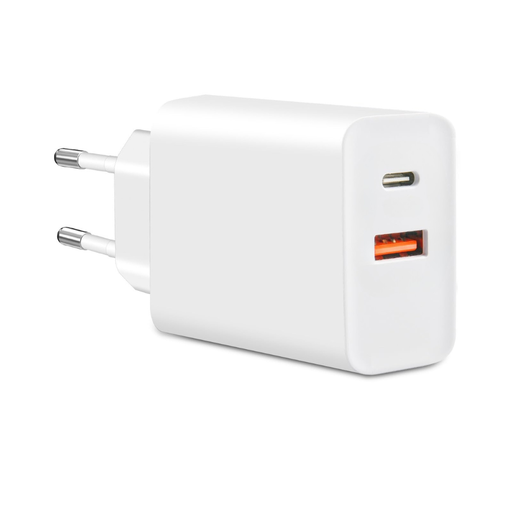 Image unavailable
An option to compare if your fan’s cable fits either port type; also check the required output.
The product name specifies 30 W, one USB-C port and one USB-A port. The product information states that it’s for indoor use in a dry location.
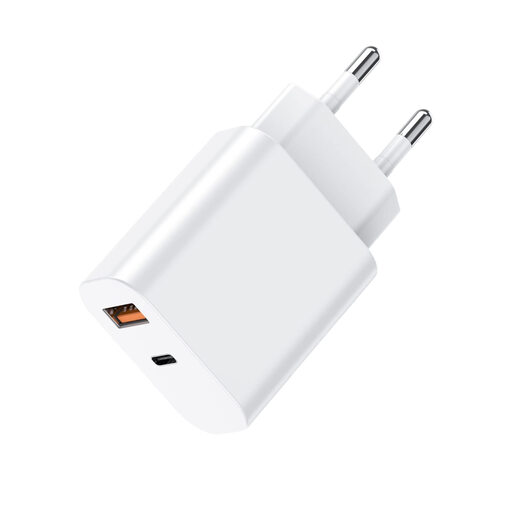 Image unavailable
Compare this charger with your fan’s charging requirements and the type of plug on the charger end of the cable.
The product name specifies 20 W, one USB-C port and one USB-A port. The product information states that it’s for indoor use.
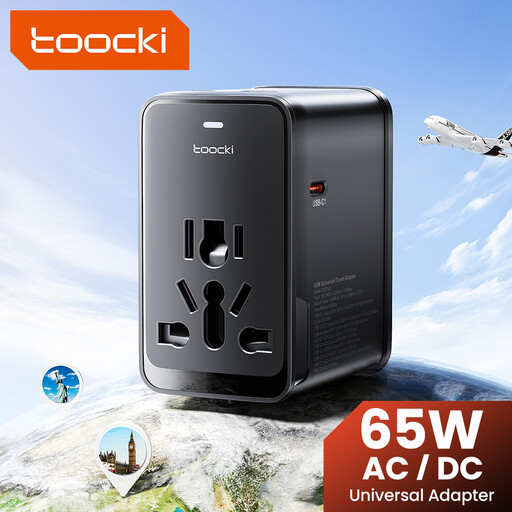 Image unavailable
May suit a cable with USB-A or USB-C on the charger end; check that the adaptor version and charging output are right for your needs.
The product name specifies 65 W, one USB-A port and three USB-C ports, and plug adaptors for the EU, UK, US and Australia.
No. The stated maximum of 20 W doesn’t prove how quickly your fan will charge. Compare the charging requirements in the manual with the output of the port you’re using.
Don’t place a device that’s charging on bedding. The Fire Service recommends using a hard surface, having a working smoke alarm in the room where you’re charging it and, preferably, charging while you’re awake and nearby.
Contact the seller. According to ACM ConsuWijzer, statutory guarantees in the Netherlands don’t have a fixed term of exactly two years. What you can reasonably expect from a product depends, among other things, on the product itself and how it’s used.
The EU common charger rules described by the European Commission cover specific categories of devices, but not fans. So check the connection on the model you want to use.
The NVWA states that CE marking is compulsory for electrical products placed on the market in the Netherlands. The mark is a declaration of conformity by the manufacturer; it doesn’t automatically mean that an independent body has tested the specific item.