
Recorder user looking to charge their device
Wants to check first whether USB charges the battery or only supplies power on their particular recorder model. The Zoom H1essential manual describes USB as a power source alongside batteries.


First, check the manual for your exact recorder model to find out whether USB charges the battery or only supplies power; having a USB port doesn’t necessarily mean the recorder can be charged. Then choose a charger with the specified connection and power output. Keep the charger and cable dry, uncovered and undamaged on the worktop.
Wants to check first whether USB charges the battery or only supplies power on their particular recorder model. The Zoom H1essential manual describes USB as a power source alongside batteries.
Wants a suitable spot where the charger can sit uncovered and the recorder and cable can stay dry and undamaged. Brandweer Nederland advises placing chargers in the open so heat can dissipate.
May want to use one charger for the recorder and another device, so the number of ports and the output per port matter. The ports and cables provided vary by product version.
Start with the manual for your exact recorder model. Then compare the connection, cable, worktop location and any extra ports.
| What to consider | What should you check? | Who is this most important for? |
|---|---|---|
| USB power or battery charging | Look up the exact model and check what the manual says about USB power, built-in batteries and replaceable batteries. | I want to avoid buying a charger that only supplies power when I want to charge the battery. Around 36% of consumers prioritise charging functionality. |
| Safe location | Keep the charger and cable dry and undamaged; place the charger in the open so heat can dissipate. | On the worktop, I want to use the recorder without the charger or cable getting wet or being covered. Around 29% of consumers prioritise safe use in the kitchen. |
| Port, cable and output | Compare the specified connection and power supply with the charger’s port and output; also check whether a cable is included. | I want a combination that suits my recorder’s connection and power requirements. Around 21% of consumers prioritise having the right port and cable. |
| Multiple devices | Check the output per port and when used simultaneously, as well as the cables you’ll need. | If I want to connect other devices too, the charger needs to have the right ports and outputs. Around 14% of consumers prioritise using a charger with multiple devices. |
A USB connection can supply power while you use the recorder without charging its batteries. The manual for the exact recorder model will explain which function it supports.
Check the manual’s information about charging before choosing a mains charger.
A charger’s maximum power rating doesn’t prove that an unspecified recorder will use that power or charge faster with it.
Compare the recorder’s power requirements with the charger’s output, and only consider fast-charging claims relevant if they apply to your device.
Damp conditions, damaged cables and a covered charger are all worth bearing in mind when using one on the kitchen worktop. Brandweer Nederland advises placing chargers in the open so heat can dissipate.
Choose a dry, clear spot and don’t use a damaged cable or charger.
Belkin describes the WCA006vfWH as a compact mains charger with one USB-C port and a maximum output of 20 W. It may be worth considering if your recorder’s manual allows for a compatible USB-C power supply.
The product information for the Nexode 20W PD Charger & 60W USB-C Cables lists a USB-C output, including 5 V/3 A, and a cable bundle.
Samsung describes the EP-T2510XBEGEU as a USB-C mains charger with a maximum output of 25 W for compatible devices.
This selection includes USB-C chargers and models with multiple ports. First check whether your recorder supports USB charging, then compare the required connection, power supply and cable.
 No image available
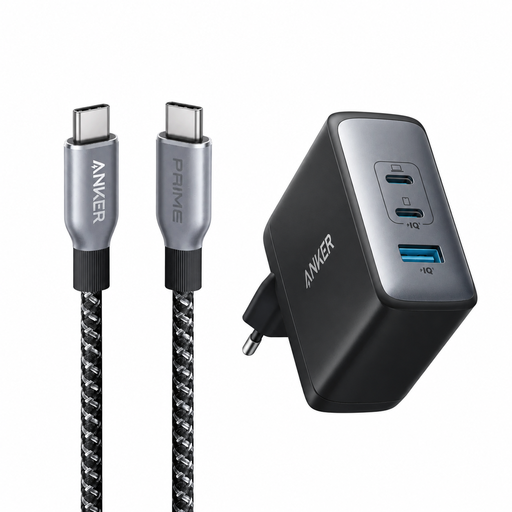
The title lists a USB-C charger and a USB-C to USB-C cable. Check that the connection and power supply suit your recorder’s manual.
The included cable is described as 240 W, 90 cm and braided with upcycled material.
 No image available
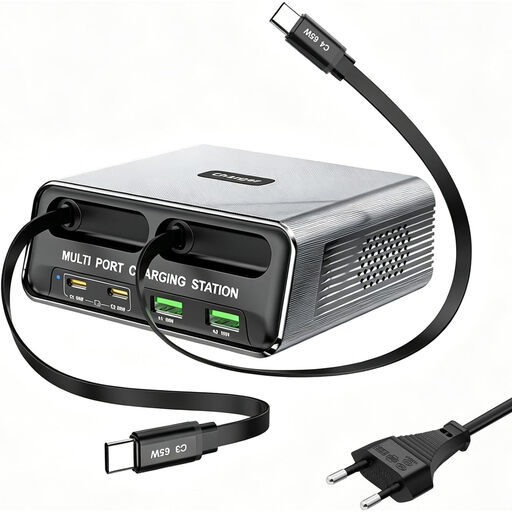
This model may be useful if you want to connect other devices as well as a recorder. Check the required cables and power specifications first.
The product description lists two built-in retractable USB-C cables, along with USB-C and USB-A ports. Check the output per port and when used simultaneously.
 No image available
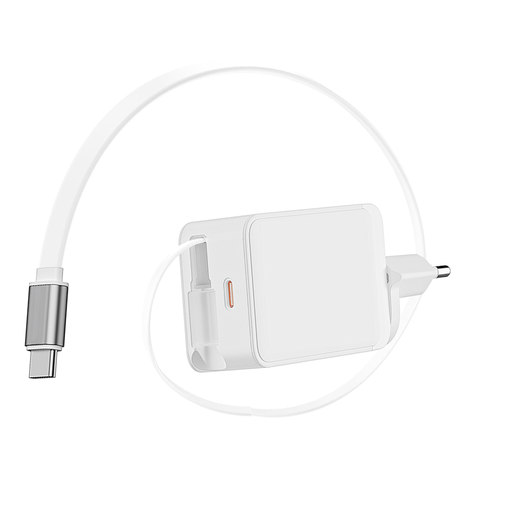
The multiple connections may come in handy if you want to use more than one device. Check that the output suits your recorder’s power requirements.
The product title lists two USB-C ports, a USB-A port and a retractable USB-C cable.
 No image available
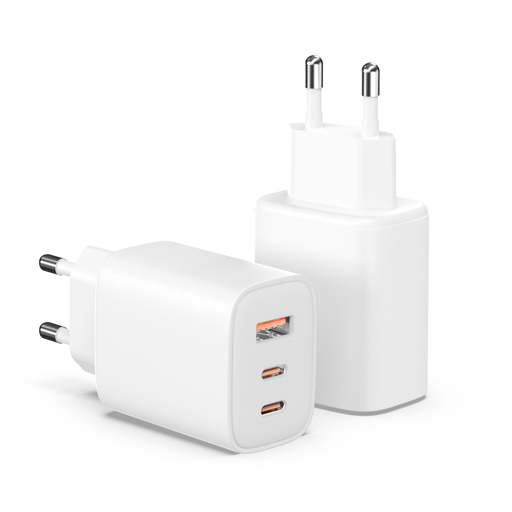
This charger may be useful if you need different types of USB connection. Match the connection and power supply to your recorder’s manual.
The product title lists USB-A and two USB-C ports; the product description also mentions a built-in retractable USB-C cable.
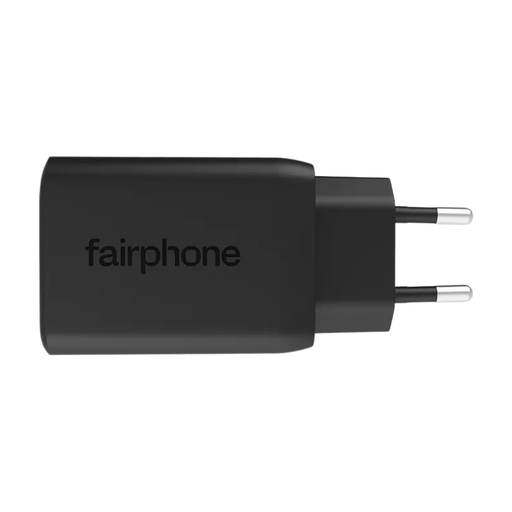 No image available
The USB-C and USB connections listed may suit different cable types. Check your recorder’s connection and power requirements.
The product description lists two USB-C ports and one USB-A port. Cables aren’t included. Don’t use the charger in a damp environment or with damaged cables, and don’t cover it while it’s in use.
No. The presence of a USB port doesn’t tell you whether it will. Zoom describes USB on the H1essential as a power source alongside battery use. Check whether your own model supports internal charging.
Keep them dry, don’t use a damaged cable and don’t cover the charger, so heat can dissipate. Brandweer Nederland gives this as usage advice; it doesn’t mean that a particular model is suitable for a damp location.
Not simply because it’s an audio recorder. Dutch guidance on common USB-C connections applies to specified device categories. Check the connection and manual for your recorder.
In the Netherlands, you’re entitled to a product that works properly, and the retailer is your point of contact for a solution. According to the Dutch government, there isn’t one fixed statutory warranty period that applies to all products in the Netherlands.
Yes, if the applicable rules require CE marking for that electrical product. The Netherlands Food and Consumer Product Safety Authority explains when the marking is compulsory; a CE mark on its own doesn’t prove that every individual item has been independently tested.