
Travellers with a USB camping lantern
If you want to charge your lantern, check that its cable works with an actual output port. For example, Anker says the USB-C port on the 313 Power Bank (PowerCore 10K) is input-only.


If you can charge the lantern directly in your hotel room using a suitable USB power supply and don’t need extra backup power while you’re out, you may not need a power bank. If you want to charge it away from a mains socket, first check the lantern’s input and cable, and whether the power bank stays on when charging at a low current. Only then should you consider capacity and weight: a high output rating alone doesn’t mean a power bank is right for your lantern.
If you want to charge your lantern, check that its cable works with an actual output port. For example, Anker says the USB-C port on the 313 Power Bank (PowerCore 10K) is input-only.
If a power bank switches itself off while charging, a suitable low-current mode may be useful. Anker does specify a minimum current requirement for keeping the mode running with a connected device.
If you want to use your lantern between charges, weigh up how much backup power you need against the extra weight and how easy it is to recharge the power bank in your hotel room.
If you can safely charge your lantern in your hotel room using a suitable power supply, you don’t need to bring a power bank just for that. If you want portable backup power, first check the lantern’s connection and how it charges.
| What to consider | What should you check? | Who is this important for? |
|---|---|---|
| Connection and cable | Check the lantern’s input and compare it with a port marked as an output, or with the power bank’s built-in cable. | If I want to connect my lantern without a separate cable that may not fit, I’ll prioritise the right connection. Around 36% of consumers consider the connection and cable the most important factors. |
| Charging at low power consumption | Check whether the manual for the exact model describes a low-current mode, and test it with your lantern. | If my lantern draws very little power while charging, I want to avoid the power bank switching off partway through. Around 29% of consumers prioritise uninterrupted charging at low power consumption. |
| Backup power and weight | Compare the stated capacity with the lantern’s specifications and consider the weight too; don’t use the mAh figure to calculate an exact number of charges. | If I’m going several days between charges, I’ll weigh up how much backup power I want against what I’m willing to carry. Around 21% of consumers give backup power top priority. |
| Recharging in your room | Check which input, cable and wall charger the power bank needs, and whether the model supports charging and discharging at the same time. | If I want to recharge the power bank for the next day of my trip, I’ll take the required cables and power supply into account. Around 14% of consumers consider easy recharging the most important factor. |
According to Anker, the USB-C port on the Anker 313 Power Bank (PowerCore 10K) is only for recharging the power bank itself.
Check the function of the port on the exact model and compare it with your lantern’s input.
If the connection isn’t compatible, you may need a different cable or power bank.
The stated capacity isn’t the same as the energy a lantern actually receives. The Consumers’ Association distinguishes between a power bank’s stated capacity and the amount of power it really delivers.
Use capacity to compare models, but don’t expect an exact number of lantern charges without considering the specifications of both the lantern and the power bank.
A power bank may switch off when the charging current is low. Anker specifies a minimum current requirement for the low-current mode discussed here.
Check the manual for the exact model and test a full charging session with your lantern and cable.
The Netherlands Food and Consumer Product Safety Authority (NVWA) has published warnings about specific power bank models and versions. A warning doesn’t automatically mean that every product from the same brand is affected.
Before use, check the full model number and, if specified in the warning, the batch against the latest information from the NVWA. Don’t use a product covered by the warning.
The Anker 313 Power Bank (PowerCore 10K) may be worth considering if you’re looking for a model with a documented low-current mode.
The Trust Primo 24678 has separate USB-A and USB-C ports, while the Fiera 25880 has a built-in USB-C cable and an extra USB-C port.
The Powerbank 12000 mAh 2PB12100SG is a cabled model with USB-C and USB-A.
The BoostCharge BPB012btBK has several wired outputs, while the BPB006btBLK has built-in cables.
These Joybuy power banks are for anyone looking for portable backup power for USB devices. For your lantern, always check that the output or built-in cable is compatible and that the way it charges suits the power bank.
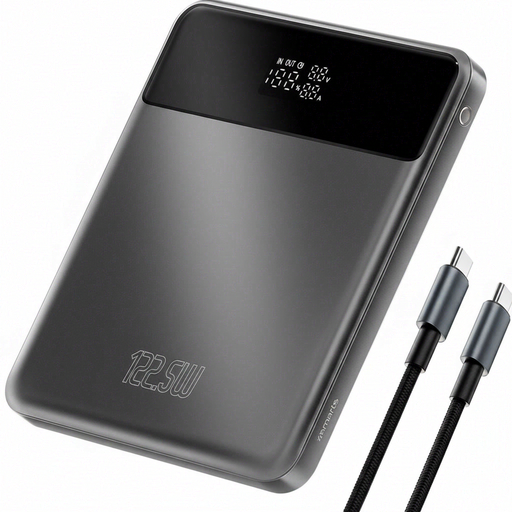 No image available
The stated capacity can help you compare models if you’re looking for backup power; check that an output is compatible with your lantern’s cable.
The product title lists 20,000 mAh and 122.5 W.
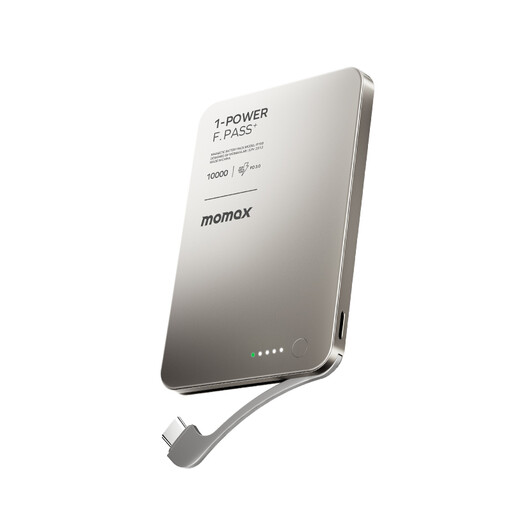 No image available
A built-in cable can be handy if it fits your lantern’s input; check the connection before relying on it instead of a separate cable.
The product title lists a capacity of 10,000 mAh.
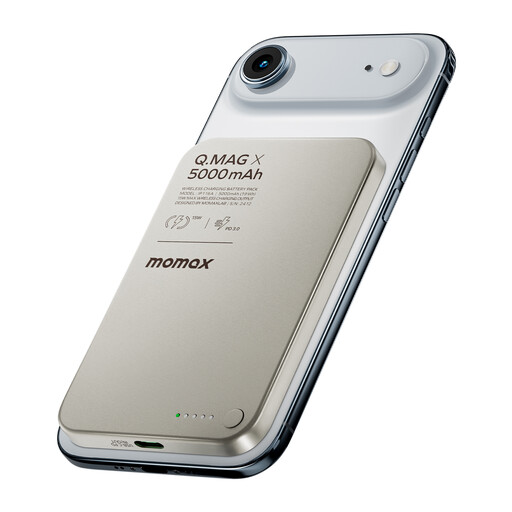 No image available
The product title describes this model as a wireless power bank. For a USB camping lantern, check whether it can connect to this model in a way that allows it to charge.
The product title lists 5,000 mAh.
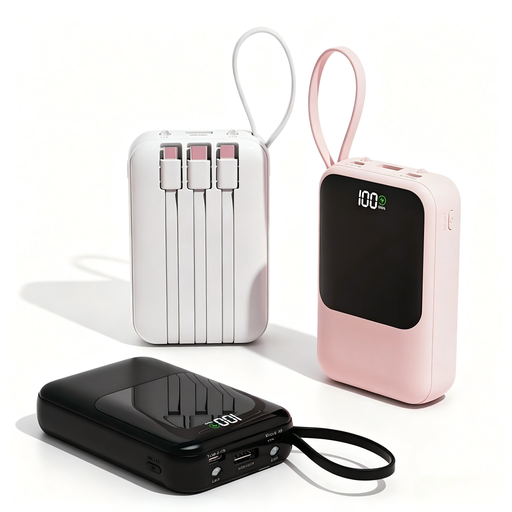 No image available
The built-in cables can save you carrying separate ones, but the USB-C cable will only work if it fits your lantern’s input.
The product title lists 10,000 mAh and 22.5 W. The built-in cables are listed as USB-C and Lightning.
 No image available
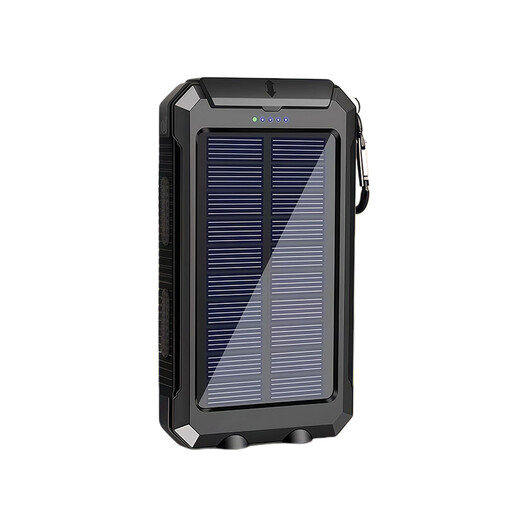
This model may be worth considering if you’re looking for a power bank with a solar function; check the instructions and connections for your lantern.
The product title lists 10,000 mAh, an LED light, a compass and a wrist strap.
Not necessarily. If you can charge the lantern directly using a suitable USB power supply, as instructed, and don’t need backup power while you’re out, a power bank adds little for that one occasion. Having a mains socket doesn’t necessarily mean you’ll also have the right wall charger or cable.
One possible cause is that it switches off automatically when the charging current is low. First check the lantern, cable and connection. If the exact power bank model has a low-current mode, try it as described in the manual. Anker also specifies a minimum current requirement for the mode discussed here.
The Fire Service advises placing chargers in a clear space so heat can escape, and not charging devices under a pillow or duvet. Always follow the manufacturer’s instructions too.
Check the rules for your airline and route. KLM says that, on its flights, spare lithium batteries and power banks may only be carried in hand luggage. This isn’t a general rule for all airlines or capacities.
When you buy as a consumer, you have statutory consumer rights in addition to any manufacturer’s warranty. These apply if, under normal use, the product doesn’t meet what you could reasonably expect. The Netherlands Authority for Consumers and Markets’ ConsuWijzer points out that there’s no fixed two-year statutory period for every product; contact the seller to find a solution.