
Laptop user with one spare socket
You want to edit holiday videos on a bigger screen and possibly power your laptop through the same USB-C cable. This only works if your laptop, cable and monitor support video and provide enough charging power.


Choose a USB-C monitor that can receive a video signal and provide enough Power Delivery for your laptop if you want to avoid using a separate laptop charger. The monitor still needs mains power, and your laptop, cable and monitor must all be compatible. Then choose between native 4K detail and QHD, and compare the colour modes with your editing work.
You want to edit holiday videos on a bigger screen and possibly power your laptop through the same USB-C cable. This only works if your laptop, cable and monitor support video and provide enough charging power.
You want to compare the colour modes and quoted colour spaces for the exact model with your video project. BenQ and ASUS publish these model specifications, but they are not an independent measurement of the unit you receive.
You want to view your footage and editing timeline on a 27-inch 4K screen, but first want to check whether your laptop supports the resolution you need and whether the monitor provides enough power.
First, check that USB-C video and laptop charging work with your laptop. Then compare the resolution and colour modes, and make sure the screen and power information suit your workspace.
| What to consider | What should you check? | Who is this important for? |
|---|---|---|
| Video and laptop power | Check USB-C video and Power Delivery on the monitor, your laptop's video output and power requirements, and whether the cable is suitable. | If you only have one spare socket, you'll want to know whether video and laptop power can run through the same cable. Around 36% of consumers prioritise this connection. |
| Colour for your project | Compare the quoted colour space and colour modes for the exact model with your project's colour space, and decide whether you need to carry out your own colour check. | If you assess colours carefully, you'll want a suitable colour mode rather than drawing conclusions from an HDR label alone. Around 29% of consumers prioritise colour assessment. |
| Resolution and editing space | Check the native resolution, screen size and the resolution your laptop can output. | If you want to view 4K detail at native resolution, check that this is practical for your laptop and editing work. Around 21% of consumers prioritise native 4K detail. |
| Positioning and power information | Check the stand and adjustment options, your desk dimensions and the energy label for the exact model. | If positioning and power consumption will influence your choice, you'll want to make sure the monitor fits on your desk and compare model information. Around 14% of consumers prioritise these workspace considerations. |
A USB-C connection alone doesn't confirm that the monitor can receive a video signal and supply enough power for your laptop. The monitor also needs mains power.
Check the monitor's video support and Power Delivery, your laptop's video output and power requirements, and the cable you're using.
If the combination isn't up to the job, you may still need a separate laptop charger or another power solution.
Quoted colour space, colour modes and calibration are not the same as a measurement of your individual unit in the mode you've chosen.
Match the colour mode to your project, and distinguish manufacturer information from your own checks.
ASUS lists the PA278CGRV as QHD, with 2560 × 1440 pixels; LG and BenQ list the 27UP850K-W and PD2706U as 4K, with 3840 × 2160 pixels. So a QHD screen won't display a 4K video at native 4K resolution.
Choose QHD if it's enough for your preview and timeline, or check whether you need native 4K and whether your laptop supports it.
According to LG, the LG 27UP850K-W combines a 27-inch 4K screen with USB-C for video, data and up to 96 W of power for a laptop.
According to BenQ, the BenQ PD2706U combines 27-inch 4K with colour modes and 90 W USB-C Power Delivery.
According to ASUS, the ASUS ProArt PA278CGRV combines a 27-inch QHD screen with colour modes and up to 96 W of USB-C power.
According to Dell, the Dell Plus S2725QC is a 27-inch 4K USB-C monitor with a refresh rate of up to 120 Hz.
This selection includes USB-C monitors for video editing, with 4K and QHD options. For each model, check that your laptop's video output and power requirements are compatible with the monitor.
 Image unavailable
An option if you're looking for a 27-inch 4K screen and your laptop is compatible with this monitor's USB-C video and power.
The product information lists 3840 × 2160 pixels, USB-C with DP Alt Mode and up to 98 W Power Delivery. The quoted 97% DCI-P3 and 94% Adobe RGB are product claims, not independent measurements. The monitor itself needs mains power.
 Image unavailable
Consider this model if you're looking for native 4K and 90 W Power Delivery suits your laptop's power requirements.
The product information lists 3840 × 2160 pixels and USB-C with 90 W Power Delivery. The quoted 99% Adobe RGB and Delta E < 1 are product claims, not independent measurements. The monitor itself needs mains power.
 Image unavailable
An ultrawide WQHD option if that's the screen layout you're after and up to 90 W of USB-C power suits your laptop.
The product information lists a resolution of 3440 × 1440, a 21:9 aspect ratio and USB-C with up to 90 W Power Delivery. The monitor itself needs mains power; check your laptop's compatibility and power requirements.
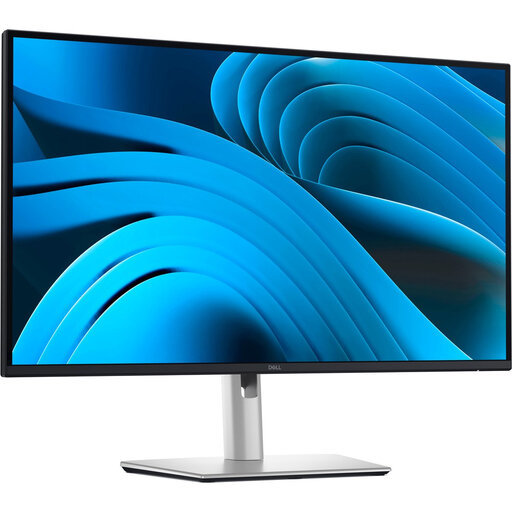 Image unavailable
This model could be a good fit if QHD is enough for your editing work and your laptop is compatible with the monitor's USB-C power.
The product information lists an IPS panel with 2560 × 1440 pixels and USB-C with 90 W Power Delivery. The monitor itself needs mains power; check that its video support and charging power suit your laptop.
 Image unavailable
A QHD option if you don't need native 4K and the USB-C power suits your laptop's requirements.
The product information lists 2560 × 1440 pixels and USB-C with 90 W Power Delivery. The quoted colour coverage of 100% sRGB and 95% DCI-P3 is not an independent measurement. The monitor itself needs mains power.
No. The monitor itself needs mains power. You may be able to leave your separate laptop charger at home, but only if your laptop can receive video through the connection you're using and work with the available USB-C power. BenQ lists DisplayPort Alt Mode and 90 W for the PD2706U; LG lists USB-C for video and data, with up to 96 W, for the 27UP850K-W.
Choose a colour mode that matches your project's colour space and consider carrying out your own calibration check. BenQ lists Rec.709, sRGB and P3 modes, among others, for the PD2706U; the specifications don't measure the individual unit you receive.
Compare the EU energy label and model information for the monitors you're considering. According to Milieu Centraal, you can take an old electrical appliance to a collection point or a recycling centre, among other options.
When you buy online from a business, you generally have a 14-day cooling-off period; check the terms that apply to your purchase. Products must also be of satisfactory quality. The Dutch government says there is no fixed statutory guarantee period in the Netherlands, and that the retailer is your point of contact if something goes wrong.
Yes. The European Commission classifies computer monitors as electronic displays that carry an energy label. Compare the label for the exact model you're considering.