
Vandaag of morgen in huis

Kwaliteit gegarandeerd

Welkomstaanbiedingen ontgrendelen: GRATIS bezorging | Tot 80% korting | Gratis 30 dagen JoyPlus-proefperiode
Download de app
Need a new USB-C charger? Maybe you've lost your old one, it's broken, or it's just too slow. The market is flooded with options, from unbranded bargains to high-powered adapters. But making the wrong choice doesn't just lead to frustratingly slow charging; it can also damage your expensive devices.
As a Product Recommendation Officer at Joybuy, I see the challenges consumers face every day. Many marketing promises are empty. Let's break down the three most common pitfalls to ensure you make a purchase you'll actually benefit from.
phone charger lacks the power for a laptop, and a high-wattage laptop charger might be overkill (and unnecessarily bulky) for just your earbuds.You don't need to be a tech wizard to avoid these traps. Simply check the following three points before buying a USB C adapter.
The power output, measured in Watts (W), determines the maximum charging speed. A higher wattage means faster charging, provided your device supports it.
fast charger.laptop charger.Just as important is the charging protocol. Power Delivery (PD) is the universal standard for fast charging over USB-C. Virtually every modern smartphone, including iPhone chargers and Samsung chargers, uses this. Samsung devices also often use PPS (Programmable Power Supply) for their "Super Fast Charging." A charger that supports both is highly versatile.
Do you have one device or a whole collection?
travel charger with two or three ports (e.g., a mix of USB-C and the older USB-A) is ideal for powering your phone, powerbank, and earbuds simultaneously. This saves space in your bag and outlets in your hotel room.You're seeing the term GaN charger more and more often. GaN stands for Gallium Nitride, a material that is more efficient than traditional silicon. In practice, this means a GaN charger can be significantly smaller and lighter than a traditional charger with the same wattage, and it produces less heat. This makes them a popular choice for powerful and compact travel chargers.
Below are some popular choices, matched to specific user profiles. This selection is based on objective product specifications.
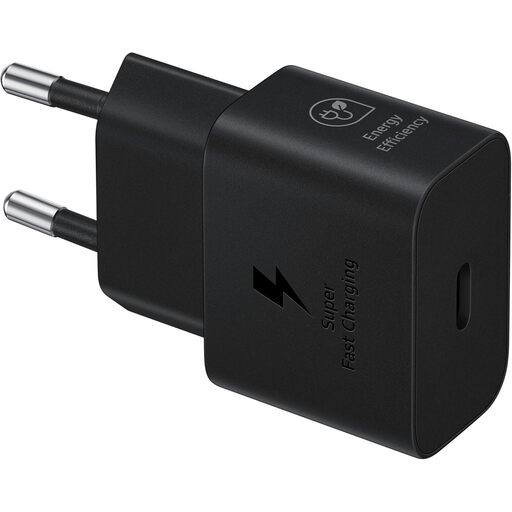
Why This Fits Their Persona: Ideal for anyone seeking a reliable, no-nonsense fast charger for their smartphone. Compact enough for home, the office, or in your bag. An official charger from a well-known brand offers peace of mind.
This charger actually delivers 25W and supports the correct protocols (PD 3.0, PPS) for optimal charging speed on compatible Samsung and other modern phones. No false promises.
Supports PPS (Programmable Power Supply) for Samsung's Super Fast Charging. Compact and reliable design.
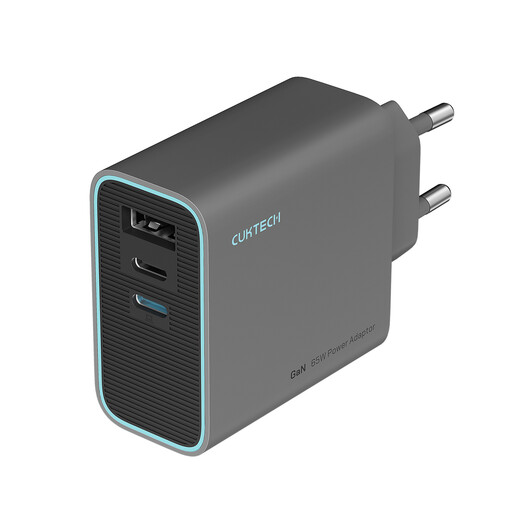
Why This Fits Their Persona: For those who want to charge a laptop, phone, and another device simultaneously with a single compact adapter. Perfect for reducing the number of chargers in a travel bag or on a desk.
This isn't a vague "one-size-fits-all" charger. With 65W of total power and smart power distribution, it can genuinely power a laptop and a phone at the same time without sacrificing speed or safety.
Three ports in one compact block. The foldable plug design makes it extra convenient for travel. Its 65W output is sufficient for most USB-C laptops.
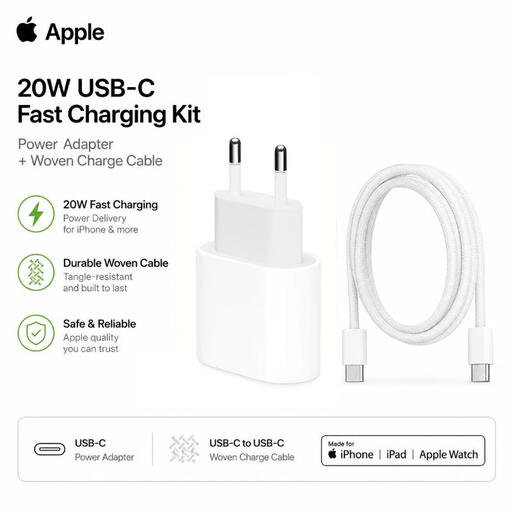
Why This Fits Their Persona: For those looking for a complete and reliable charging solution for an iPhone, iPad, or AirPods. No fussing with separate components; this is an all-in-one package that works right out of the box.
This kit guarantees perfect compatibility and safety within the Apple ecosystem. You can be sure you're getting the optimal charging speed without the risk of error messages or damage from an unsuitable charger.
A complete set with an official Apple 20W adapter and a durable, 1-meter woven USB-C to USB-C cable. Ready to use immediately.
We have compiled a complete, up-to-date list of products that meet strict selection criteria and safety regulations, including traditional chargers.
Yes, that's perfectly safe. Thanks to the Power Delivery (PD) protocol, your charger and phone communicate with each other. The charger will never deliver more power than your phone can safely handle. So, you can safely use a 65W laptop charger to charge your smartphone; it will simply charge at its own maximum speed (e.g., 25W).
The difference lies mainly in three areas: safety, efficiency, and lifespan. More expensive chargers from reputable brands contain certified components and built-in protections against overheating, overvoltage, and short-circuiting. They often use more efficient technology like a GaN charger, which allows them to be smaller and stay cooler during use. A cheap charger may cut corners on these crucial points.
Yes, the cable is a critical part of the charging chain. To take full advantage of a fast charger's speed, you need a cable that can handle the power. A cheap, thin cable can limit the charging speed and, in the worst-case scenario, be unsafe. For chargers above 60W, a cable that explicitly supports 100W PD is required. For a standard phone charger, a quality USB-C cable that supports PD is usually sufficient.
