
Vandaag of morgen in huis

Kwaliteit gegarandeerd

Welkomstaanbiedingen ontgrendelen: GRATIS bezorging | Tot 80% korting | Gratis 30 dagen JoyPlus-proefperiode
Download de app
Need a new USB-C charger? Maybe the old one is lost, broken, or just too slow for your new phone. However, the search for a replacement can feel like a minefield of technical terms, vague promises, and widely varying prices. Before you spend any money, it's important to recognise a few common pitfalls that manufacturers often use.
Many consumers fall into these traps and end up with a charger that doesn't perform as expected or needs replacing after just a few months. Here are the three main points to watch out for:
By understanding these points, you can make an informed choice that suits your devices and budget.
You don't need to be a tech expert to make the right choice. Focus on two crucial specifications that determine whether a charger will work well and safely for your devices.
A charger's power is expressed in Watts (W). A modern phone charger often needs between 25W and 45W for fast charging. A USB-C laptop charger typically requires 65W or more.
The key to fast charging is the Power Delivery (PD) protocol. This is a standard that allows the charger and your device to communicate to determine the optimal charging speed. For a true fast-charging experience, your charger, cable, and device (phone, tablet, laptop) must all support PD. For example, a 45W charger works perfectly for a recent Samsung device that supports this speed, but it will charge an older device at a lower, safe speed.
The USB-C to USB-C cable is just as important as the adapter. Not every cable can handle high power levels. A cable designed for 20W cannot deliver the speed of a 65W charger and, in the worst-case scenario, can overheat.
Therefore, always check the maximum power a cable supports. This is often listed on the packaging or product page (e.g., 60W, 100W, or even 240W). For durability, a braided cable is a popular choice. The nylon exterior provides extra protection against kinks and breaks, significantly extending its lifespan.
Below is a selection of products tailored to different user profiles. These recommendations are based on objective specifications to help you see through the marketing hype.
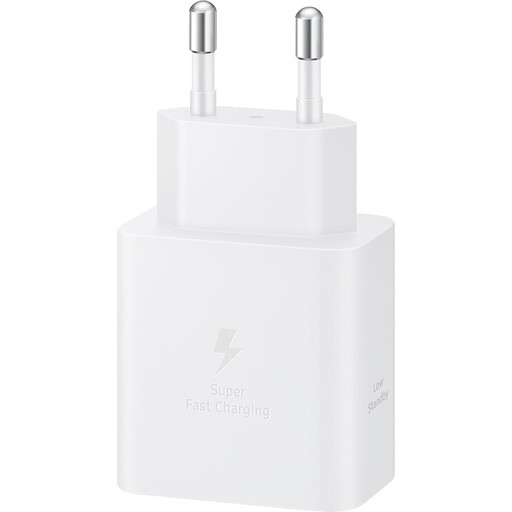
Why This Fits Their Persona: This official Samsung charger is designed to make the most of the 'Super Fast Charging' feature on compatible Galaxy devices. A straightforward choice for those who want the performance the manufacturer intended.
It tackles the 'wattage illusion' by providing a perfect match for compatible Samsung devices. However, be mindful of the second pitfall: you'll need a separate USB-C to USB-C cable that supports 45W.
Offers the maximum charging speed for supported Samsung devices and is an original accessory, which guarantees compatibility and safety.
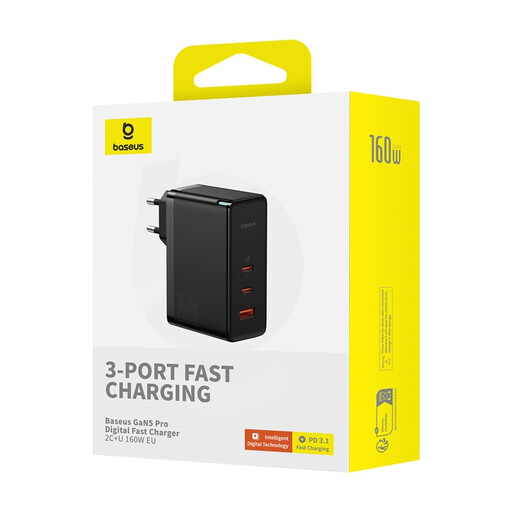
Why This Fits Their Persona: Ideal for those who want to charge a laptop, phone, and earbuds simultaneously. This charger combines high power with multiple ports, so you no longer need to carry a bag full of adapters.
It replaces multiple chargers with a single, compact solution. Thanks to GaN technology, it's smaller and more efficient than traditional chargers with similar power, which helps prevent overheating.
Very high total power output (160W) and three ports (2x USB-C, 1x USB-A) for maximum flexibility. It can fast-charge a powerful USB-C laptop charger and a phone at the same time.
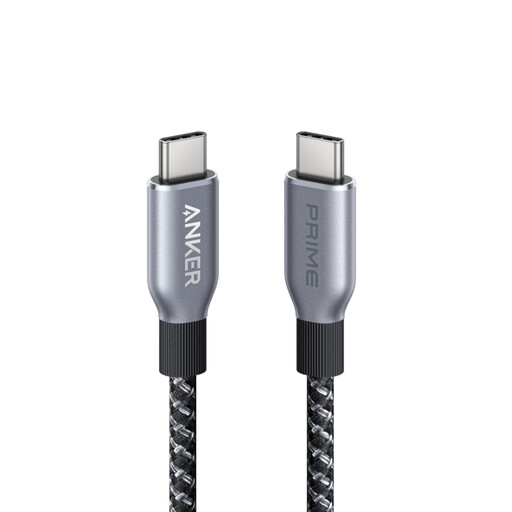
Why This Fits Their Persona: Perfect for anyone frustrated with cables that break after just a few months. This cable is built for longevity and can handle extremely high power, making it future-proof.
It directly addresses the 'poor build quality' pitfall. According to Anker, the robust, braided cable is designed to withstand tens of thousands of bends without breaking.
Supports up to 240W, which is more than most current devices need, making it a future-proof investment. The outer layer is made from recycled materials.
Are you looking for a specific cable, for instance, to connect your new USB-C devices to older USB-A ports? Then check out our selection.
In principle, yes, as the USB-C port is universal. However, the charging speed will vary greatly. For a fast charger experience, both the charger and your device must support the same fast-charging protocol, such as Power Delivery (PD). A charger with a lower wattage than your phone can handle will simply charge more slowly. Always check the specifications of both your device and the charger.
The difference lies mainly in build quality, materials, and supported speeds (for both charging and data transfer). A more expensive braided cable is often more resistant to kinks and breaks. More importantly, a quality cable supports higher power (wattage) and has better internal shielding for safe and stable charging, which is essential for a powerful USB-C laptop charger.
This usually has one of three causes:
Always ensure that all three components—charger, cable, and device—are aligned for the desired performance.
