Vandaag of morgen in huis

Kwaliteit gegarandeerd

Welkomstaanbiedingen ontgrendelen: GRATIS bezorging | Tot 80% korting | Gratis 30 dagen JoyPlus-proefperiode
Download de app
Buying a new USB C charger seems simple—until you get tangled in a web of wattages, protocols, and marketing jargon. Many chargers promise the world but, in reality, leave your devices charging at a painfully slow pace. The result? A drawer full of unused adapters and frustration. Before you make another bad purchase, it's helpful to recognise the most common pitfalls.
The main problems consumers face are:
fast charger is useless if it doesn't support your device's specific charging protocol. Without the right "language," like Power Delivery (PD), the charger can't communicate properly with your device, and charging speeds remain low.By paying attention to a few key specifications, you can easily avoid these problems and choose a charger that truly works for your setup.
You don't need to read a technical manual to make an informed choice. Focus on these three key points.
The total wattage (e.g., 65W or 100W) is the maximum power a charger can deliver across all its ports combined. More important is the maximum power per port.
A Power Delivery adapter is the standard today. Power Delivery (PD) is a protocol that allows the charger and your device to negotiate the optimal charging speed. Without PD support, your device will charge at a much lower, standard speed.
For some devices, particularly Samsung smartphones, there is an additional protocol called PPS (Programmable Power Supply). A charger with PPS support can fine-tune the charging speed even more precisely, resulting in more efficient and faster charging.
You'll see the term GaN charger more and more often. GaN stands for Gallium Nitride, a material that replaces the traditional silicon components in chargers. The practical advantages are clear:
For a travel adapter or a powerful multi-port charger, GaN technology offers a distinct advantage.
Based on the criteria above, we have selected a few products that suit specific needs.
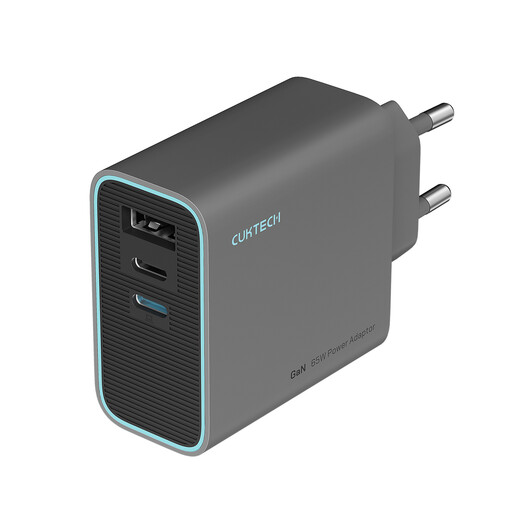
Why This Fits Their Persona: Ideal for those who commute daily between home and the office. This charger is compact enough for any bag and powerful enough to charge a laptop, phone, and earbuds without needing to carry three separate adapters.
With 65W on a single port, this charger delivers enough power for most ultrabooks, avoiding the pitfall of an underpowered 'laptop charger'.
Compact and foldable: The plug can be folded, making it highly portable. 3-port configuration: Charges multiple devices at once.
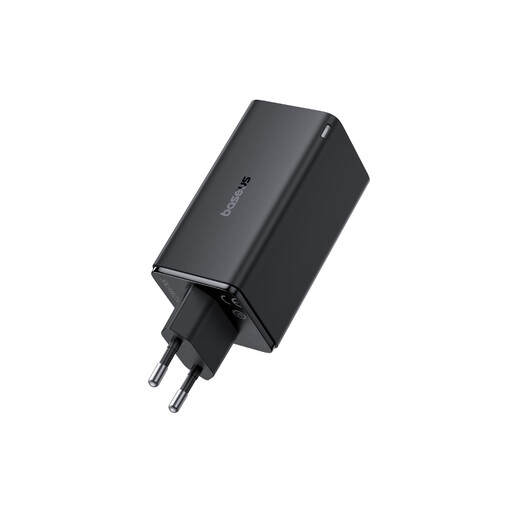
Why This Fits Their Persona: For those who want a powerful workspace with minimal cable clutter. This charger can power a demanding laptop, tablet, and phone simultaneously, replacing the standard chargers for all those devices.
This charger tackles the 'split power' pitfall by delivering up to 100W on a single Type-C port, enough for most high-performance laptops.
High power output: 100W is sufficient for virtually any USB-C laptop. GaN6 technology: Stays relatively cool and compact despite its high power.
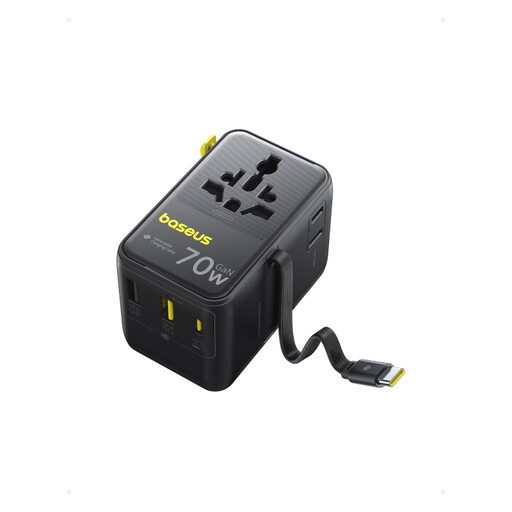
Why This Fits Their Persona: For frequent international travelers who don't want a bag full of separate adapters. This device combines a universal plug adapter with multiple USB ports and even AC outlets.
This is more than a simple charger; it's a complete power solution. It solves the problem of having to choose between a charger and a plug adapter when traveling.
6-in-1 solution: Combines AC outlets, USB-A, USB-C, and a retractable cable. Universal compatibility: Works in most countries.
We have compiled a complete, up-to-date list of products that fully meet these strict selection criteria and safety regulations.
No, that's a common misconception. A USB-C laptop charger must provide sufficient power (wattage). Most laptops require at least 45W or 65W. A standard 20W phone charger will barely charge a laptop, if at all, even if the plug fits. Always check your laptop's required wattage, which is usually printed on the original charger or in the manual.
A GaN charger uses Gallium Nitride, a more modern material than traditional silicon. This makes the charger smaller, lighter, and more efficient (it generates less heat). If you travel often, want a tidy desk, or need a powerful multi-port charger, the compactness and efficiency of GaN are often worth the premium. For a simple charger that you only use at home, a traditional model may be sufficient.
Check if the charger supports your phone's fast-charging protocol. For most modern devices (including iPhones and Google Pixels), Power Delivery (PD) is the key standard. Do you have a recent Samsung phone? Then look for a charger that also supports PPS (Programmable Power Supply) for the highest possible charging speed. The charger's specifications will explicitly list these protocols.