
Cyclists who want to check cable compatibility
You want to make sure the output and cable are compatible with your light’s charging port. CatEye’s manual shows why it’s important to follow the instructions for your specific light model.


If there’s an accessible socket at your holiday cottage, along with a suitable USB charger and cable, you won’t need a power bank for that charging session. A power bank is most useful if you want a backup charging option when there’s no socket available. First, check your bike light’s charging port and manual. Then choose a power bank based on how much backup power you need and how much extra weight you’re happy to carry.
You want to make sure the output and cable are compatible with your light’s charging port. CatEye’s manual shows why it’s important to follow the instructions for your specific light model.
You want to be able to charge your light when there’s no socket available, and need to weigh the extra backup power against what you’ll have to carry. The Dutch Consumers’ Association describes power banks with USB-A, USB-C or both types of port.
You want to charge your light and power bank in line with their manuals, and check your lights are working before setting off. The Netherlands Fire Service advises placing chargers in an open space so heat can dissipate.
Suitable if: there’s a suitable socket at your cottage and you have the right USB charger and cable.
The trade-off: you won’t need to carry an extra battery, but you won’t be able to charge this way without access to a power supply.
Suitable if: you mainly want backup power for your light or a short ride.
The trade-off: a smaller model is easier to carry than a heavier one, but may provide less backup power.
Suitable if: you want to charge several lights or other USB devices between visits to a socket.
The trade-off: a higher stated capacity can mean more weight. Check that the ports and cables are compatible too.
| What to consider | What should you look for? | Who is this most relevant to? |
|---|---|---|
| Port and cable | Read your light’s manual and check the charging port, suitable USB power supply and cable supplied. A USB-C cable won’t automatically fit a light with a micro-USB port. | If I want to charge my existing light, I’ll first check that the plug and output are compatible. Around 36% of consumers put compatibility first. |
| Backup power | Compare capacity figures on the same voltage basis. The number of charges also depends on the light, so it can’t be worked out from the stated mAh alone. | If I want to charge without a socket on several occasions, backup power matters more than a high capacity figure on its own. Around 29% of consumers say backup power is their top priority. |
| Safe charging | Check that the product and cable are undamaged. Follow the manual and charge in an open space where heat can dissipate. | If I’m charging equipment at a holiday cottage, I want to follow the manuals and avoid covering the battery. Around 21% of consumers put safe charging first. |
| Size and weight | Check the weight of the specific model and consider whether the power bank will stay at the cottage or come with you on your bike. | If I’m taking the power bank on a ride, I want to keep the extra weight down without losing sight of how much backup power I need. Around 14% of consumers say portability matters most. |
A capacity in mAh isn’t directly comparable with the capacity available at a different voltage. For example, VARTA lists its Energy Powerbank 10.000 type 57976 as having 10.000 mAh at 3,7 V and a rated capacity of 5.920 mAh at 5 V. Don’t use these figures to predict a set number of charges without information about your light.
A USB-C cable won’t connect directly to a light with a micro-USB port. The connections on both the power bank and the light matter.
Before you set off, check your light’s charging port and both ends of the cable you’ll need.
The stated mAh figure alone doesn’t tell you how many times a particular light can be charged. The voltage basis and the light’s specifications matter too.
Compare capacity figures on the same voltage basis, and don’t treat a predicted number of charges as certain unless you have the relevant information about your light.
A power bank’s maximum output isn’t a guaranteed charging speed for a particular bike light. Your light’s manual contains the relevant charging instructions.
First, choose a compatible connection, then check your light’s manual for the charging method and charging time.
In 2025, the Netherlands Food and Consumer Product Safety Authority issued a warning about specific Anker models: A1257, A1647, A1681 and A1689. That warning doesn’t automatically apply to every product from the brand.
Check the exact model and, where applicable, the batch details against the warning. Don’t use a product that is covered by it.
The BoostCharge BPB011 combines USB-A and USB-C outputs, while the BPB027 has USB-C outputs. For a bike light, the key thing is whether the cable is compatible with the light.
The Energy Powerbank 10.000 type 57976 has USB-A and USB-C ports, and lists its capacity at two different voltages.
The Galaxy Battery Pack EB-P4520 is a model with a stated capacity of 20.000 mAh and USB-C ports.
Anker makes power banks with different port configurations. Check the full model number before choosing one.
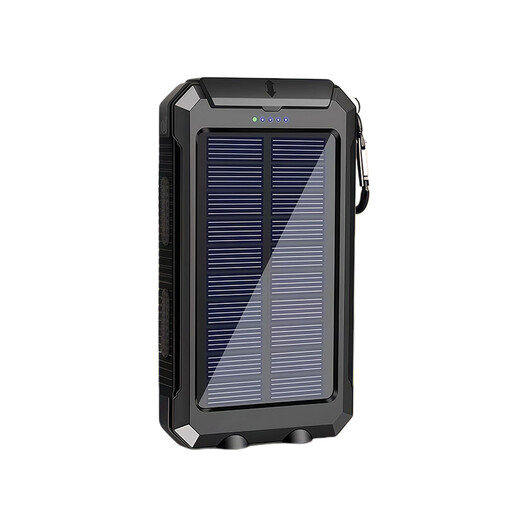
A Joybuy product pick for portable USB backup power. Before buying, check that the output and cable are compatible with your bike light’s charging port.
 No image available
The stated capacity is 10.000 mAh. Check that the output and cable are compatible with your bike light’s charging port and manual.
The product name also mentions an LED torch, compass and wrist strap.
You can if your light’s manual allows this charging method and you use a compatible charger and cable. The manual for the CatEye TL-LD700-R/F specifies a PC or USB battery charger. For your own light, follow the instructions for its specific model.
Follow the manuals for both products and place the charger in an open space so heat can dissipate, as advised by the Netherlands Fire Service. The manual for the CatEye TL-LD700-R/F specifies a charging temperature of 5–40 °C for that model and says to disconnect it after charging. Don’t assume these model-specific limits apply to another light without checking.
In the Netherlands, online purchases generally come with a statutory 14-day cooling-off period after delivery, subject to exceptions. You’re also covered by statutory consumer guarantees: if a product doesn’t perform as you could reasonably expect under normal use, the seller must put things right in line with the applicable rules. ACM ConsuWijzer explains that statutory guarantees are separate from any manufacturer’s warranty.
In the Netherlands, your front and rear lights must be on when cycling in the dark or in poor visibility, and your bike must have the prescribed reflectors. The Government of the Netherlands states that the front light may be white or yellow and the rear light must be red; lights must not flash. A charged power bank is no substitute for working front and rear lights.