
Holiday cyclist with one USB bike light
This person wants to charge their own light near a socket without packing more connections than necessary. The port and cable you need depend on the light model.


If there’s an accessible socket and you only need to charge a bike light, a suitable compact USB wall charger is usually enough. Extra ports or higher output won’t necessarily be useful for a single light. Choose a multi-port charger if you also want to charge other devices at the same time, or a power bank if you need to charge without a socket. In every case, check the connection, cable and charging instructions for your specific light.
This person wants to charge their own light near a socket without packing more connections than necessary. The port and cable you need depend on the light model.
This group wants to charge lights and other devices in one place. Compare the number and types of ports, and check what happens when several ports are used at the same time.
This cyclist needs portable power. It’s worth checking that the power bank has a suitable output and will keep charging when the light draws very little power.
Choose this if: there’s an accessible socket and you mainly want to charge one bike light.
Bear in mind: you’ll need mains power, and there’s limited scope for charging several devices at once.
Choose this if: you also want to plug in a phone, a second light or other USB devices in the same place.
Bear in mind: extra ports and higher total output won’t necessarily be useful for a single light. Power distribution may change when several ports are used at once.
Choose this if: you want to be able to charge when a socket isn’t available or is awkward to reach.
Bear in mind: you’ll need to charge the power bank itself and check whether the exact model keeps charging when power draw is low.
| What to consider | What should you look for? | Who is this important for? |
|---|---|---|
| Connection and cable | Check the charging connection, the cable supplied and the instructions for the exact light model, then compare these with the charger’s ports. | I want to connect my bike light using the cable I already have, so I first check that the port is compatible. Around 36% of consumers name the connection and cable as their top buying priority. |
| Several devices | Count how many devices you want to charge at once, and check the type and specifications of each port when used simultaneously. | If I want to charge a phone or second light as well as my bike light, I look for ports that can be used at the same time. Around 28% of consumers prioritise simultaneous charging. |
| Charging without a socket | Check the outputs, how the power bank itself is charged and whether the exact model supports low power draw. | If I can’t rely on having an accessible socket, I want to be able to charge my light using portable power. Around 27% of consumers prioritise charging without a socket. |
| Safe place to charge | Follow the instructions and choose a clear spot where the charger won’t be covered; don’t use damaged cables. | I want to charge the light in an open, uncovered space and avoid using damaged cables. Around 9% of consumers name safe placement as their top buying priority. |
The maximum output for one port may differ from the way power is distributed when several ports are used at once.
Start with the cable and the devices you actually want to connect at the same time. Then check the port specifications for the exact model.
Support for low power draw varies by model; a power bank may stop charging automatically.
Check the documentation for the exact model and try it with your own light before relying on it during your holiday.
Brandweer Nederland advises placing chargers in an open space so heat can escape, and warns against charging under a cushion or duvet.
Choose a clear spot to charge, follow the instructions for the light and charger, and don’t use damaged cables.
The features listed apply to the specific models below and aren’t a general assessment of every product from these brands.
The BoostCharge WCC002vfWH is a multi-port wall charger with three USB-C ports.
The Nexode 65W model reviewed, model 10335, combines two USB-C ports with one USB-A port.
The Fuel Series 5 FS5103U is a power bank with two USB-C ports and one USB-A port.
According to Hama, charging station 00201977 has four USB-C ports and one USB-A port.
This selection includes multi-port wall chargers and charging stations for a dedicated charging spot, as well as a portable power station for times when you need USB power without a socket right beside you.
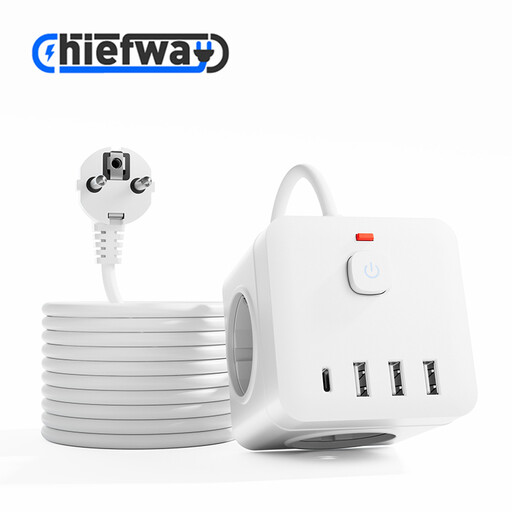 No image available
An option for a dedicated charging spot if you want to plug in your bike light and other USB devices.
The product description lists three USB-A ports, one USB-C port and three AC sockets.
The cable is 1.5 m long; the product name states a maximum of 2500 W.
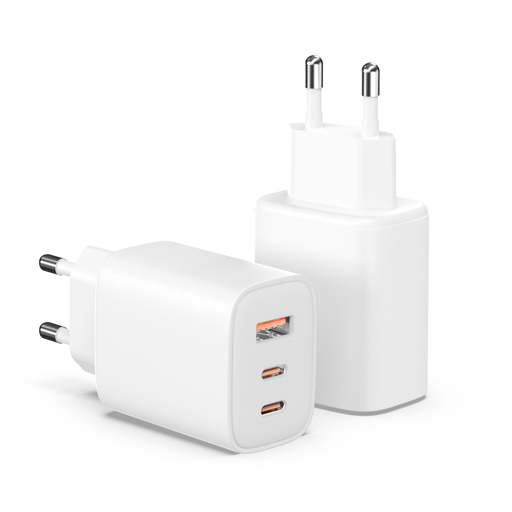 No image available
Suitable for a stay where there’s a socket and you want to plug in your bike light and other USB devices.
The product description lists two USB-C ports and one USB-A port; the stated output is 65 W.
Requires an available socket. Check that the port matches your light’s cable and charging instructions.
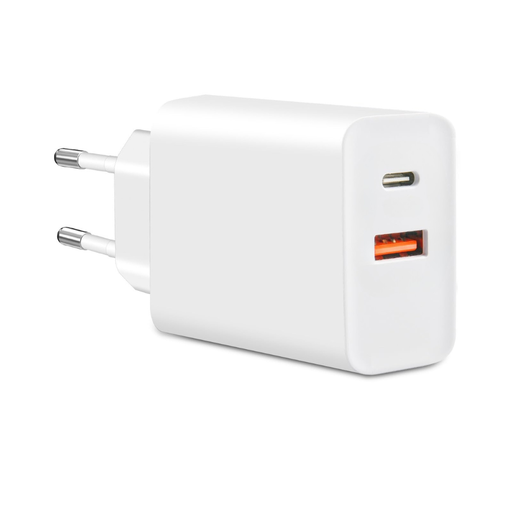 No image available
A compact wall charger for a spot with a socket, provided the connection matches your bike light’s cable.
The product description lists one USB-C port and one USB-A port; the stated output is 30 W.
Requires an available socket. Check the charging instructions for your exact light model.
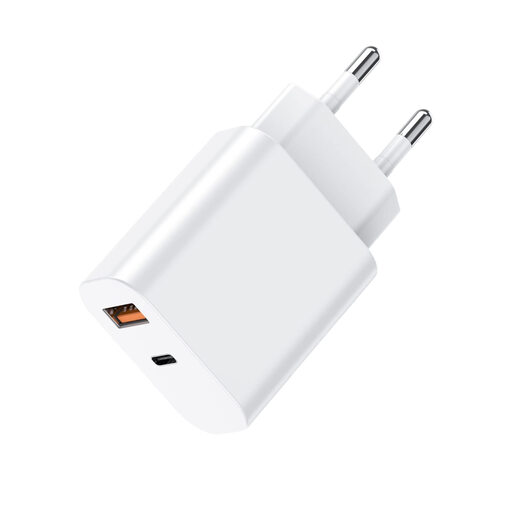 No image available
A wall charger for a stay with a socket, if the port type matches your bike light’s cable.
The product description lists USB-A and USB-C; the stated output is 20 W.
Requires an available socket. Check the charging instructions for your exact light model.
 No image available
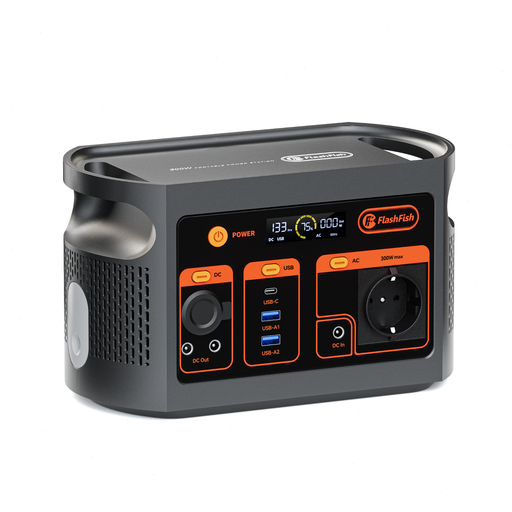
A portable option when you need USB power without a socket right beside your charging spot.
The product name lists 300 W output, 179.2 Wh capacity and a weight of 3 kg.
The product description lists two USB-A outputs and two USB-C outputs. According to the description, it can be charged using a wall adapter or a compatible solar panel; the power station itself needs to be charged.
Not just because of the maximum wattage. First check the connection and charging instructions for your light. The outputs manufacturers list for some multi-port chargers don’t tell you how quickly that specific bike light will charge.
Place the charger in an open space so heat can escape, and don’t charge it under a cushion or duvet. Brandweer Nederland also advises against using damaged cables. Follow the instructions for the light and charger too.
Some power banks switch off automatically when power draw is low. Anker describes a low-current mode for supported models; check whether the exact model has this feature, as that alone doesn’t confirm it will work with your light.
According to the Rijksoverheid, you must have a front and rear light on in the dark and when visibility is poor; detachable lights are permitted. So having a charged light doesn’t by itself mean your bike lights meet the rules for road use.
The NVWA explains that the directive applies to electrical equipment with a rated AC voltage of 50 to 1,000 V or a rated DC voltage of 75 to 1,500 V. This doesn’t confirm that a specific product on offer meets all the applicable requirements.