
Cyclists with one spare socket
You want to charge a bike light and phone, or a front and rear light, from one charging point. The number and type of ports determine which charger will work for you.


Choose a multi-port mains charger based on the connector at the charger end of your bike light cable and how many devices you want to charge at once. Then check how much power is available when using multiple ports, and charge in a dry, clear space with undamaged cables. The charger models mentioned are examples of different connections, not confirmed matches for your bike light.
You want to charge a bike light and phone, or a front and rear light, from one charging point. The number and type of ports determine which charger will work for you.
You use both USB-A and USB-C cables and want to make sure your existing cable will fit the charger.
You want to know how much power is available when several devices are connected, and whether charging might be interrupted briefly.
Start with the connector at the charger end and the number of devices you need to charge at once. Then check how power is shared when several ports are in use, and consider where you plan to use the charger.
| What to consider | What to look for when buying | Who is this important for? |
|---|---|---|
| Several devices, one socket | Count how many devices need charging at once and check the number of charging ports. A USB data hub is not automatically a mains charger. | If I want to charge my bike light and phone from one spare socket, I need enough compatible ports. Around 36% of consumers prioritise charging several devices from one socket. |
| Cable connection | Check both ends of the cable and follow the bike light’s charging instructions. Pay attention to the connector type at the charger end. | I want to connect my existing bike light cable without assuming in advance that it uses a particular type of USB connection. Around 29% of consumers prioritise cable compatibility. |
| Power when charging several devices at once | Compare your devices’ requirements with the specifications for the number of ports you plan to use at once. The total power output is not necessarily available from each port. | If I charge my light and another device at the same time, I want to know how power is shared between the ports in use. Around 21% of consumers consider this the most important factor. |
| Charging location and cables | Follow the instructions and choose a dry spot where the charger has plenty of space. Don’t use damaged cables. | I want to charge my light in a suitable, dedicated spot and make sure the cables can be laid out safely. Around 14% of consumers give the charging location top priority. |
The power output can change when you connect a second device. IKEA specifies 45 W for the SJÖSS charger when one device is connected, and 22 W per port when both ports are in use.
Compare the specifications for the number of ports you plan to use at once.
A hub for peripherals and data transfer is not the same as a mains charger with its own charging ports.
Check whether the product plugs directly into a socket and which ports are designed for charging devices.
You may also need a suitable power adapter to use it as a charging solution.
A cable that won’t fit the charger, or a charger that can’t release heat properly, can make your chosen charging spot unsuitable.
Check both ends of the cable and follow the instructions. The fire service advises placing chargers in a clear space so heat can escape, and not using damaged cables.
The BoostCharge WCB002vfWH is an example of a wall charger with two USB-A ports. It could suit you if you want to use two compatible cables from one socket.
The SJÖSS 805.744.38 is a two-port charger for cables with a USB-C connector at the charger end.
The Nexode 10335 combines two USB-C ports with one USB-A port, making it suitable for different types of cable.
These Joybuy picks are multi-port mains chargers for charging a USB bike light and other devices. Before buying, check that the connections are compatible with your cables.
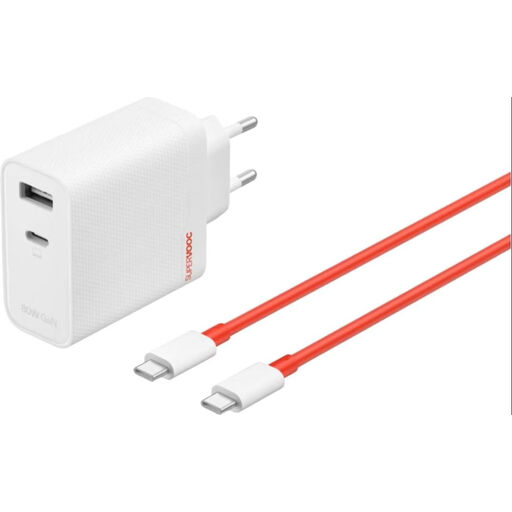 No image available
The two output types may suit you if you want to charge devices with USB-A and USB-C cables from one socket. Check your bike light cable and charging requirements.
The product name lists USB-A and USB-C, 80 W and simultaneous charging for two devices, according to the product description. The power split isn’t specified here.
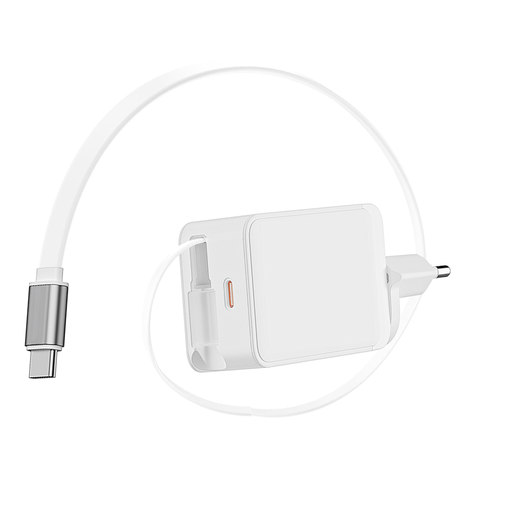 No image available
An option to consider if your bike light cable has a USB-C connector at the charger end and you want to charge two devices from one wall socket.
The product name lists up to 65 W, two USB-C ports and a retractable USB-C cable. The product description says you can charge via two ports at once; check how the power is shared for your device combination.
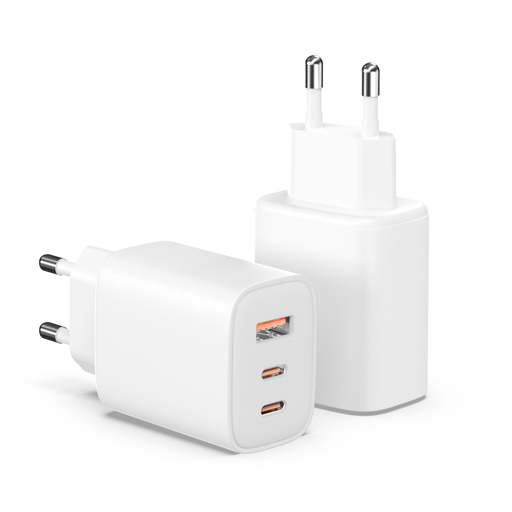 No image available
The combination of USB-A and USB-C may suit you if you use different types of cable at the charger end and want to connect more than two devices.
The product name lists 65 W and three ports. According to the product description, you can charge three devices at once; check the power available for the combination you plan to use.
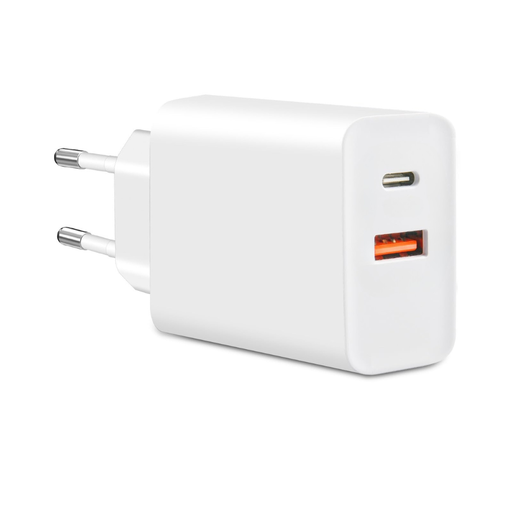 No image available
This two-port charger may suit you if you want to use one USB-A cable and one USB-C cable from the same wall socket.
The product name lists 30 W, one USB-A port and one USB-C port. The product description says you can charge via two ports at once; check how the power is shared between your devices.
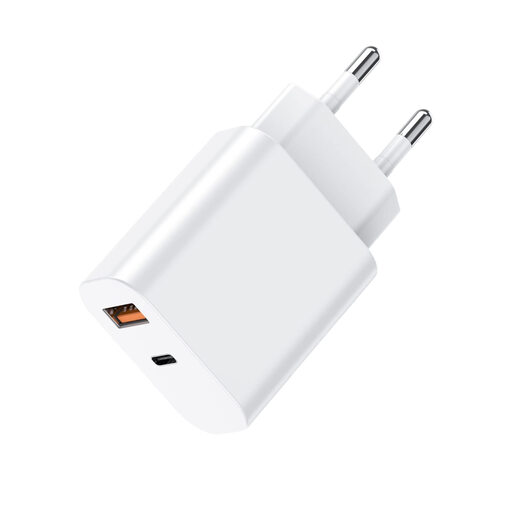 No image available
An option to consider if you want to charge two devices from one socket and your cables are compatible with the USB-A and USB-C outputs.
The product name lists 20 W and both port types. The product description says you can charge via two ports at once; check that the available power split meets your charging requirements.
You can’t tell from the word USB alone. Check which connector your existing cable has at the charger end and follow your bike light’s charging instructions. The IKEA SJÖSS charger described here has USB-C outputs; the Belkin model described has USB-A outputs.
Choose a dry spot where the charger has plenty of space so heat can escape, and don’t use damaged cables. The fire service advises charging battery-powered devices in a room with a working smoke alarm. Also follow the instructions for your light and charger, and check the cables and connections before use.
No. You don’t need an additional manufacturer’s warranty to claim under your statutory rights in the Netherlands. According to ACM ConsuWijzer, the seller is responsible if a product used normally doesn’t meet what you could reasonably expect from it. Whether a particular fault is covered depends on the circumstances; a manufacturer’s warranty is separate from your statutory rights.