
Livraison le jour même et le lendemain

Qualité garantie

Débloquez vos offres de bienvenue: Livraison GRATUITE | Jusqu'à -80 % | 30 jours d'essai gratuits à JoyPlus
Téléchargez l'application
An upper-arm blood pressure monitor is more convenient for many households than a wrist monitor. The cuff usually stays more stable during a reading, and the result is less dependent on the exact position of your arm. However, not every automatic blood pressure monitor is suitable for regular use.
Many buyers focus mainly on the price or on terms such as “smart”, “accurate” and “clinical”. This can lead to a poor purchase. Instead, look for specifications you can check: the cuff size, how easy the display is to read, the memory and how the device flags possible measurement errors.
A cuff that is too small or too large can affect the reading. So, first check the circumference of your upper arm. Many models in this selection fit 22 to 42 cm, but this is not true of every device. A wide-range cuff is practical for several adults in the same household, as long as their arm circumference falls within the stated range.
A digital blood pressure monitor with Bluetooth, an app or a colour scale can be useful, but these features do not automatically make a device suitable for your needs. For home use, a stable upper-arm cuff, a clear start button and an easy-to-read screen are often more important.
Smartwatches can track heart rate, movement and other readings. For example, the product descriptions for VoxorAI smartwatches mention blood pressure and oxygen readings. These features are best used as additional information to track trends. Don’t automatically use a smartwatch as a replacement for an upper-arm cuff blood pressure monitor. If in doubt, check the instructions and speak to a doctor about readings that remain outside the expected range.
Choose a model that fits your upper arm. Measure your arm circumference according to the manufacturer’s instructions and place the cuff on your bare upper arm, usually a few centimetres above the elbow. Sit still during the reading, with both feet flat on the floor and your arm at heart level.
An automatic blood pressure monitor is only useful if you follow the instructions consistently. Don’t talk, and move as little as possible during the reading. Some models alert you if you move or the cuff is fitted incorrectly. This can help you spot an inaccurate reading sooner.
For older people and carers, a blood pressure monitor with a large display is often practical. Check the text size, contrast and whether there are clear symbols for heart rate, battery level and saved readings.
A blood pressure monitor with memory is useful if you want to track changes over several days. For two users, at least two separate profiles are helpful. Models with 2 × 90, 2 × 99 or 2 × 120 memory slots store readings separately for each person, making it less likely for data to get mixed up.
Almost all the devices mentioned show your heart rate as well as systolic and diastolic blood pressure. A blood pressure monitor with heart rate monitoring can therefore show several readings at once. Some models also feature irregular heartbeat detection or an IHB alert.
This kind of alert is not a diagnosis. It’s a prompt to check the instructions and seek medical advice if it happens repeatedly. You can also look at the average of three readings, which may give you a more useful picture than a single result.
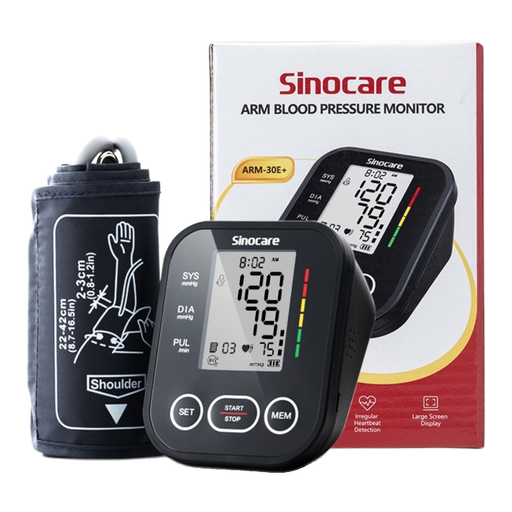
Why it suits this user: The one-button operation is straightforward for anyone taking readings at home for the first time. The 3.6-inch LCD screen displays the results straight away.
The upper-arm cuff and simple controls make it less tempting to focus only on smart extras.
One-button operation, 3.6-inch LCD display and irregular heartbeat detection, according to the product description.
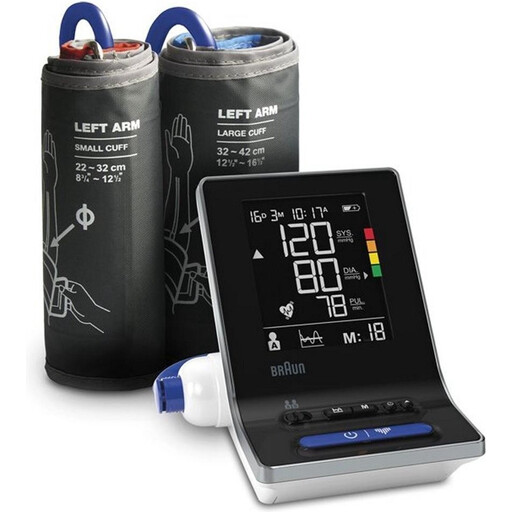
Why it suits this user: This model comes with two cuffs, supports two users and has a backlit colour display.
The two cuffs reduce the risk of one fixed size not fitting all users properly.
Two user profiles, an average of three readings, irregular heartbeat detection and cuff sizes up to 33–43 cm, according to the product specifications.
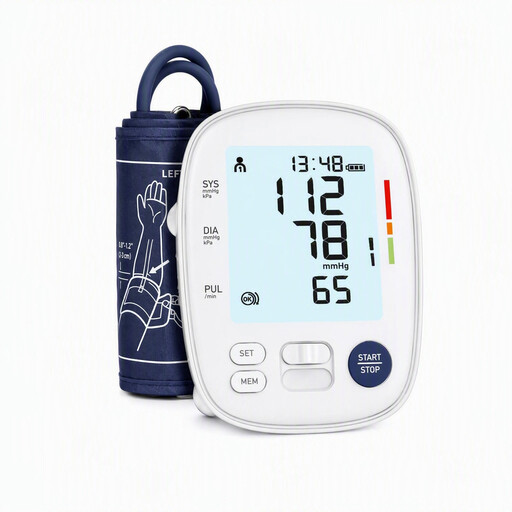
Why it suits this user: A good fit for households that take readings often and want to keep data separate for two people.
The large LCD screen, cuff check and movement alert address many practical issues that can arise during use.
2 × 120 memory slots, 22–42 cm cuff, average of three readings, colour indicator and optional Bluetooth functionality.
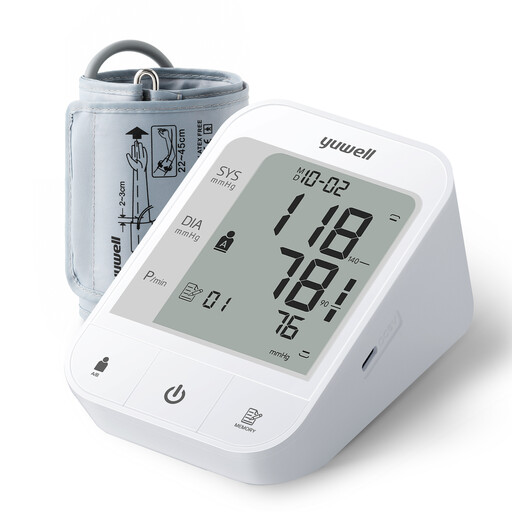
Why it suits this user: The one-button operation, 3.8-inch screen and wide-range cuff are practical for independent use.
The self-check and incorrect-use alert help you check the set-up before taking a reading.
22–45 cm cuff, two users with 99 memory slots per person, USB cable, batteries and storage case, according to the product information.
We’ve put together a complete, up-to-date list of products that meet these strict selection criteria and current European safety regulations.
An upper-arm model uses a cuff that goes around your upper arm. Its reading is generally less sensitive to small changes in position than a wrist monitor’s, but correct placement is still essential. That’s why many people choose an automatic upper-arm monitor for regular use at home.
Its lifespan depends on how it’s used, the batteries, storage and the quality of the cuff. Keep the device dry, avoid sharply folding the cuff and follow the care instructions. Before buying, also check the stated product lifespan and warranty.
As well as the purchase price, the main costs to consider are batteries and, if needed, a replacement cuff. A USB-powered model can be handy if you use it often, while batteries are more practical if you need to take it with you. Bluetooth or an app can make things more convenient, but isn’t essential for a basic reading.
