
The careful chair cleaner
You want to treat a stain, but first check whether the chair’s care instructions allow wet cleaning. This is especially important if the chair isn’t yours.


First, check your chair’s care instructions: a machine marketed for upholstery isn’t automatically suitable for every fabric. If wet cleaning is allowed, focus on size and storage space when comparing cleaners for spot stains. For seams and several areas, the nozzle, hose and tank maintenance matter too. Only use steam if the care instructions for both the upholstery and the machine allow it.
You want to treat a stain, but first check whether the chair’s care instructions allow wet cleaning. This is especially important if the chair isn’t yours.
You’re looking for a spot cleaner that you can empty and leave to dry after use, then store away neatly.
You’re comparing the reach, nozzles and tank capacity for cleaning several areas or hard-to-reach seams, provided the upholstery can be wet-cleaned.
Start by checking which cleaning methods are suitable for your chair. Then compare the size, reach and maintenance requirements of the specific model.
| What to consider | What should you check? | Who is this important for? |
|---|---|---|
| Upholstery suitability | Check the care instructions for the specific chair or cover and find out which cleaning methods are allowed. Follow the instructions for testing on an inconspicuous area too. | I want to know whether my chair fabric can be wet-cleaned before choosing a machine. Around 36% of consumers prioritise upholstery suitability. |
| Storage in a rented flat | Compare the dimensions and weight of the exact model, and take the hose, nozzles and tanks into account. | In a small rented flat, I need to be able to put the machine and its attachments away after use and leave the tanks to dry. Around 29% of consumers prioritise compact storage. |
| Reach and size of the job | Check which upholstery and crevice nozzles are included, along with the hose length and the capacity of the clean- and dirty-water tanks. | If I want to clean seams or several areas, I check which nozzle and reach are suitable, and how often I might need to refill or empty the tanks. Around 21% of consumers prioritise reach and cleaning several areas. |
| Maintenance after use | Check how to empty, rinse and dry the tanks and parts. Also check which replacement parts and cleaning products are available for the specific model. | I want to know how many steps are involved in cleaning and storing the machine after use. Around 14% of consumers prioritise maintenance and long-term supplies. |
Which cleaning methods are allowed depends on the specific fabric and its care instructions, not just the description of a machine.
Check the care instructions for the chair or cover before choosing a wet-cleaning method.
BISSELL describes the ProHeat as a model that keeps water warm; the HydroSteam Pro also has steam settings. These are different features, and neither proves that a particular chair can withstand steam cleaning.
Compare the features of the exact model, and only use steam if the care instructions for both the chair and the machine allow it.
A similar series name doesn’t guarantee that the model or the included parts are the same.
Compare the full model number and product specifications for the version you’re considering.
BISSELL offers several SpotClean models for upholstery. Compare the full model number, as features vary between versions.
Kärcher describes the SE 3 Compact Home N1 as a spray extraction cleaner for items including upholstered furniture.
Philips describes the 3000 Series as a stain remover with a 3-in-1 nozzle for soft surfaces.
These products are designed for spot-cleaning upholstery. Before use, check that your chair’s care instructions allow the cleaning method you choose.
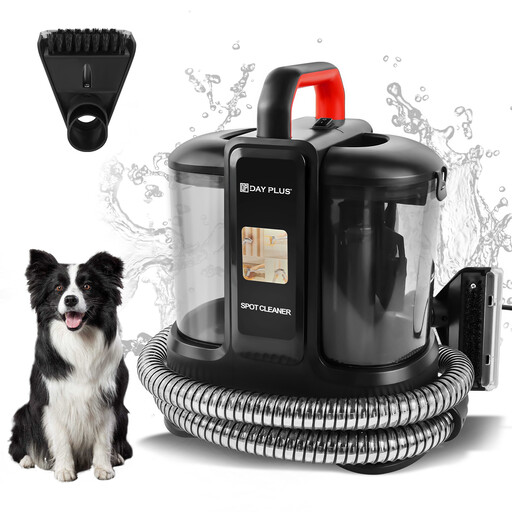 Image not available
The product description mentions spraying and suction for upholstery and sofas.
Corded model with a 4.25 m cable. The product name lists 0.6 l and 1.2 l tanks.
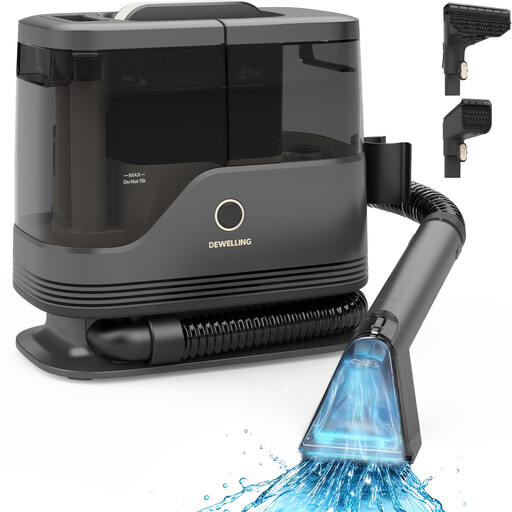 Image not available
The product name describes a portable wet upholstery cleaner for fabric surfaces.
The name mentions a self-cleaning function on the handle and a power rating of 400 W.
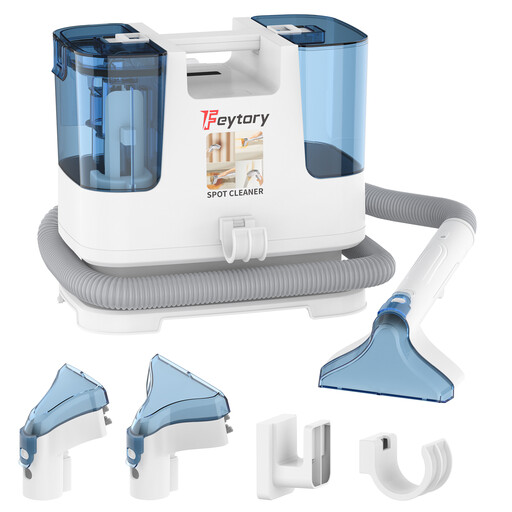 Image not available
The product name lists sofas, carpets and vehicle interiors as surfaces the model is designed for.
The name lists separate tank capacities of 0.6 l and 1.5 l.
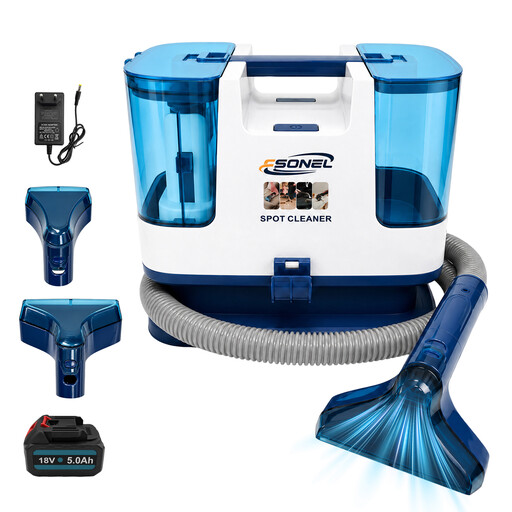 Image not available
The product name lists wet fabrics, sofas and car seats as intended surfaces; check whether your chair can be wet-cleaned.
The name lists one battery, a power rating of 400 W and suction power of 17 kPa.
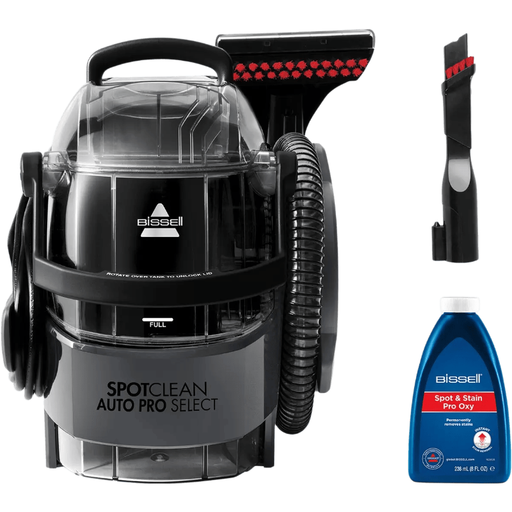 Image not available
The product description lists upholstery and sofas as suitable surfaces.
The product name describes this as a portable carpet cleaner. Check the chair’s care instructions before wet-cleaning it.
No, follow the care instructions for the specific chair or cover. A furniture care guide may use codes such as W for water-based cleaning, S for solvent-based cleaning and X for vacuuming or brushing only. Check which code and any additional instructions apply to your furniture. IKEA also advises following the care instructions for the specific product.
Empty and clean the tanks and any parts you’ve used, following the manual for your chosen model, then leave them to dry before putting everything away. Kärcher lists a rinsing function for the SE 3 Compact Home N1; BISSELL lists a HydroRinse accessory for the C5. These features vary by model.
You don’t need a manufacturer’s warranty to have statutory rights. According to ACM ConsuWijzer, you have statutory rights in addition to any manufacturer’s warranty. If a product proves faulty sooner than you could reasonably expect under normal use, the seller is responsible for offering an appropriate solution. This doesn’t mean every fault is guaranteed to be repaired free of charge.
CE marking is mandatory for electrical and electronic consumer products covered by the rules, as explained by the Netherlands Food and Consumer Product Safety Authority and the Netherlands Enterprise Agency. Check the marking and product information for the specific model; information about a product category or brand doesn’t prove that an individual machine meets the requirements.