
Cautious fabric owner
You don’t want to damage a delicate or unfamiliar headboard. First, check the furniture manufacturer’s care instructions; Swiss Sense also recommends dry care as an option for velvet.


First, check your headboard’s care instructions: an upholstery cleaner isn’t automatically suitable for every type of furniture fabric. If the fabric can be wet-cleaned, choose a manageable machine with a suitable upholstery tool for the occasional small stain. For tall or hard-to-reach areas, hose length and attachments matter more. Test any permitted treatment on an inconspicuous area, then allow the upholstery to dry thoroughly.
You don’t want to damage a delicate or unfamiliar headboard. First, check the furniture manufacturer’s care instructions; Swiss Sense also recommends dry care as an option for velvet.
You’re looking for a machine you can grab to tackle small stains on a headboard that’s suitable for wet cleaning. A suitable attachment and cleaning the machine after use are also worth considering.
You want to be able to clean top edges, seams and hard-to-reach areas. Compare the hose length and the tools included with the exact model.
Choose this option: if wet cleaning is permitted and you mainly need to treat a small stain now and then.
Bear in mind: a smaller dirty-water tank may need emptying sooner during a larger cleaning job.
Choose this option: if the machine needs to stand beside the bed, or you want to reach top edges and seams.
Bear in mind: extra reach or accessories are only useful if they suit your headboard. Filling, emptying and drying are still part of the job.
Choose this option: if wet cleaning isn’t permitted or the care instructions aren’t clear.
Bear in mind: vacuuming, dry brushing and hand cleaning are different methods. Follow the advice for the specific fabric in each case.
| Concern | What to look for when buying | Who is this important for? |
|---|---|---|
| Fabric suitability | Check whether the care instructions allow wet cleaning; test any permitted treatment on a hidden area first. | I want to avoid treating my headboard with the wrong method; around 36% of consumers put fabric suitability first. |
| Small stains caused by family life | Compare the upholstery tool included and how easy the machine is to take out, fill and store. | When small stains keep cropping up, I want to clean them quickly without turning it into a bigger job than necessary; around 29% of consumers focus on this most. |
| Reaching top edges and seams | Measure where the machine can stand and check the hose length and tools included with the exact model. | If my headboard is tall or awkwardly positioned, I want to know whether the hose and attachment will reach; around 21% of consumers prioritise reach. |
| Cleaning and storing after use | Compare the water tanks and any rinsing features; don’t assume they mean you can skip emptying and drying the machine. | After a quick clean, I want to be able to look after the tanks and parts without a fuss; around 14% of consumers focus mainly on after-use care. |
The type of machine doesn’t determine which cleaning method the manufacturer allows for your specific fabric. Using the wrong method could damage it.
Check your headboard’s care instructions. Test any permitted treatment on an inconspicuous area first.
Steam isn’t automatically suitable for every type of upholstery. Swiss Sense says the fabric must be heat-resistant and also recommends dry care for velvet.
Follow the furniture manufacturer’s advice for your specific fabric rather than treating steam as the default option.
If your headboard is tall or awkwardly positioned, the hose length and tools can also determine whether you can reach the areas you want to clean.
Measure where the machine can stand and check which attachments are included with the exact model.
The Clean It range includes models for spot-cleaning upholstery. Size, brushes and tank capacity vary by model.
The SpotClean range is designed for spot-cleaning upholstery. Hose length, tanks and accessories vary by model.
The SE 3 Compact Home N1 is a spray-extraction cleaner with tools for upholstery and crevices.
This selection features spray-extraction cleaners for spot-cleaning upholstery and reaching seams, but only where the care instructions allow wet cleaning.
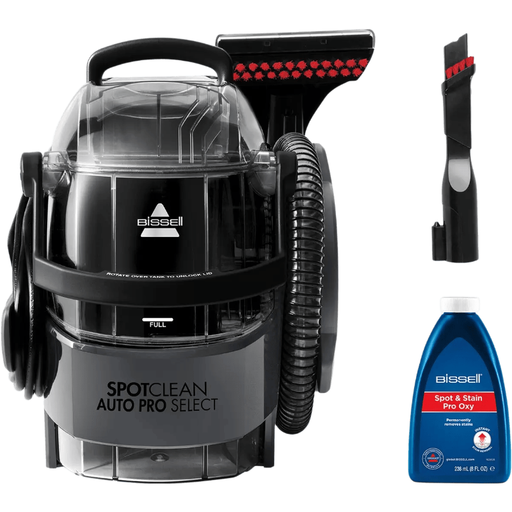 No image available
A good fit if you’re looking for a machine to spot-clean upholstery and need an upholstery tool for fabric that can be wet-cleaned.
The product instructions exclude delicate fabrics labelled ‘dry clean only’.
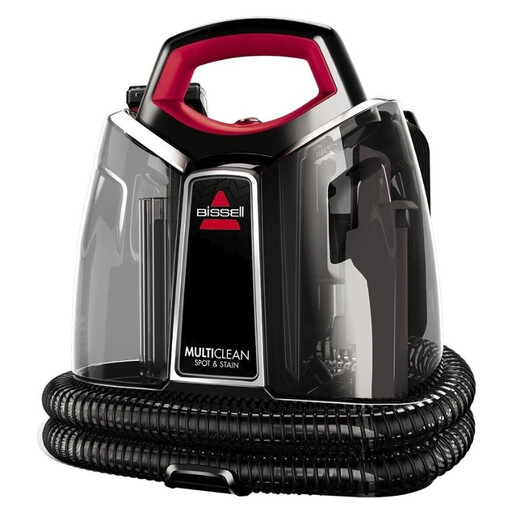 No image available
A good fit if you want to spot-clean upholstery and treat an accessible area or seam. Check first that the fabric can be wet-cleaned.
The instructions specify BISSELL-recommended cleaning formulas.
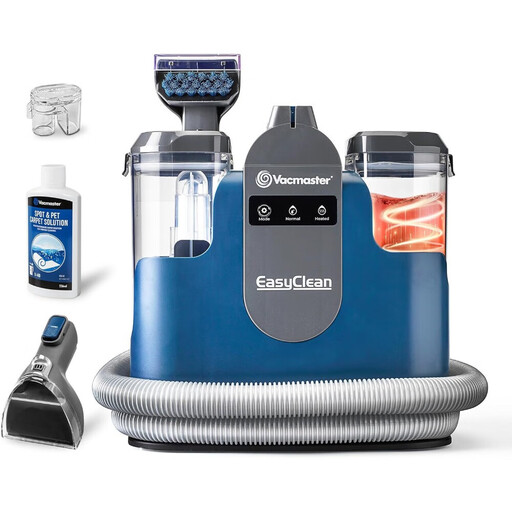 No image available
A good fit if you’re looking for a machine to spot-clean upholstery and want to use the hose from a little further away. Wet cleaning must be permitted for the fabric.
The product name lists two tanks of 1.6 and 0.95 litres and a 1.8 m hose with a self-cleaning function.
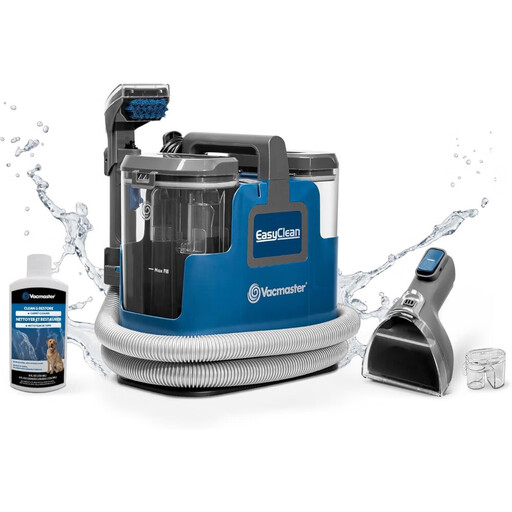 No image available
A good fit if you want to spot-clean upholstery with a compact model and compare separate water tanks, provided the fabric can be wet-cleaned.
The product name lists two tanks of 1.6 and 0.95 litres and a 1.8 m hose.
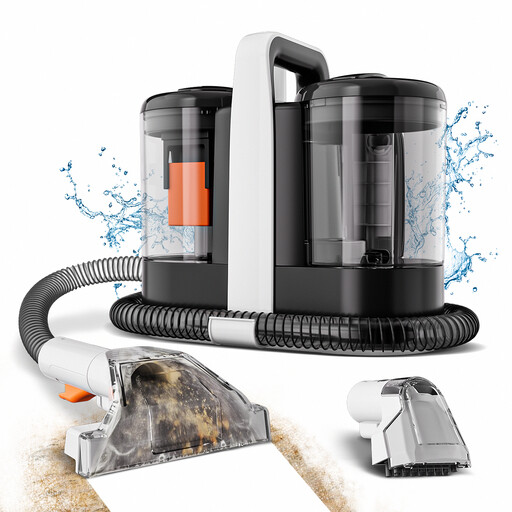 No image available
A good fit if you’re looking for a portable machine to spot-clean fabric upholstery, provided the care instructions allow wet cleaning.
The product name lists 600 W, 15 kPa and a power cord; these figures alone say nothing about the cleaning results on your headboard.
No. Follow the care instructions for your specific headboard. BISSELL lists codes W or WS for its wet-cleaning method and advises against using it on fabrics labelled S or X. You should also test colour-fastness on a hidden area. This US code system doesn’t replace your furniture manufacturer’s instructions.
First, check that the fabric is suitable for your chosen method and test it on an inconspicuous area. Remove loose dust, then air and dry the headboard thoroughly after cleaning. Empty and clean the tanks according to the machine’s instructions.
CE marking is mandatory for products covered by the applicable harmonised EU rules. According to the European Union, the Low Voltage Directive applies to equipment with a rated voltage of 50–1,000 V AC or 75–1,500 V DC. Check which rules apply to the specific appliance; the mark doesn’t confirm that it’s suitable for your furniture fabric.
No. ACM ConsuWijzer says the law doesn’t set a fixed duration for the statutory guarantee; with normal use, it depends on what you could reasonably expect from the product. If there’s a fault, contact the seller. A commercial guarantee has its own terms and conditions.
Check the manual for your chosen model to see which cleaning solution is specified and which tools are included. The instructions for the BISSELL 4720M specify BISSELL-recommended cleaning formulas.