
Vandaag of morgen in huis

Kwaliteit gegarandeerd

Welkomstaanbiedingen ontgrendelen: GRATIS bezorging | Tot 80% korting | Gratis 30 dagen JoyPlus-proefperiode
Download de app
Replacing a faulty seat-belt buckle may seem straightforward. However, many universal models are not a good fit for the belt socket, mounting hole or attachment point on the frame. So a buckle described as “universal” is not automatically suitable for your car, SUV, van or lorry.
Look out for these three common pitfalls:
A universal replacement seat-belt buckle is only a safe choice if its dimensions, attachment and operation match your vehicle. If in doubt, also check your vehicle documentation or have a garage fit it.
First, check the metal tongue on your current seat belt. The stated compatibility for the replacement seat-belt buckle discussed here is:
Measure it with callipers or an accurate ruler. Even a difference of a few millimetres can mean that the tongue will not lock securely into the seat-belt socket.
A seat-belt buckle adapter must be fitted to a strong metal bracket on the seat frame. Do not use it on plastic, a loose trim support or thin sheet metal. The product description also recommends positioning the red release button facing upwards and aligning the socket in the same direction as the belt tongue.
Once fitted, the buckle should:
The replacement seat-belt buckle described has an ABS housing and a metal inner mechanism. It measures 16 × 5 × 3 cm and weighs approximately 0,14 kg. These are verifiable product specifications, but on their own they do not mean that the part is suitable for every vehicle.
Do not use engine oil, grease or other lubricants in the socket. Dust and grease can contaminate the mechanism. Keep the belt flat and avoid twisting or knotting it. Regularly check that it fastens and releases correctly, especially after use in damp or muddy conditions.
Do not simply opt for a universal part if:
After an accident, it is sensible to have the entire belt assembly checked, including the webbing, retractor and buckle. Replacing just one part may not be enough.
Also consider what the product is for. A seat-belt buckle should secure the occupant correctly. Never use a buckle to disable a warning signal when someone is not wearing a seat belt. Before using it on public roads, check whether the part may be used under the applicable vehicle and safety regulations.
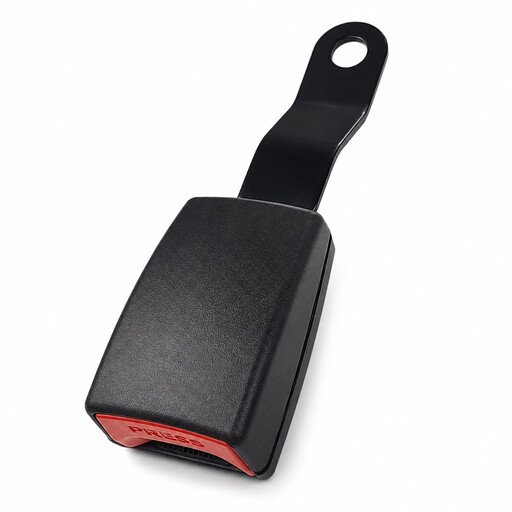
Why it suits this user: A practical choice for DIY enthusiasts who want to check the belt tongue and mounting point before ordering.
The product information gives specific measurements: 2,0–2,2 cm, a minimum insertion depth of 3 cm and a 12 mm mounting hole. Check these measurements yourself before buying.
ABS housing with a metal core, black finish and stated dimensions of 16 × 5 × 3 cm.
Why it suits this user: Ideal for buyers who focus on the materials, fitting information and a neat fit with their car interior.
The fitting instructions warn against attaching it to plastic or thin metal. This helps ensure that a smart exterior is not mistaken for a suitable construction.
Metal inner mechanism, M10 fitting recommendation and red release button for easy-to-recognise operation.
Why it suits this user: For drivers of SUVs, vans or lorries looking for a replacement seat-belt buckle and able to check the vehicle attachment point carefully.
The instructions recommend checking that it is secure, has no play and is correctly aligned. This matters for vehicles that are used heavily every day.
Described as splash-resistant, with a compact design and cleaning instructions that recommend a cloth and no lubricant.
We’ve put together a complete, up-to-date list of products that meet these strict selection criteria and the applicable European safety regulations.
Only fit the buckle after comparing it with the original setup. Tighten the fixing securely, but avoid damage from over-tightening. Then check:
Repeat these checks after a few journeys. If there is any play, the release mechanism sticks or the click is unclear, do not use the part.
No. The term “universal” usually refers to a particular range of dimensions, not every vehicle. Check the belt tongue width, insertion depth, mounting hole and fitting method. The shape of the seat-frame bracket can also vary from one vehicle to another.
Its lifespan depends on use, dirt, moisture, vibration and the quality of the fitting. There is no set lifespan that applies to every vehicle. Test the socket regularly and replace it if it has play, is damaged or the mechanism sticks.
Not always. A collision can also damage the belt webbing, retractor, attachment points or seat-belt pretensioner. Have the entire seat-belt assembly checked before driving the vehicle again.
