
Weekend ironer
You mainly want to tidy up a few uniform sleeves after a weekend away. Think about how much you actually iron and whether the extra setting up and storage space needed for a steam generator are worthwhile.


For one or a few uniform sleeves after a weekend away, a standard steam iron is usually more practical. A steam generator becomes a more attractive option if you also iron more clothes or want to tackle stubborn creases. The Consumers' Association points out that, as well as steam output, you should consider the garment care label, how easy the appliance is to use and how much space the complete unit takes up.
You mainly want to tidy up a few uniform sleeves after a weekend away. Think about how much you actually iron and whether the extra setting up and storage space needed for a steam generator are worthwhile.
You may iron a range of fabrics and want to match the temperature and steam settings to what the care label allows. Check the label on each garment before choosing a setting.
You regularly get through a larger pile of uniform clothing. In that case, a separate water tank and the weight of the iron in your hand may matter more than the convenience of a compact set-up.
Start with how much ironing you do and the fabric your uniform is made from; only then compare steam output and extra features. For a short ironing session, the space a generator takes up may matter more than its larger water tank.
| What to consider | What should you check? | Who is this important for? |
|---|---|---|
| Ironing sleeves quickly and precisely | Look at the soleplate shape and how easy the controls are to use around seams, buttons and cuffs; compare this with the time needed to set up and heat the appliance. | If you only iron a few sleeves after a weekend away, you want to work easily around the details without setting up a large unit. Around 36% of consumers prioritise ironing sleeves quickly and precisely. |
| Suitable for the fabric | Read the ironing symbol and check which temperature and amount of steam are allowed. | If your uniforms are made from different fabrics, you want to be able to follow the label for each garment, even when speed matters. Fabric suitability is the main concern for around 29% of consumers. |
| Space for a short ironing session | Check the dimensions of the complete generator and whether your ironing board can support it securely. | If space is limited and you only iron a few sleeves, a compact set-up may matter more than a larger tank. Space and convenience come first for around 21% of consumers. |
| Maintenance with repeated use | Check how to descale the model and whether it uses replaceable cartridges or other consumables. | If you iron regularly, you’ll want to know what maintenance is involved and whether anything needs replacing. Around 14% of consumers prioritise maintenance and predictable running costs. |
A steam generator can be useful for a large pile of ironing or stubborn creases, but for a few sleeves, the larger unit also needs more space and preparation.
Think about how many uniform items you usually iron in one go, and check where you can set up and store the complete appliance.
The garment care label tells you how to treat the fabric. A temperature or steam feature doesn’t change what the label says.
Read the ironing symbol before choosing a setting, and don’t iron a garment if the label advises against it.
A scale collector or other anti-scale system doesn’t automatically eliminate the need for maintenance. Models with replaceable cartridges may also need replacements regularly.
Check the descaling process before buying and see whether your chosen model needs consumables.
The 3000 Series is a useful point of comparison for regular ironing.
The Express Power SV8110 is worth considering when comparing steam output and maintenance features.
The CareStyle 5 IS5249BK is worth considering if ease of handling matters during longer ironing sessions.
These Joybuy products are steam generators for uniforms with creases and regular ironing. Bear in mind that the complete set-up may take up more space than a standard iron if you’re only ironing a few sleeves.
 No image available
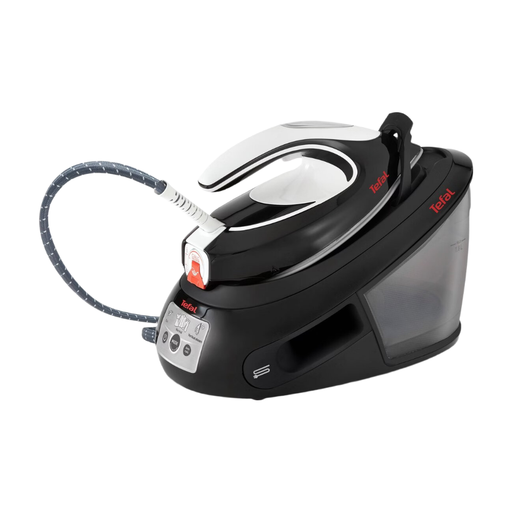
Could suit regular ironing when you also want to tackle creases.
The product name lists 6.5 bar. The description mentions automatic temperature and steam settings, and a removable scale collector.
 No image available
An option to compare if you iron other uniform items as well as sleeves.
The product name lists 2400 W, a steam boost of 350 g and a 1.4 l water tank. Philips Netherlands also lists a maximum pump pressure of 6 bar and continuous steam of 120 g/min for the PSG3000/20.
 No image available
A steam generator to consider if you switch between different ironable fabrics.
The product description mentions temperature settings based on the fabric type and care label, a 1.3 l tank and a SteamGlide soleplate. Always follow the garment care label.
 No image available
Could suit ironing where creases and maintenance are priorities.
The product description mentions a Durilium AirGlide soleplate and a Calc Clear anti-scale system.
 No image available
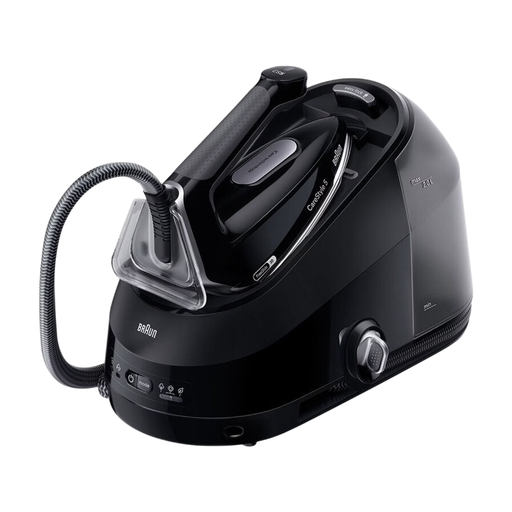
An option to compare if you iron around buttons, pockets and zips, or regularly tackle stubborn creases.
The description mentions a removable 2 l tank, iCare temperature control for ironable fabrics and a FreeGlide 3D soleplate. Braun Household Netherlands lists steam output of up to 150 g/min for the IS5249BK.
If the garment care label allows steam ironing, iron with steam first and then without it, so the fabric can dry. Too much steam can make your clothes and ironing board damp.
Follow the instructions for your specific model on water and descaling. The Consumers' Association says steam irons and steam generators are generally designed for tap water; don’t add perfumed ironing water or other products unless the manufacturer allows it.
According to ACM ConsuWijzer, the seller is responsible under the statutory guarantee if a product used normally doesn’t meet the standard you could reasonably expect. This statutory right is separate from any manufacturer’s warranty, and there isn’t simply a fixed two-year period for every appliance.
According to ACM ConsuWijzer, a standard online purchase usually comes with a statutory cooling-off period of up to 14 days after delivery, with no need to give a reason. Check which exceptions and returns conditions apply to your purchase.