
Someone who wears a uniform with crisp cuffs
After your journey, your main priority is a neat sleeve seam and cuff. The right ironing surface and a soleplate tip that lets you work precisely are important.


For sharply pressed sleeve seams and cuffs, a steam iron with a precision tip is usually the right choice. A garment steamer is more convenient if you simply want to freshen up a suitable item while it’s hanging. Choose a 2-in-1 appliance if you want both options, and consider a steam generator mainly if you also iron large loads regularly. Check the care label first, and let a sodden sleeve dry: extra steam isn’t suitable for every fabric.
After your journey, your main priority is a neat sleeve seam and cuff. The right ironing surface and a soleplate tip that lets you work precisely are important.
You want to freshen up a uniform while it’s hanging, and you’re happy to accept that steaming won’t give you the same crisp finish as pressing with an iron soleplate.
You regularly iron several garments one after another. Tank capacity, ease of use and maintenance matter more than they would for a single sleeve.
Best for: Pressing one or a few uniform items flat and working precisely along a sleeve seam or cuff, provided the care label allows ironing.
Keep in mind: The Consumentenbond notes that steam irons have a smaller tank than steam generators. An iron can also feel heavier during long ironing sessions. A precision tip is a model feature, not a guarantee of a particular result.
Best for: Freshening up a suitable garment while it’s hanging, when you don’t need a sharp crease.
Keep in mind: Steaming clothes on a hanger means you don’t need to set up an ironing board, but it won’t automatically give seams and cuffs the same crisp finish as pressing with an iron soleplate.
Best for: If you want to freshen up garments on a hanger as well as occasionally press them flat.
Keep in mind: Tefal lists a precision tip and an included ironing mat among the features of the Duo Power JF4031E0. Check which accessories are included with each version.
Best for: If uniform sleeves are part of frequent, heavy ironing, including garments with stubborn creases.
Keep in mind: The Consumentenbond points out that steam generators are larger and need more storage space. A generator may not suit your ironing board or workspace.
| What to consider | What to look for | Who should consider it? |
|---|---|---|
| Precise pressing | Check that the care label allows ironing and that the soleplate tip and ironing surface are suitable for seams and cuffs. | If I want to get the sleeve seam and cuff really flat, I look for a suitable soleplate tip and surface. Around 36% of consumers prioritise precise pressing. |
| Quick touch-ups | Check whether the appliance can steam vertically and whether the garment is suitable for this. Also consider how much space you have to set it up. | If I just want to quickly freshen up a hanging sleeve after arriving, I care more about a quick set-up than a sharp crease. Around 29% of consumers prioritise quick touch-ups. |
| Fabric and moisture | Read the care label and let a sodden sleeve dry first. The GINETEX symbol for a maximum of 110 °C means iron without steam. | If I’m not sure what my uniform can handle, I check the care label and make sure it’s dry before choosing extra steam. Around 21% of consumers prioritise protecting the fabric. |
| Longer ironing sessions | Compare the tank capacity and storage space with your ironing routine, and follow the instructions for your chosen model when descaling it. | If I’m ironing several uniform items one after another, I consider the tank, maintenance and storage, not just one sleeve. Around 14% of consumers prioritise long ironing sessions. |
The care label may restrict the use of steam, regardless of how much steam an appliance can produce. A wet journey doesn’t change how the fabric can be treated.
Check the ironing symbol and how wet the sleeve is before choosing an appliance or setting.
Freshening up a garment while it’s hanging and pressing it flat are different tasks. A garment steamer won’t automatically give a seam or cuff the same crisp finish as an iron soleplate.
Decide in advance whether you mainly want to freshen up the garment or press it properly. If you’re considering a 2-in-1 appliance, check which ironing surface is included.
If you need a separate iron soleplate and a suitable surface, remember to allow extra room for the set-up.
A larger tank is most useful for big loads of laundry. A generator takes up more space and may not suit your ironing board.
Compare your overall ironing load and available workspace before choosing a generator.
The larger set-up needs extra storage space and may require a different, suitable ironing board.
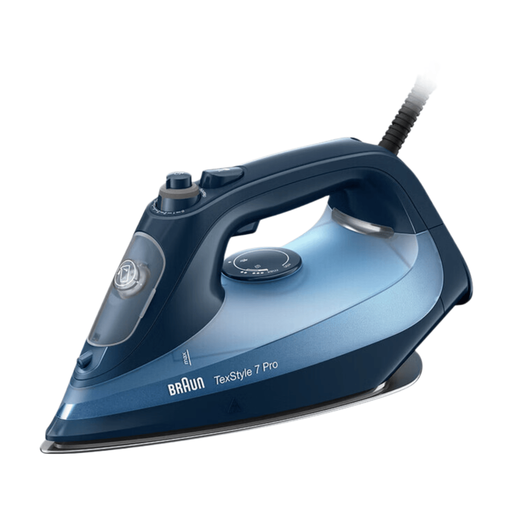
The TexStyle 7 Pro range includes steam irons for pressing garments flat. According to Braun, the SI 7160 has a manual thermostat and adjustable steam.
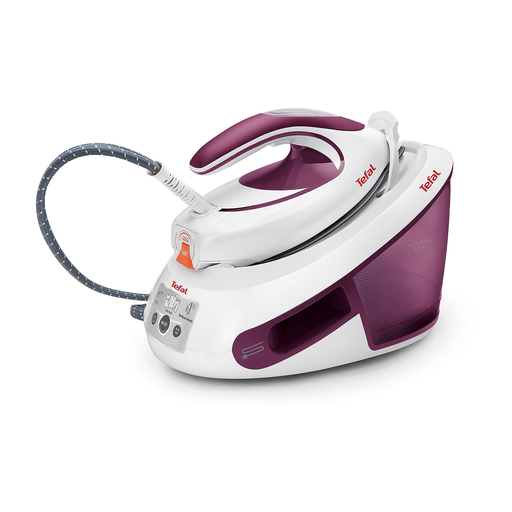
Tefal offers steam irons and the Duo Power JF4031E0, a combination appliance for pressing flat and freshening up garments vertically.
According to Philips, the Azur 8000 DST8070/80 is a steam iron with a single automatic temperature setting for ironable fabrics.
This selection of Joybuy products includes steam irons, a 2-in-1 appliance and a garment steamer for pressing clothes flat or freshening them up on a hanger. Choose according to the finish you want, and check the care label before use. Electrical appliances sold on the Dutch market must meet the applicable European requirements. The Dutch government’s Ondernemersplein explains that, after a conformity assessment, the manufacturer affixes a CE mark and draws up an EU declaration of conformity. Check what information is available for the exact model on offer.
 No image available
The combination of ironing and steaming is designed for anyone who wants to press a sleeve flat as well as freshen up a garment on a hanger.
The description lists a heated ceramic soleplate, steam output of 20 g/min and a 3 m cord.
The stated heat-up time is around 60 seconds. Check which accessories are included with this version.
 No image available
This handheld steam iron is suited to anyone who wants to adjust the temperature and steam manually when ironing sleeves.
The description lists dry and steam ironing, vertical steaming, and manual temperature and steam controls.
The stated weight is 0.77 kg and the heat-up time is 30 seconds. The product name mentions dual voltage.
 No image available
A steam iron with a precision tip may suit anyone who wants to work along sleeve seams and cuffs. Whether the treatment is suitable depends on the garment’s care label.
The description lists a temperature dial, a 300 ml tank and a self-cleaning function.
Braun lists a precision tip for this range. Check the manual for the settings and maintenance instructions for this model.
 No image available
This steam iron may suit anyone considering variable steam and vertical touch-ups alongside ironing clothes flat.
The product name lists 2800 W and a Durilium soleplate. The description mentions a 1.8 l tank and variable steam control.
A precision tip, vertical steaming and self-cleaning are also listed. Check the manual for use and maintenance instructions.
 No image available
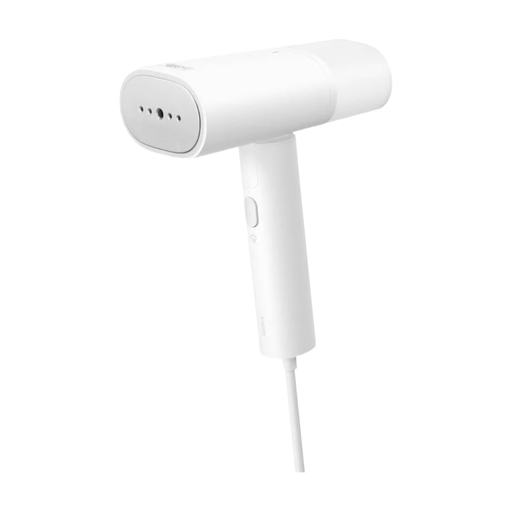
This handheld steamer is designed for anyone who wants to freshen up a suitable sleeve while it’s hanging, without setting up an ironing board.
The product name lists a 160 ml tank and a heat-up time of 30 seconds.
Steaming clothes on a hanger isn’t the same as pressing a crisp sleeve seam or cuff with an iron soleplate.
Let a sodden sleeve dry sufficiently first, and follow the care label. Ironing damp fabric may help with suitable materials, but the GINETEX symbol for a maximum of 110 °C means you should iron without steam.
You generally don’t need a steam generator for a couple of sleeves. The Consumentenbond recommends a standard steam iron if you don’t iron large loads one after another or have limited storage space. A generator is more suited to heavy ironing and stubborn creases.
Follow the descaling instructions for the exact model. The Consumentenbond reports that limescale can block the steam channels, so don’t use a product or method intended for another model unless the manufacturer recommends it.
According to ACM ConsuWijzer, if a product develops a fault during normal use and doesn’t meet your reasonable expectations, the seller must provide an appropriate remedy free of charge. Online purchases generally also come with a 14-day cooling-off period from delivery, subject to applicable exceptions.
Electrical appliances placed on the Dutch market must meet the applicable European requirements. The Dutch government’s Ondernemersplein says that, after a conformity assessment, the manufacturer affixes a CE mark and draws up an EU declaration of conformity. Check the information for the specific model.