
Vandaag of morgen in huis

Kwaliteit gegarandeerd

Welkomstaanbiedingen ontgrendelen: GRATIS bezorging | Tot 80% korting | Gratis 30 dagen JoyPlus-proefperiode
Download de app
An undated A5 planner is useful if you don’t want to start again every year or often skip weeks. Students, professionals, business owners and people who plan at home can choose when to start using it. Yet many models look much the same. An attractive cover tells you little about the layout, paper quality or how practical it will be in the long term.
So, look out for these three common pitfalls:
First, think about how you’ll use your planner. Do you mainly want to note appointments and deadlines, or keep track of goals, tasks and reflections too?
A practical A5 weekly planner ideally includes:
A monthly planner is suitable for appointments, deadlines, holidays and major projects. A weekly overview works better for day-to-day organisation. If you need both, choose a planner with undated monthly and weekly pages.
A5 measures approximately 14.8 × 21 cm. It usually fits in a work bag or rucksack and offers more writing space than an A6 notebook.
Also check the paper weight. The Jubiluu model uses 100 g offset paper in an off-white colour, with ruled pages. This is a specific product detail; it doesn’t mean that every pen will leave no ink showing through. If you use a lot of markers, it’s a good idea to try one on a test page first.
Check the total number of pages too. 112 sheets equal 224 pages. This gives you a clearer idea of how much writing space is available than the description “18 months” alone.
An A5 hardcover planner can protect the pages better when you take it with you every day. An elastic closure helps keep the cover shut, while a bookmark makes it easier to find the current week again.
Also check:
A notebook with an elastic closure isn’t automatically a complete planner. Check that it actually includes monthly and weekly overviews.
The recommendations below are based on verifiable features such as size, paper, layout, closure and page count. Colour is a matter of personal preference. For example, the sage green planner has a calm, neutral look, while Scarlet Red stands out more in a bag or on a desk.

Why it suits this type of user: The undated layout gives beginners the freedom to start at any time. Its calming colour and A5 size make it suitable for studying, planning at home and everyday use.
This planner has more than just an attractive cover: it also includes undated monthly and weekly overviews, with space for notes. So you’re not paying for looks alone.
A5 size, 100 g offset paper, 224 pages, hardcover, elastic closure and bookmark.
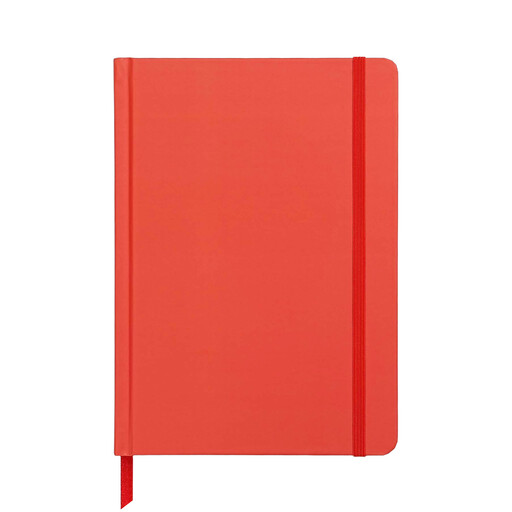
Why it suits this type of user: This version combines the same practical features with a striking cover. It’s a good choice if you want to spot your planner quickly in a full work bag.
The product information clearly states the number of sheets, paper weight and layout. This lets you compare how practical the planners are, rather than focusing only on colour or marketing copy.
Hardcover, ruled 100 g off-white paper, monthly and weekly layouts, note boxes and an elastic closure.
Why it suits this type of user: The combination of monthly and weekly pages lets you organise projects, study plans and personal goals alongside your daily tasks.
The undated layout means you won’t have unused pages if you skip a period. Dedicated note space also helps you keep extra tasks or ideas alongside the relevant week.
Designed for up to 18 months of planning, with 112 sheets, monthly and weekly spreads, a bookmark and an elastic closure.
We’ve put together a complete, up-to-date list of products that meet these strict selection criteria and the applicable European safety regulations.
Start with the month you actually want to plan. Fill in the month name and dates first, then complete the weekly pages. You can also use the planner for a study period, project or move without tying its layout to a set calendar year.
That depends on how many pages you use, how you write and how you store the planner. A model with 224 pages and a hardcover offers plenty of space for long-term use. Keep the planner somewhere dry and clean the cover with a soft, dry cloth.
For many people, yes. The size balances portability with writing space. If you make very detailed daily plans, check how much room each day gets on the weekly pages. A5 is generally practical for appointments, tasks, goals and short notes.
