
Vandaag of morgen in huis

Kwaliteit gegarandeerd

Welkomstaanbiedingen ontgrendelen: GRATIS bezorging | Tot 80% korting | Gratis 30 dagen JoyPlus-proefperiode
Download de app
An undated A5 planner is handy if you don’t want to start on 1 January, after the summer holidays or at the beginning of a term. You only fill in the days you actually use. This makes it a good choice for students, professionals, people working from home and anyone who wants to organise work, study and personal goals at their own pace.
However, not every planner labelled undated planner is the same. A low price, for example, may mean thin paper, an impractical layout or a cover that gets damaged easily. So it’s worth watching out for the following pitfalls.
A planner may be advertised as an 18-month planner, but that doesn’t automatically tell you how the pages are laid out. Check that it includes both monthly and weekly views, and that there’s enough room to write down appointments, tasks and notes.
A monthly planner is useful for deadlines and appointments at a glance. A weekly planner helps you organise your tasks. If you need both, choose a planner where the two layouts work well together.
Paper thickness is sometimes described simply as “high quality”. That’s not something you can easily verify. Look for a specific detail instead, such as 100 g/m² offset paper. The results can still vary depending on the pen and ink you use, but the paper type and weight give you more to go on than general marketing claims.
Do you use a fountain pen, gel pen or highlighter? Look for a planner whose product information clearly states the paper type. Bear in mind that contact with liquid can damage the paper.
A hardcover planner may stand up to being carried in a bag better than a soft cover, but check the details too. For example, a planner with an elastic closure and bookmark is easier to keep shut and lets you find the right page more quickly.
Also consider the size. A5 measures approximately 14.8 × 21 cm. It gives you more writing space than a small notebook, while still being easy to carry on your commute, to lectures or to a flexible workspace.
A good undated planner gives you space to fill in the month, week and day yourself. Check whether you can customise the first page. This is useful if you want to create your own index, yearly goals or key.
If you mainly write down daily tasks, you could choose a daily planner. Monthly pages are useful for planning further ahead. A combination of monthly and weekly pages is more versatile for work, study and personal life.
Don’t just look at the number of pages; check the number of sheets too. One sheet has two pages. The Jubiluu model below lists 224 pages and 112 sheets, with 100 g/m² off-white lined offset paper. That’s clearer than simply describing the paper as “thick”.
An A5 planner should lie open comfortably and offer enough space for longer notes. A hardcover can provide extra protection, while an elastic closure stops loose pages from opening in your bag. A bookmark helps you quickly find the current week or an important goal.
Also check the safety and care information. For the model mentioned, it’s recommended that you keep the cover dry, avoid contact with liquids and clean it with a soft, dry cloth.

Why it suits this type of user: The flexible, fill-in layout and A5 size make this an easy-to-use starting point for students or anyone who isn’t yet sure how much planning they need to do each day.
The product information specifies an undated 18-month layout with monthly and weekly views, so unused weeks aren’t pre-printed and wasted.
A5 size, hardcover, 112 sheets of 100 g/m² offset paper, plus an elastic closure and bookmark.
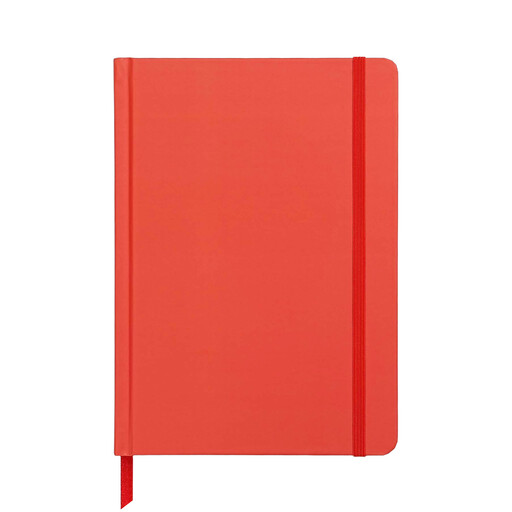
Why it suits this type of user: A good choice for professionals and people working from home who want to combine work appointments, personal notes and goals in one practical system.
The specifications clearly state that it has 224 pages, 112 sheets and 100 g/m² paper. This makes it easier to compare what’s inside without relying on vague quality claims.
Hardcover, off-white lined paper, flexible monthly and weekly pages, and a built-in bookmark.
Why it suits this type of user: The layout is ideal for anyone who wants to combine long-term planning with weekly notes and personal goal tracking.
The planner has no fixed dates, so you can take breaks without leaving pre-printed days blank and decide for yourself when each planning period begins.
Monthly and weekly views with space for notes, a hardcover, an elastic closure and a bookmark for regular use.
We’ve put together a full, up-to-date list of products that meet these strict selection criteria and current European safety regulations.
Yes, provided it has enough space for notes as well as monthly and weekly views. Check in advance whether the pages are lined and whether the layout suits the way you work. If you only need to note appointments, a monthly planner may be enough; for tasks and time blocks, a daily or weekly planner is more practical.
How long it lasts depends on how often you write in it, how you carry it and how you store it. A hardcover can help protect the cover during everyday use, but the paper and binding are still vulnerable to moisture and heavy wear. Keep the planner dry and avoid contact with liquids.
For many people, A5 offers a useful balance between portability and writing space. At approximately 14.8 × 21 cm, it will usually fit in a rucksack or work bag. If you make lots of drawings, detailed project plans or large diagrams, check the amount of writing space on each page too.
