
Vandaag of morgen in huis

Kwaliteit gegarandeerd

Welkomstaanbiedingen ontgrendelen: GRATIS bezorging | Tot 80% korting | Gratis 30 dagen JoyPlus-proefperiode
Download de app
An A5 notebook set is handy for school, the office, journalling and creative projects. You’ll have several notebooks to hand and can give each one a specific purpose: lecture notes, to-do lists, sketches or a journal. Yet many sets look alike, even though the practical differences can be significant.
So don’t just look at the number of notebooks or an attractive kraft cover. The paper, binding and stated contents are what determine whether a set remains pleasant to use.
A set of 20 notebooks may seem like good value, but always check how many sheets each one contains. According to the product description, the set on offer contains 20 notebooks with 30 sheets each, or 60 pages per notebook. A set of 10 may be more practical if you want to store less stock or use each notebook more intensively.
So compare more than just the price per pack. Also check:
A blank notebook gives you the freedom to write, create mind maps and diagrams, and draw. Lined paper, however, may be easier to organise for everyday planning. Check that the pages are genuinely blank and whether the product is intended as an A5 sketchbook, journal or planner.
A notebook that won’t stay open is awkward to write in near the inner margin. The kraft sets mentioned here are described as having a 180-degree lay-flat binding. This can be especially useful for sketches, long notes and working at a small desk. When buying, check that this specification applies to the variant you’ve chosen, as some product pages offer several versions.
A5 measures approximately 14.8 × 21 cm. This size will usually fit in a rucksack or laptop bag and gives you more writing space than A6, without being as large as A4.
When choosing a set of 10 or 20 notebooks, consider both the size and the contents. A notebook with 30 sheets is suitable for a defined project, a short course or a single subject. For long-term planning, a thicker notebook with more pages makes more sense.
The kraft sets specify 80 g/m² cream-white paper. This is a common weight for everyday writing. The product description calls the paper ‘eye-friendly’; this is a claim from the brand’s product information, not a medical claim. The cream-white shade can give a page a softer look than bright white paper.
If you use a fountain pen, brush pen or markers, it’s worth checking first whether the paper is suitable for them. A paper weight of 80 g/m² doesn’t automatically tell you how resistant the paper is to show-through.
A kraft notebook has a simple cover with a natural look. The product description calls it a DIY kraft softcover and presents it as suitable for the office, school, journalling and sketching. A softcover is lightweight and flexible, but offers less protection than a hardcover.
A 180° lay-flat design is practical if you want to write with both hands or open the notebook completely flat. If you carry it every day in a full bag, a protective cover or a separate compartment can help keep the cover in good condition.
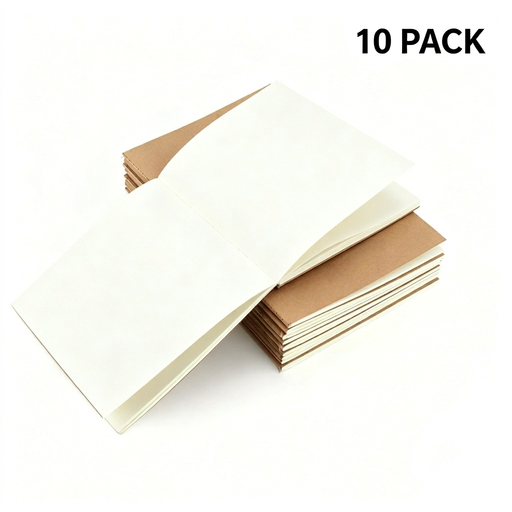
Why it suits this profile: This set of 10 notebooks is a good choice if you want to divide different subjects between separate notebooks without buying a large supply straight away. Think school subjects, shopping lists or short projects.
The number of notebooks and the blank-page format are clearly stated. That means you won’t end up buying a lined planner when you want the freedom to write or draw.
10 A5 notebooks, each with 30 sheets, blank pages, a kraft softcover and, according to the product listing, a 180° lay-flat binding.
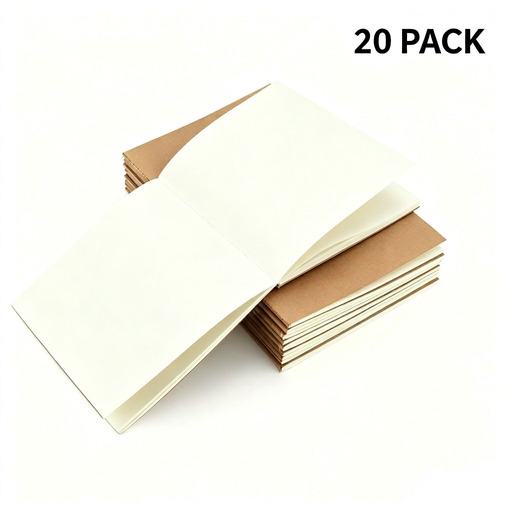
Why it suits this profile: If you write, teach, study or work on creative projects regularly, having a larger supply of identical notebooks can be useful.
The specifications state both the quantity of 20 and the 30 sheets per notebook. This makes it easier to compare the total amount of paper with smaller sets.
20 notebooks, 80 g/m² cream-white paper, blank pages, a kraft softcover and a 180° lay-flat binding, according to the product description.
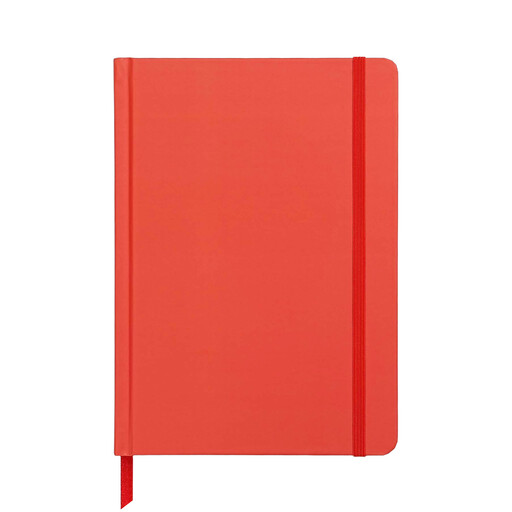
Why it suits this profile: This planner is a good fit for professionals, students and planners who want structure for monthly and weekly planning and goal-setting, rather than completely blank pages.
The layout is described in advance: monthly and weekly views, a notes section and an undated design. So it’s clearly different from a blank notebook.
A5 size, hardcover, 112 sheets of 100 g/m² off-white lined paper, an elastic closure and a bookmark, according to the product information.
We’ve put together a complete, up-to-date list of products that meet these strict selection criteria and the applicable European safety regulations.
It depends on the price per notebook and the number of sheets. A set of 20 usually gives you a larger supply, but only if you’ll actually use the notebooks. Divide the total price by the number of notebooks, then compare the number of sheets in each one too.
80 g/m² is a common paper weight for ballpoint pens, pencils and many gel pens. Markers, ink or wet paint may show through. Check the product information and choose your writing materials to suit the paper.
Its lifespan depends on how you use it, where you store it and how you carry it. A notebook with 30 sheets may fill up more quickly with heavy daily use than a planner with 112 sheets. Keep it dry and avoid putting heavy pressure on the softcover if you carry it in a bag regularly.
