
PC world-builder
Wants a wide play area for building and exploring. Check that your sandbox game supports 21:9 and that the monitor and stand will fit on your desk.


If you mainly play on PC and want more horizontal space for building and exploring, consider a 34-inch 21:9 monitor. If 4K detail or use with several devices matters more, compare a large 16:9 screen instead. Always check that your game, device and connection support your preferred aspect ratio, resolution and refresh rate. If you choose OLED, also bear in mind that menus may remain on screen for long periods.
Wants a wide play area for building and exploring. Check that your sandbox game supports 21:9 and that the monitor and stand will fit on your desk.
Wants to see the finer details of builds on a large screen and is weighing up 4K against what their PC or console can handle.
Wants to use one screen with several devices and checks which resolution and refresh rate are available for each input.
Start with the aspect ratio your game supports, then check your preferred resolution, available connections and any OLED-related considerations.
| What to consider | What to look for | Who should prioritise it? |
|---|---|---|
| A wide view of the world | Check 21:9 support for each game and make sure the screen and stand will fit on your desk. | If I mainly want a wide play area for building and exploring, I check game support first. Around 40% of consumers prioritise a wider view. |
| Detail on a large screen | Compare the native resolution and screen size with the output your PC or console can handle. | If you want to view detailed builds on a large screen, consider resolution alongside the capabilities of your device. Around 30% of consumers prioritise detail. |
| Refresh rate for each connection | Check the maximum resolution and Hz for each input, cable and device. Dell lists a maximum of 165 Hz via DisplayPort and 100 Hz via HDMI for the AW3423DWF. | If I want to move smoothly through a sandbox world, I check which settings my connection actually supports. Around 20% of consumers prioritise refresh rate. |
| Devices and OLED care | Check the connections for each device and, with OLED, follow the guidance on displaying static images for long periods. LG describes temporary image retention caused by such images. | If you use several devices or have game menus on screen for long periods, it’s worth checking how the connections and care requirements work for your chosen model. Around 10% of consumers prioritise compatibility and aftercare. |
The available refresh rate can vary between inputs. Dell lists different maximum refresh rates for DisplayPort and HDMI on the AW3423DWF.
Check the resolution and refresh rate you want for both the monitor port and the connected device.
The extra width won’t necessarily suit the display layout of every sandbox game.
Check that each game supports your preferred aspect ratio. If it doesn’t, base your choice on the display mode you’ll actually use.
LG warns that static elements displayed for long periods can cause temporary image retention. Care features and terms vary by model.
Read the manual for your specific model and follow its screen-cleaning guidance during long sessions.
The G34WQi is a 34-inch 21:9 option for PC players looking for extra width. Xiaomi Netherlands specifies a resolution of 3440 × 1440 and a maximum refresh rate of 180 Hz for this model.
The AGON PRO AG326UD is a large 16:9 alternative for anyone who values 4K detail more than ultrawide width.
The UltraGear 34GX900A-B is a 34-inch ultrawide OLED option.
The curved 34M2C8600P/00 is a 34-inch QD-OLED option with Ambiglow.
The AW3423DWF is a 34-inch 21:9 QD-OLED option with different maximum settings for each video input.
This selection includes both wide screens for anyone who wants more room to build and explore, and large 4K screens for those who prioritise detail.
 Image unavailable
Suited to anyone looking for a wide play area for building and exploring. Check that your game supports your preferred aspect ratio.
The product title lists OLED and a resolution of 3440 × 1440.
 Image unavailable
Suited to anyone who wants to view detailed builds on a large screen. Check that your connected device supports the 4K output you want.
The product title lists 31.5 inches, 3840 × 2160 and OLED.
 Image unavailable
Suited to anyone who wants extra width for building and exploring. Check that your sandbox game supports your preferred aspect ratio.
The product title lists 3440 × 1440, 200 Hz and an R1500 curvature.
 Image unavailable
Suited to anyone looking for a wide view for building and exploring. Check game support and the settings you want to use on your device.
The product title lists 3440 × 1440 and an LCD screen.
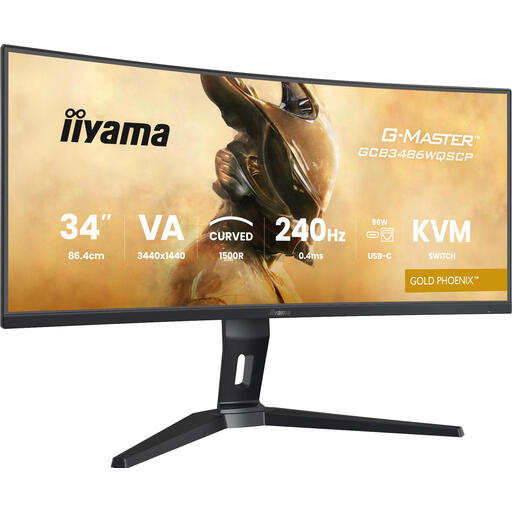 Image unavailable
Suited to anyone looking for a wide view while exploring. Check that the game and connected equipment support your preferred screen settings.
The product title lists 240 Hz, a 0.4 ms response time and a KVM switch.
Check both the output settings on your connected device and the specifications for the monitor port you’re using. PlayStation Support explains that on PS5, you can view information about the connected HDMI device under ‘Screen and Video’. For 120Hz output, both the screen and the game must support that setting.
Follow the care instructions for your exact model. LG describes temporary image retention caused by static elements displayed for long periods, and screen cleaning as a maintenance feature. Dell documents pixel-refresh notifications specifically for models including the AW3423DWF. This is manufacturer guidance, not a guarantee that every mark will disappear.
Compare the EU energy label and product information sheet for the exact models. The European Commission says monitor labels show details including the A–G scale, screen size and resolution, as well as efficiency information for HDR content. Where possible, compare models on the same basis.
According to ACM ConsuWijzer, online product purchases generally come with a statutory cooling-off period that ends 14 days after delivery. The seller must also resolve issues if a product does not meet what you could reasonably expect under the statutory guarantee. Check the manufacturer’s OLED terms separately; they do not replace your statutory rights.