
Colour-critical vector reviewer
Wants to know which colour gamut and calibration details are specified for the exact monitor. BenQ and LG publish colour information for specific models.


Start with what you need to assess during a vector review. For colour-critical work, the stated colour gamut and calibration features matter; for artwork with references and feedback alongside it, resolution and usable workspace take priority. In a shared workspace, you should also check adjustability, connectivity and charging capacity for every laptop in use. Manufacturer specifications do not prove that a monitor has been set up correctly at your workstation.
Wants to know which colour gamut and calibration details are specified for the exact monitor. BenQ and LG publish colour information for specific models.
Wants to view an illustration, reference file and comments at the same time, without constantly switching between windows. iiyama and Samsung specifications mention features for displaying multiple windows or sources.
Needs a monitor that can be readjusted, with connections that suit the laptops used by different people. Arboportaal recommends adjusting the screen workstation for each user.
First decide whether colour assessment or seeing everything side by side matters most. Then check that the monitor can be adjusted properly at the shared workstation and works with the laptops in use.
| Consideration | What should you check? | Who is this important for? |
|---|---|---|
| Colour reproduction | Check the stated colour gamut, available colour modes and any calibration details for the exact model. | If colour is part of my assessment, I want to know which colour gamut and settings I’m working with. Around 36% of consumers in this breakdown put verifiable colour reproduction first. |
| Workspace | Compare the resolution and screen size with your desk space and the scaling settings in your design software. | If I want to see artwork, references and feedback at the same time, usable side-by-side space matters. Around 29% of consumers give this overview top priority. |
| Adjustability | Check the height and tilt adjustments, available desk space and reflections at the workstation. | If several people use the monitor, I want to be able to readjust the setup between users. Around 21% of consumers prioritise this flexibility. |
| Connectivity and charging | For each laptop, check the supported video output over USB-C and the charging power required. | If I switch between laptops regularly, I want to know whether video and power work through the connection I intend to use. Around 14% of consumers give suitable connections and power top priority. |
A stated colour gamut or factory calibration report does not, by itself, tell you how the monitor is set up at a shared workstation. The computer and selected display mode also play a part.
Choose a colour mode that suits your work, and check the settings on both the computer and the monitor before assessing colour.
Matching the computer and monitor settings may take extra time.
A product listing that gives only the base name does not confirm that it is a specific version, such as the iiyama XUB3493WQSU-B6.
Check the full model number on the product listing and packaging before expecting the features of that version.
The Dell U3425WE listing we reviewed gives different vertical resolutions and contradicts itself about whether the screen is LCD or OLED. This copy does not confirm which version is being sold.
Check the exact version and specifications with the seller, then compare them with Dell’s documentation before ordering.
The models reviewed have different stated charging capacities; a USB-C port alone does not mean that video and power will work with every laptop.
Check each laptop’s video output and power requirements. Depending on your setup, you may need a separate laptop charger or another dock.
The PD3420Q is aimed at design work, with colour modes and calibration details.
According to LG, the 34BA85QE-B combines a spacious IPS workspace with connectivity for an office setup.
The ProLite XUB3493WQSU-B6 is a flat ultrawide with an adjustable stand, for workspaces where several users want a clear overview.
Dell describes the UltraSharp U3425WE as a curved Thunderbolt hub monitor for workspaces with multiple connections.
The ViewFinity S65VC is a curved option for anyone considering a multifunctional ultrawide for the office.
These Joybuy picks are ultrawide monitors offering plenty of workspace for a shared office. Check that each model’s version and connections suit your work setup.
 No image available
The wide screen layout could suit anyone who wants to view several work windows side by side.
WQHD VA panel, 1800R curve and 120 Hz, according to the product name.
 No image available
Could suit a shared laptop workstation; check that each laptop supports the video output and power delivery you need over USB-C.
Curved WQHD IPS USB-C hub monitor with webcam, 100 Hz and 90 W Power Delivery, according to the product name.
 No image available
Could suit a shared workstation for laptop use and meetings; check that the features of the exact version match your setup.
34-inch USB-C hub conferencing monitor, according to the product name.
 No image available
An ultrawide option for anyone who wants to arrange artwork and other windows across a wide display; check that it will fit your desk.
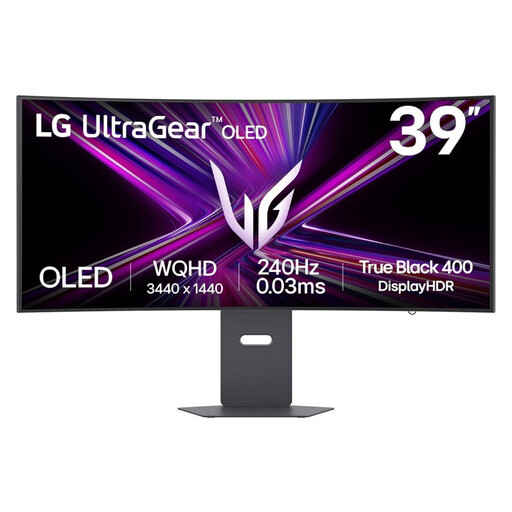
Gaming monitor, according to the product name.
 No image available
Could suit a shared workstation where several computers are used; check which dual-mode setting works best with your design software and preferred display.
Curved dual-mode business monitor, according to the product name.
No. Screen size alone does not tell you how many pixels are used to display a detail. Compare the resolution too, and try the scaling settings in your design software. For example, the BenQ PD3420Q has a resolution of 3440 × 1440 pixels on a 34-inch screen.
Readjust the screen for each user, keep symbols easy to read and watch out for reflections and light sources in your line of sight. Arboportaal offers this advice for screen work; an adjustable monitor does not replace an assessment of the whole workstation.
No, check each laptop individually. BenQ specifies USB-C with DisplayPort Alt Mode and 65 W power delivery for the PD3420Q; LG lists 90 W power delivery for the 34BA85QE-B. Check the laptop’s supported video output and power requirements.
Consumer purchases are covered by statutory guarantees: if a product does not meet expectations, the seller must provide a solution. For distance sales, a 14-day cooling-off period applies in many cases, according to the Dutch government. Check the terms that apply to your specific purchase; consumer protections do not automatically apply to a business purchase made by an office.
The government information consulted does not specify a required brand, panel type or ultrawide format. Arboportaal does outline employers’ responsibilities for healthy screen work and workstation setup, so assess the whole workstation, not just the monitor.