
Checkout tester who works with two windows
You want to view the checkout and your development tools at the same time, while also deliberately testing narrower layouts.


A 34-inch ultrawide monitor with a resolution of 3440 × 1440 pixels can give you room to view a checkout alongside your development tools, but measure your desk first and check your laptop’s connections. A wide screen is no substitute for testing at narrower screen sizes: Google explains how to adjust the browser viewport in Chrome DevTools. The model specifications mentioned here are not measured results from checkout tests.
You want to view the checkout and your development tools at the same time, while also deliberately testing narrower layouts.
You want to know whether the wide screen and stand will fit in your student bedroom, so dimensions and adjustability matter.
You’re looking for a connection that suits your laptop’s video output and charging needs.
Choose this if: you often want to view the checkout and, for example, DevTools at the same time, and the screen will fit on your desk.
Trade-off: the extra width takes up space, and you’ll still need to test narrower layouts separately.
Choose this if: you’re short on desk space and want to get started with your current screen and Chrome DevTools.
Trade-off: you’ll have less physical space to keep two windows open side by side.
| What to consider | What should you check? | Who is this most important for? |
|---|---|---|
| Workspace for side-by-side windows | Check the resolution and aspect ratio of the exact model. Try viewing your windows side by side at your usual text size. | I want to see the checkout and development tools at the same time without constantly switching; around 33% of consumers prioritise this workspace. |
| Desk space | Measure the available width and depth, then compare them with the dimensions of the model with its stand. | I want to position my keyboard and mouse comfortably in my student bedroom; around 27% of consumers prioritise how well the monitor fits on their desk. |
| Connecting and charging a laptop | Compare your laptop’s video output and charging needs with the monitor’s connection and any USB-C power delivery. | I want to connect my laptop regularly and, if needed, charge it through the same connection; around 20% of consumers start by checking for a suitable laptop connection. |
| Readability and narrower layouts | Try your usual text size and set narrower browser viewports separately in DevTools. | I want to keep text readable and check narrow checkout views too; around 20% of consumers prioritise this combination. |
The physical width of the monitor is different from the size of the browser viewport. So a wide checkout view won’t automatically show you how the page works on a phone.
Set narrow and responsive dimensions separately in Chrome DevTools. Where needed, use a real mobile device to check how the page behaves on it.
The diagonal measurement doesn’t tell you how much desk space the screen and stand take up together. For example, BenQ lists the EX3410R as 795.7 mm wide and 269.7 mm deep with its stand.
Measure your available space and compare it with the model-specific dimensions, including the stand. Also check the adjustment options available on the exact model.
A USB-C port on the screen alone doesn’t confirm that your laptop can output video through that connection or receive enough power.
Check your laptop’s video output and charging needs against the specifications of the exact model. Depending on the combination, you may need a different cable or a separate power supply.
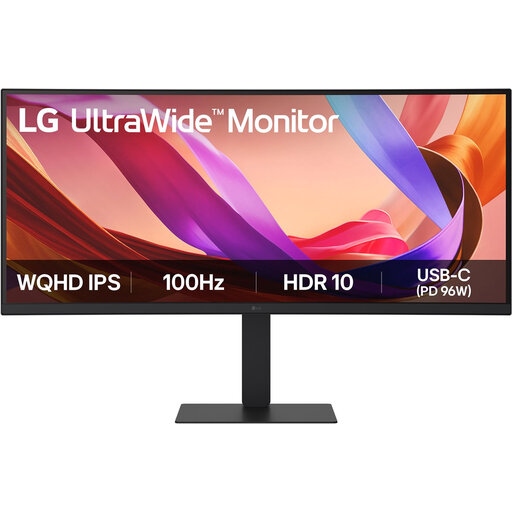
The LG 34U650A-B is a specific 34-inch model to compare if you’re looking for a wide workspace.
The Philips 346E2CUAE/00 is a 34-inch ultrawide monitor to compare if USB-C and viewing multiple windows at once matter to you.
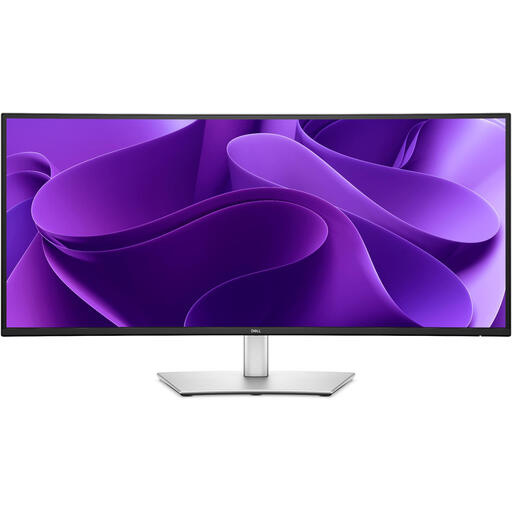
The Dell P3425WE is worth considering if you’re looking at a USB-C hub and network connection as well as screen space.
The EX3410R gives you a model-specific point of comparison if you want to work out how much room a curved screen and stand will need.
These ultrawide models let you view a checkout alongside your development tools. Test narrower browser views separately too.
 No image available
An option for viewing the checkout and development tools side by side.
LG lists this model as having a 21:9 aspect ratio, IPS, a resolution of 3440 × 1440 pixels, a 100 Hz refresh rate and USB-C. Check that the connection is compatible with your laptop.
 No image available
An option if you’re looking for an ultrawide monitor to use with several windows side by side.
The product name specifies a 34-inch screen with a resolution of 3440 × 1440 pixels. Check the features and connections of this version to make sure they suit your laptop.
 No image available
An option if you want to compare a wide workspace with laptop connections.
The product name specifies a resolution of 3440 × 1440 pixels. Dell lists the P3425WE as having up to 90 W of USB-C power delivery, RJ45 and height adjustment; check that it suits your laptop.
 No image available
An option to compare if you’re looking for a dock and adjustable stand as well as screen space.
The product name specifies a USB-C dock, LAN, KVM switch and 15 cm of height adjustment. Check the connections and features to make sure they suit your laptop and peripherals.
 No image available
An option for comparing the screen space available for side-by-side windows.
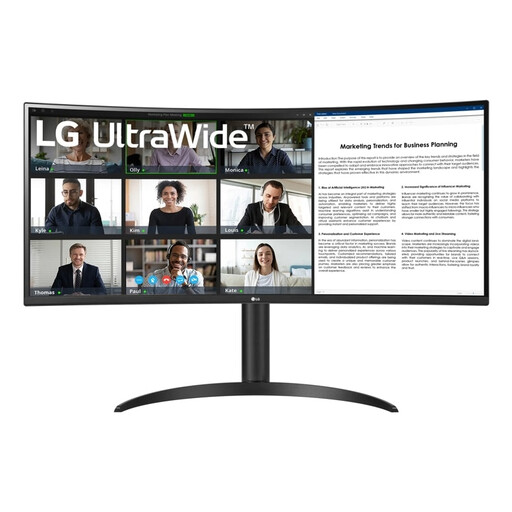
The product name specifies a resolution of 3440 × 1440 pixels. Check the connections and adjustment options on this version to make sure they suit your setup.
Not with the wide screen alone. You can set a narrow or simulated mobile viewport in Chrome DevTools; Google also explains remote debugging, which lets you inspect a page on a real mobile device.
Measure the space for the screen and stand, check the adjustment options on the exact model and try a comfortable text size. The Dutch Arboportaal lists small symbols, reflections and ambient light as factors that can reduce readability; this is not a legal minimum desk size.
According to ACM ConsuWijzer, the statutory cooling-off period for an online purchase generally ends 14 days after delivery. The legal guarantee covers a product that doesn’t meet what you could reasonably expect; it’s not the same as a fixed two-year guarantee period.