
Vandaag of morgen in huis

Kwaliteit gegarandeerd

Welkomstaanbiedingen ontgrendelen: GRATIS bezorging | Tot 80% korting | Gratis 30 dagen JoyPlus-proefperiode
Download de app
By a Joybuy Product Recommendation Officer | Last updated: July 28, 2026
A scratchy throat, dry eyes, or a constantly static-charged sweater. Especially when the heating comes on, the humidity level in your home drops, and the discomfort begins. An ultrasonic humidifier seems like a simple solution, but the market is flooded with models that cause more frustration than comfort. Before you invest in a healthier indoor climate, it's crucial to recognise the common pitfalls.
Many people make a choice based on marketing promises and end up with a device that fails to meet their expectations. These are the three most common mistakes:
To avoid wasting money on a device that ends up in a closet after a few months, there are a few technical specifications you should always check. These determine whether a humidifier is practical and effective in daily use.
The capacity of the water tank, expressed in litres (L), determines how long the humidifier can run without needing a refill. A small 1 or 2-litre model might need to be refilled every evening. For bedroom use, a large-capacity humidifier of at least 4 to 5 litres is a practical choice. This often allows it to run for two full nights, ensuring uninterrupted comfort.
For a quiet humidifier, the noise level, expressed in decibels (dB), is the most important specification. This is especially true for light sleepers or for a humidifier in a nursery. Ultrasonic models are generally quieter than evaporative ones.
Modern humidifiers offer more than just mist. Two features are particularly useful for convenience and comfort:
Based on these practical criteria, we have selected a model that excels in user-friendliness and functionality.
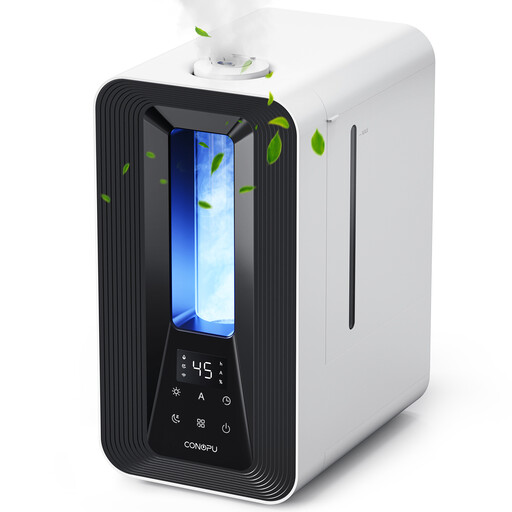
Why This Fits Their Persona: This model is an all-in-one solution for anyone seeking a more comfortable and healthier indoor climate without the hassle. The large tank, quiet operation, and smart features make it ideal for use in the living room or bedroom, even in a busy household with children.
The tank is easily filled from the top, preventing spills. The sleep mode operates at a very low noise level of 25 dB. The built-in hygrostat regulates humidity automatically and reliably.
Large 5L tank for a runtime of up to 50 hours. Includes automatic humidity control, an aromatherapy function, and 360° rotating nozzles for even distribution.
We've compiled a complete, up-to-date list of products that fully meet these strict selection criteria and local safety regulations.
A healthy relative humidity level in a home is between 40% and 60%. In winter, heating can cause this to drop below 30%, leading to discomfort. A humidifier for dry air with a built-in hygrostat can help automatically maintain this ideal level.
You can, but distilled or demineralised water is recommended. Hard tap water contains minerals (limescale) that can settle as a fine, white dust in the room. Over time, this can also shorten the lifespan of the device. Some models include a filter to mitigate this.
Regular cleaning is crucial to prevent the growth of bacteria and mould. Change the water daily. Clean the unit thoroughly at least once a week according to the manufacturer's instructions, often using a solution of water and white vinegar. A model that is easy to disassemble makes this maintenance much simpler.
